Rosemary hair growth oil has become one of the clearest commercial opportunities in private label hair care. Consumer awareness of rosemary oil as a scalp active reached a turning point when a widely shared clinical comparison showed rosemary oil performing comparably to 2% minoxidil for hair count improvement over six months. That single data point, amplified across TikTok, Instagram, Amazon, and dermatology-adjacent content, moved rosemary oil from a niche botanical ingredient into a mainstream hair care hero active.
For private label brands, the opportunity is real but competitive. Rosemary oil is now one of the most crowded claims in the hair care market. The brands that win in this space are not the ones that simply add rosemary extract to a carrier oil — they are the ones that formulate thoughtfully, position precisely, and build a product that works at the concentrations needed to deliver the scalp benefit the consumer expects.
This guide explains how to develop a private label rosemary hair growth oil, including formula design, rosemary oil concentration, carrier oil selection, claim compliance, active combinations, packaging compatibility, and OEM manufacturing support.
For broader supplier comparison and hair care OEM planning, you can also read our guides to private label hair care manufacturers and private label hair growth oil manufacturers.
Quick Answer: What Makes a Good Private Label Rosemary Hair Growth Oil?
A good rosemary hair growth oil is not defined by whether rosemary appears on the ingredient list. It depends on the full formula system: rosemary oil concentration, carrier oil texture, scalp feel, oxidation stability, packaging compatibility, supporting actives, and compliant claim language.
For most private label projects, a rosemary hair oil should be designed around four decisions:
- Formula type: pure oil blend, serum-oil hybrid, scalp tonic, or pre-wash treatment oil
- Rosemary oil level: enough to support the product positioning, but still suitable for leave-on scalp use
- Carrier oil system: lightweight, stable, and comfortable for the target hair type
- Claim direction: cosmetic-safe wording such as scalp health, stronger-looking hair, fuller-looking hair, and visible density support
Brands should avoid treating rosemary oil as a simple trend ingredient. The stronger opportunity is to build a complete scalp care story around botanical actives, oil texture, application experience, and regulatory-safe positioning.
Why Rosemary Oil Works for Scalp and Hair Growth Support
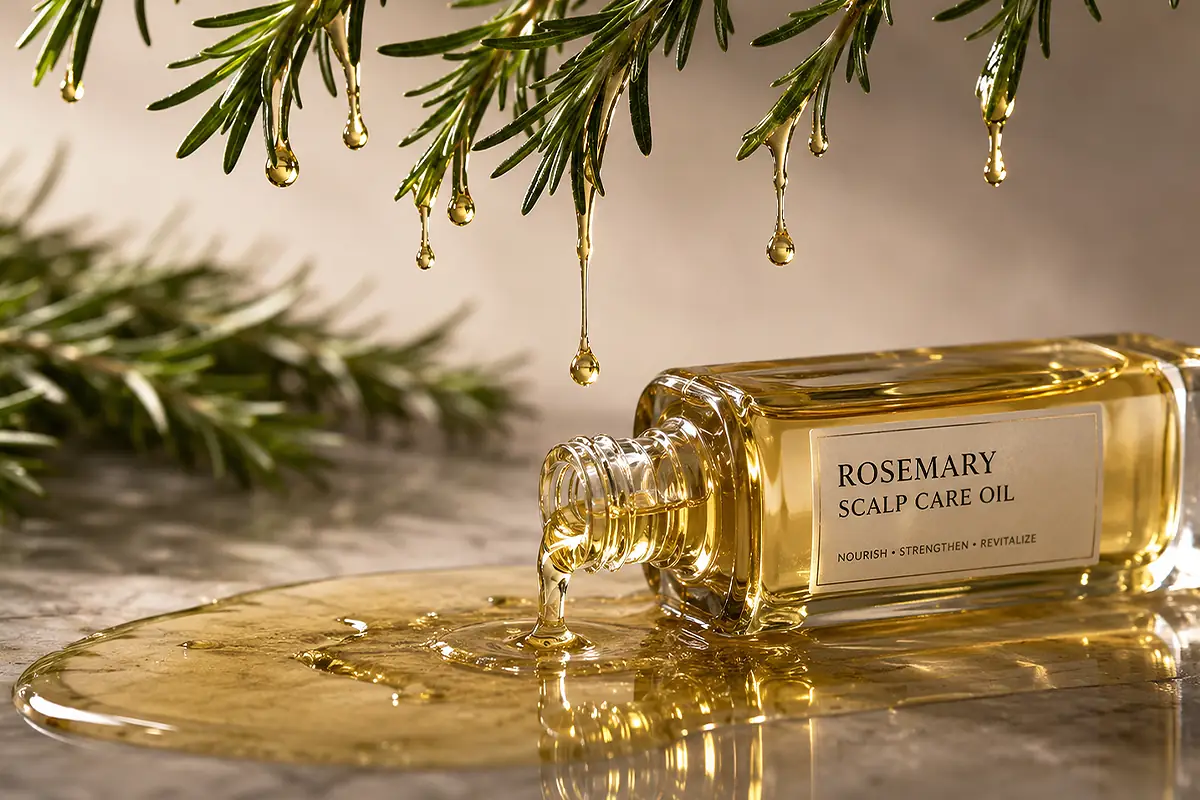
Rosemary oil, often listed as Rosmarinus Officinalis Leaf Oil or Salvia Rosmarinus Leaf Oil, is a steam-distilled essential oil from the rosemary plant. Its main constituents include 1,8-cineole, camphor, alpha-pinene, and other aromatic compounds that are commonly discussed in scalp care and botanical hair growth support.
From a formulation and marketing perspective, rosemary oil is attractive because it connects several ideas that consumers already understand: natural scalp stimulation, hair density support, stronger-looking hair, and a clean botanical ritual.
The Mechanism at the Scalp Level
Rosemary oil’s proposed mechanism for supporting hair growth involves several converging pathways.
5-alpha-reductase inhibition. Several rosemary-related constituents are often discussed in relation to 5-alpha-reductase activity. 5-alpha-reductase converts testosterone to dihydrotestosterone, which is associated with follicle miniaturization in androgenetic alopecia. Partial inhibition of 5-alpha-reductase at the scalp level reduces DHT’s influence on genetically susceptible follicles.
Scalp microcirculation support. Rosemary oil is also associated with scalp stimulation and microcirculation support. For consumers, this creates a clear sensory and functional story: a scalp oil that supports the environment around the hair follicle and helps hair appear healthier and denser over time.
Anti-inflammatory activity. Chronic scalp discomfort and irritation can affect the appearance and quality of the hair and scalp. Rosemary oil’s botanical profile supports a scalp care positioning when used at appropriate cosmetic levels and combined with soothing or barrier-supporting ingredients.
Antioxidant protection. Oxidative stress is often discussed in relation to scalp aging and hair quality. Rosemary oil has antioxidant positioning value, especially when combined with vitamin E, fermented ingredients, peptides, or botanical extracts.
The Clinical Evidence Brands Often Reference
The most frequently cited study is a 2015 randomized comparative trial that compared rosemary oil with 2% minoxidil in people with androgenetic alopecia over a six-month period. Both groups showed improvement in hair count at the six-month endpoint, and the rosemary oil group reported less scalp itching than the minoxidil group.
For private label brands, this study is useful but must be handled carefully. It does not mean every rosemary hair oil on the market performs like minoxidil. It does not mean a cosmetic product can claim to treat androgenetic alopecia. It means rosemary oil has a stronger research story than many generic botanical ingredients, but the final product still needs correct concentration, proper formulation, realistic use instructions, and compliant claim wording.
For a broader ingredient comparison, see our guide to GHK-Cu vs Redensyl vs Capixyl hair growth ingredients.
Rosemary Oil Formulation: What Actually Works
Concentration Matters More Than Presence on the Label
The most common formulation failure in rosemary hair growth oils is using rosemary oil at concentrations too low to support the product story. A formula that contains rosemary oil only as a trace botanical addition may still allow a “with rosemary” claim, but it is not a strong rosemary scalp oil in any meaningful formulation sense.
For leave-on scalp oil development, many rosemary oil concepts are designed around a functional positioning range of approximately 0.5%–2% in the finished formula, depending on the full essential oil blend, target market, skin sensitivity requirements, fragrance strength, and local compliance direction.
When briefing an OEM manufacturer, brands should ask about the specific rosemary oil level, the carrier oil system, the intended use frequency, and whether the formula has been reviewed for leave-on scalp suitability.
Carrier Oil Selection
The carrier oil system determines texture, absorption, scalp comfort, and consumer satisfaction. A rosemary oil that feels too heavy may create a poor repeat-use experience, even if the ingredient story is strong.
- Jojoba oil: dry finish, good oxidative stability, premium scalp care positioning
- Fractionated coconut oil: lightweight, stable, fast-absorbing, suitable for daily-use oils
- Argan oil: premium hair shine and nourishment story
- Castor oil: richer texture, suitable for pre-wash treatment or natural hair rituals
- Sweet almond oil: soft sensory feel, often used for massage and wellness positioning
For daily-use scalp growth oil, lightweight carriers are usually preferred. For pre-wash or overnight treatment positioning, richer oils such as castor oil can be used more comfortably.
Oxidative Stability
Essential oils are volatile and can oxidize over time, especially when exposed to heat, oxygen, and light. A rosemary hair growth oil should be designed with stability in mind from the beginning.
Vitamin E, usually listed as tocopherol, is commonly used as an antioxidant support ingredient in anhydrous hair oil formulas. Amber glass, dark PET, aluminum packaging, or UV-protective bottles can also help protect the formula and support a premium shelf appearance.
Synergistic Essential Oils
Rosemary oil is often combined with other scalp-positioned essential oils to strengthen the sensory experience and product story.
- Peppermint oil: cooling scalp sensation and activation story
- Tea tree oil: scalp freshness and oil-control positioning
- Cedarwood oil: traditional botanical scalp care story
- Ginger oil: warming sensory signal and scalp massage positioning
These combinations can make the product feel more active to consumers, but they must be controlled carefully because essential oils can increase irritation risk if overused.
Rosemary + Biotin: The Most Commercial Hair Oil Positioning
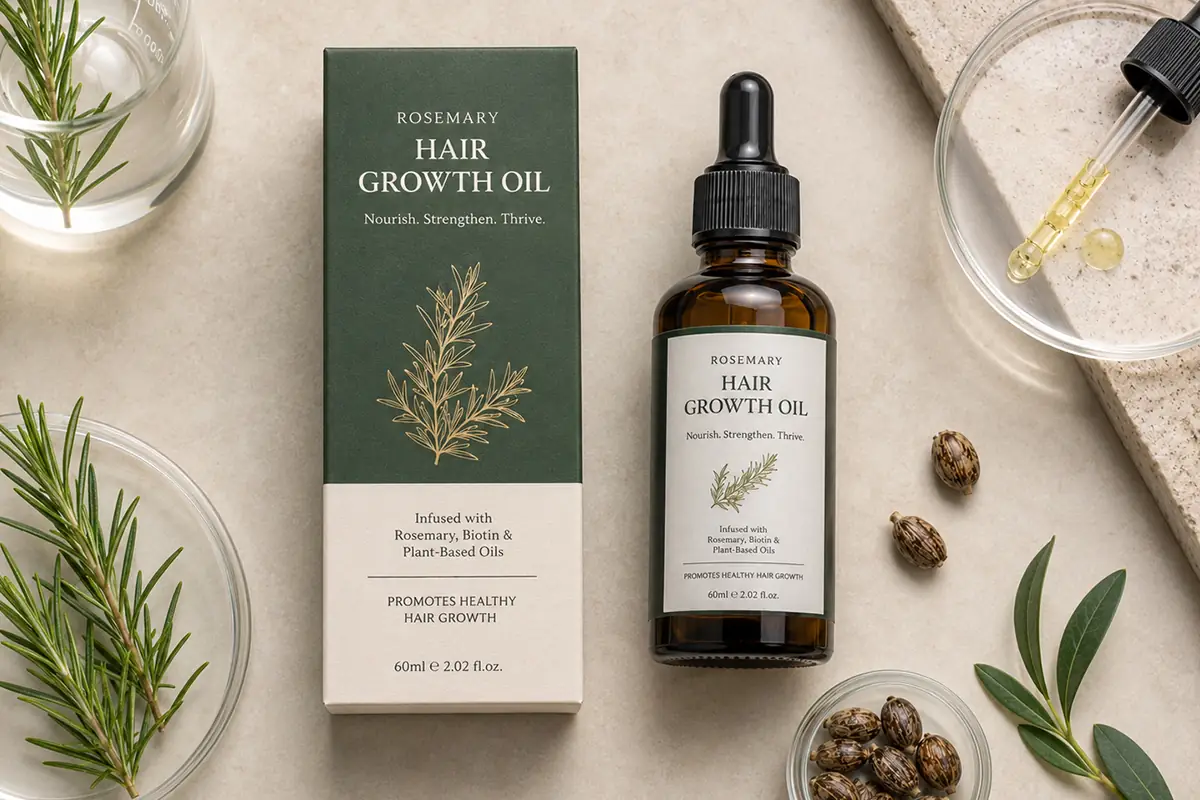
The combination of rosemary oil and biotin has become one of the most recognizable commercial formats in the hair growth oil category. “Rosemary & Biotin Hair Growth Oil” is easy for consumers to understand and works well across Amazon, TikTok Shop, DTC stores, salon retail, and natural hair care brands.
The formulation logic is simple. Rosemary oil provides the active scalp story, while biotin provides consumer recognition and a strengthening narrative. Topical biotin does not need to carry the entire efficacy story by itself; its role is to reinforce the perception of stronger-looking, healthier-looking hair.
For brands developing a low-risk, market-ready concept, rosemary + biotin is one of the most practical starting points. You can view our product direction here: Private Label Rosemary & Biotin Hair Growth Oil.
Rosemary Hair Oil Product Formats
| Product Format | Typical Rosemary Positioning | Best Carrier / System | Packaging | Best-Fit Brand Type |
|---|---|---|---|---|
| Leave-On Scalp Growth Oil | Daily scalp care, fuller-looking hair, density support | Jojoba, fractionated coconut, argan | 30ml dropper bottle | DTC, Amazon, salon retail |
| Rosemary + Biotin Hair Oil | Natural growth support and strengthening story | Jojoba, argan, castor blend | Dropper or pump bottle | Mass-premium and social commerce brands |
| Scalp Tonic / Spray | Lightweight scalp refresh and daily-use support | Water + solubilizer system | 100ml spray bottle | Men’s care, salon, lightweight scalp care |
| Pre-Wash Treatment Oil | Intensive scalp massage and natural hair ritual | Castor, argan, almond | Squeeze bottle or larger pump | Natural hair, textured hair, wellness brands |
| Serum-Oil Hybrid | Premium scalp active system with biotech ingredients | Emulsion or solubilized hybrid base | Airless dropper or pump | Premium scalp serum brands |
Claim Compliance for Rosemary Hair Growth Oil
This is one of the most important parts of private label rosemary hair oil development. Rosemary oil sits close to the cosmetic-drug boundary because consumers associate it with hair growth, hair loss, thinning hair, and minoxidil comparisons.
That does not mean brands cannot build a strong rosemary hair oil product. It means the formula story and the market-facing claims need to be handled separately.
Cosmetic-Safe Claim Direction
For most cosmetic hair oil projects, safer claim language usually focuses on scalp condition, hair appearance, strength, shine, and visible density.
- Formulated with rosemary oil to support a healthy scalp environment
- Supports the appearance of fuller, thicker-looking hair
- Helps hair look and feel stronger from root to tip
- Supports scalp care routines for healthier-looking hair
- Designed for scalp massage and visible hair density support
- Helps improve the appearance of weak, dry, or thinning-looking hair
Claims to Avoid Without Drug Registration
These claims may move the product into drug or therapeutic territory in many markets and should not be used casually on packaging, product pages, Amazon listings, or ads without regulatory review.
- Regrows hair
- Treats hair loss
- Treats androgenetic alopecia
- Reverses balding
- Stops hair fall permanently
- Works like minoxidil
- Clinically proven to treat hair loss
The educational article can discuss research, ingredients, and mechanisms, but the final product claim should stay within the cosmetic positioning approved for the target market.
For more guidance on ingredient positioning, see our article on hair care ingredients for private label brands.
Active Ingredient Combinations for Premium Rosemary Hair Growth Oils
Rosemary oil as a standalone active works well for the mass-premium market. For brands targeting a higher price point, a more advanced active system can make the product easier to differentiate.
Rosemary + Peppermint + Caffeine
This combination works well for scalp activation positioning. Rosemary provides the botanical scalp story, peppermint creates a cooling sensory signal, and caffeine adds a recognizable science-backed ingredient narrative. It is suitable for men’s scalp care, salon retail, and brands targeting weak or thinning-looking hair.
Rosemary + Castor + Biotin
This is a strong commercial combination for Amazon, TikTok Shop, and natural hair care brands. Castor oil gives richness and cultural familiarity in natural hair care, rosemary adds the modern scalp active story, and biotin supports the strengthening positioning.
Rosemary + GHK-Cu
This is a more premium direction. GHK-Cu is water-soluble, so it cannot simply be dropped into a pure oil base. It requires a serum-oil hybrid, emulsion system, or carefully designed delivery vehicle. When done correctly, rosemary + GHK-Cu can support a more advanced scalp serum positioning for brands that want biotech, peptide, and anti-aging scalp care language.
Rosemary + Centella Asiatica + Fermented Rice Water
This combination is suitable for K-beauty-inspired scalp care and wellness-oriented brands. Centella supports a soothing scalp story, while fermented rice water provides amino-acid-rich positioning and a stronger ingredient narrative than a basic oil blend.
Rosemary + Ginger + Botanical Extracts
For brands that want a stronger herbal scalp care identity, rosemary can be combined with ginger, angelica root, He Shou Wu, tea tree, or other botanical extracts. This direction works well for brands that want a more traditional botanical or plant-powered scalp care story.
Packaging for Rosemary Hair Growth Oil
Packaging is not only a visual choice. It affects formula stability, application experience, compatibility, and shelf life.
Dropper Bottle
A 30ml amber glass dropper bottle is one of the most common formats for premium rosemary scalp oils. It supports precise scalp application, protects light-sensitive ingredients, and creates a high-value product impression.
Pump Bottle
Pump bottles work well for larger-volume oils and easier daily application. For oil formulas, packaging compatibility should be tested carefully, especially when the essential oil level is high.
Spray Bottle
Spray bottles are suitable for scalp tonic formats, but the formula must be low-viscosity and properly solubilized. Rosemary oil in a water-containing formula requires a solubilizer system to prevent separation.
Squeeze Tube or Squeeze Bottle
These formats work better for thicker pre-wash treatment oils, especially castor-dominant blends. They are practical for intensive scalp massage and natural hair care rituals.
Before production, brands should confirm packaging compatibility, leakage risk, fragrance retention, color stability, and oxidation performance with their OEM manufacturer.

OEM Development Process for Rosemary Hair Growth Oil
A private label rosemary hair growth oil project should move through a clear process: product brief, formula direction, sampling, packaging confirmation, bulk production, quality control, and shipment. This helps brands manage development time, cost, claims, and product quality more confidently.
Stage 1: Project Brief and Requirement Review
The project starts with a discussion about your product idea, target market, expected order quantity, budget range, packaging preference, ingredient direction, and claim requirements. For rosemary hair oil, this may include whether you want a pure oil blend, scalp serum oil, pre-wash treatment, or rosemary + biotin / castor oil / peppermint concept.
After understanding the brief, we evaluate formula feasibility, packaging suitability, regulatory direction, and estimated cost, then provide an initial product concept and quotation.
Stage 2: Formula Recommendation, Packaging Selection, and Sampling
Our R&D team can recommend an existing mature formula or develop a customized rosemary hair oil formula based on your positioning. At the same time, you can choose from available bottles, droppers, pumps, labels, cartons, or customized packaging options.
For many oil-based hair care formulas, initial samples can usually be prepared within 1–3 days after the product direction is confirmed. Brands can review texture, aroma, scalp feel, absorption, oil residue, packaging appearance, and finished product presentation before approval.
Stage 3: Contract Confirmation and Production Preparation
Once the sample is approved, both sides confirm the final formula, packaging, artwork, price, payment terms, quality standard, delivery schedule, and production details. After the order and deposit are confirmed, raw materials and packaging materials are purchased or prepared for bulk production.
Before manufacturing starts, incoming materials are inspected to ensure they meet the approved quality and packaging requirements.
Stage 4: Bulk Production and Quality Control
Bulk production follows the approved formula and standard operating procedures, including raw material weighing, oil blending, filling, labeling, boxing, and carton packing. During production, the QC team checks appearance, aroma, color, filling volume, sealing, label position, and batch consistency.
For rosemary oil formulas, packaging compatibility and leakage control are especially important because essential oils and carrier oils must work well with the selected bottle, dropper, pump, or cap system.
Stage 5: Finished Product Inspection, Documentation, and Shipment
After production, finished products are inspected according to quality standards. This may include sensory checks, physical and chemical indicators, microbiological testing when applicable, packaging sealing checks, and retained samples for traceability.
Depending on the product and destination market, we can support documents such as COA, MSDS, CFS, product specification, ingredient list, export documents, and other required shipment materials. After release, the goods are shipped according to the agreed logistics plan.
Why Shangpinhui for Rosemary Hair Growth Oil OEM
Shangpinhui Biotechnology Co., Ltd. supports private label and custom OEM/ODM hair care projects for brands that want more than a simple stock oil blend. For rosemary hair growth oil development, our value is not only filling oil into bottles. We help brands connect formula design, ingredient positioning, packaging compatibility, claim direction, production control, and export documentation into one development workflow.
For brands building rosemary-based scalp care lines, we can support different product directions, including rosemary + biotin hair growth oil, lightweight scalp oils, pre-wash treatment oils, scalp serum-oil hybrids, botanical scalp treatments, and complete rosemary hair care systems with shampoo, conditioner, scalp spray, and hair oil.
Botanical and Herbal Scalp Formula Development
Our hair care formula development can include rosemary, ginger, Centella asiatica, tea tree, angelica root, He Shou Wu, fermented rice water, amino acids, peptides, and other scalp-positioned ingredients. This allows brands to build a stronger product story than a single botanical oil blend.
Serum-Oil Hybrid and Advanced Active Support
For premium scalp care products, we can help develop serum-oil hybrid formats that combine oil-soluble botanical ingredients with water-soluble actives such as peptides or fermented ingredients. This is especially useful for brands that want to move beyond basic hair oil and create a higher-value scalp treatment product.
Formula, Packaging, and Claim Coordination
A rosemary hair growth oil needs the formula, packaging, and claim language to work together. We can support formula selection, sample adjustment, packaging direction, label wording review, export documentation, and production planning based on your target market and sales channel.
Flexible OEM/ODM Manufacturing Support
Shangpinhui supports private label and custom hair care projects with MOQ from 1,000 units per SKU, formula sampling, packaging coordination, quality control, and documentation support including COA, MSDS, CFS, GMPC, ISO 22716, FDA support, and export documents.
To discuss a rosemary hair growth oil project, visit our private label hair growth oil manufacturer page or explore our private label hair care manufacturer service page.
Explore Related Hair Care Products
- Private Label Rosemary & Biotin Hair Growth Oil
- Private Label Hair Growth Serum
- Private Label Grow Hair Spray
- Private Label Strength Repair Shampoo
- Private Label Heat Protectant Hair Oil
Recommended Reading
- Private Label Hair Growth Oil Manufacturer: Scalp Oils, Rosemary Formulas, and Custom OEM Development
- Private Label Hair Care Manufacturers: Global Overview
- Hair Care Ingredients for Private Label Brands: Formula Direction Guide
- GHK-Cu vs Redensyl vs Capixyl: Hair Growth Ingredient Comparison
- Private Label Hair Care & Scalp Treatment Manufacturer
Frequently Asked Questions
What concentration of rosemary oil is effective in a hair growth oil?
For leave-on scalp oil concepts, many formulas are positioned around approximately 0.5%–2% rosemary oil in the finished product, depending on the full essential oil blend, target market, sensitivity requirements, and local compliance direction. Brands should ask the OEM manufacturer for the actual rosemary oil level instead of only confirming that rosemary appears on the ingredient list.
Can I claim that my rosemary hair oil works like minoxidil?
This claim should not be used on product packaging, ads, Amazon listings, or product pages without regulatory review. A clinical comparison between rosemary oil and 2% minoxidil is often discussed in ingredient education, but saying that a cosmetic product “works like minoxidil” may create a drug-like treatment claim. Safer cosmetic wording includes “supports the appearance of fuller-looking hair” and “supports a healthy scalp environment.”
Is rosemary oil safe for all hair types?
Rosemary oil can be used across many hair types, but it is still an essential oil and may not be suitable for every sensitive scalp. The final safety profile depends on concentration, supporting ingredients, fragrance level, use frequency, and formula type. Patch test guidance and proper formulation review are recommended for leave-on scalp products.
What is the best packaging for rosemary hair growth oil?
Amber glass dropper bottles are common for premium scalp oils because they support precise application and help protect light-sensitive oils. Pump bottles, spray bottles, and squeeze bottles can also be used depending on formula viscosity and product positioning. Packaging compatibility testing is important because essential oils can interact with some plastics over time.
Can I develop a rosemary hair oil and matching shampoo from the same OEM manufacturer?
Yes. Developing a complete rosemary scalp care system with one OEM partner can make the formula story more consistent. A brand can build a system around rosemary hair growth oil, rosemary shampoo, scalp spray, conditioner, and hair serum, while keeping ingredient positioning and documentation more organized.
Start Your Private Label Rosemary Hair Growth Oil Project
Whether you want a rosemary + biotin hair growth oil, a lightweight scalp oil, a pre-wash botanical treatment, or a premium serum-oil hybrid, Shangpinhui Biotechnology can help you develop a private label hair oil formula based on your target market, claim direction, packaging preference, and order quantity.
Contact us to discuss your formula direction, request samples, or develop a custom rosemary hair growth oil for your brand.