GHK-Cu, Redensyl, and Capixyl are often compared as if they are interchangeable hair growth ingredients. For private label brands, that is not the best way to look at them.
These three ingredients can all appear in hair growth support products, scalp serums, hair density serums, anti-hair-loss support formulas, and premium scalp care lines. But they do not tell the same product story. They do not fit the same cost structure. They do not always suit the same formula format. And they should not be used with the same claim language.
For a consumer, the question may be “which ingredient works best?” For a brand owner, salon founder, Amazon seller, or sourcing team, the better question is:
Which active ingredient fits your product positioning, formula format, target price, claim direction, and OEM/ODM development plan?
This guide compares GHK-Cu, Redensyl, and Capixyl from a private label formulation perspective. If you are still comparing broader scalp care, repair, anti-dandruff, and styling ingredients, our hair care ingredients for private label brands guide gives the full formula direction framework before you choose a hero active.
Quick Answer: GHK-Cu vs Redensyl vs Capixyl at a Glance
For private label brands, the easiest way to compare GHK-Cu, Redensyl, and Capixyl is not to ask which ingredient is “best” in general. The better question is which ingredient gives your product the clearest formula story.
| Comparison Point | GHK-Cu | Redensyl | Capixyl |
|---|---|---|---|
| Ingredient Type | Copper peptide / copper tripeptide-1 | Branded hair density active complex | Branded peptide + red clover extract complex |
| Core Mechanism Story | Scalp repair, microcirculation support, follicle environment support | Follicle stem cell activation, hair density support, growth-phase story | DHT-related support, root anchoring, extracellular matrix support |
| Brand Positioning | Premium anti-aging scalp care, repair-focused scalp serum | Functional hair density serum, clinical-style growth support line | Botanical peptide anti-thinning support, root-care scalp products |
| Best-Fit Format | Leave-on scalp serum, ampoule, scalp tonic, targeted scalp essence | Hair density serum, scalp tonic, spray serum, intensive scalp program | Scalp serum, anti-thinning tonic, peptide scalp spray, premium shampoo support line |
| Best Target Market | High-end scalp care, sensitive scalp support, skincare-inspired hair care | DTC hair growth serum, salon density treatment, performance scalp care | Men’s scalp care, anti-hair-loss support, botanical performance products |
| Cost Tier | Medium to high | High, branded active | Medium to high, branded active |
| Formulation Sensitivity | High: pH, oxidation, color shift, peptide stability, packaging | Moderate: supplier source, compatibility, use level, preservation | Moderate: botanical color/odor, peptide stability, compatibility |
| Cosmetic Claim Territory | Scalp environment support, stronger-looking hair, premium scalp repair story | Fuller-looking hair, improved hair density appearance, anti-thinning support | Reduced appearance of thinning hair, root-care support, fuller-looking hair |
| Best For Private Label Brands That Want | A premium peptide scalp serum with a high-end skincare feel | A performance-driven hair density serum with strong commercial appeal | A peptide + botanical anti-hair-loss support product with broader gender appeal |
Are GHK-Cu, Redensyl, and Capixyl Alternatives to Minoxidil?
They are often discussed in the same hair growth conversation, but they should not be treated as direct regulatory equivalents.
Minoxidil is regulated as a drug in many markets. GHK-Cu, Redensyl, and Capixyl are commonly used in cosmetic scalp care and hair density products as active ingredient directions for fuller-looking hair, scalp support, anti-thinning positioning, and hair growth support concepts.
For private label brands, this distinction matters. A cosmetic scalp serum can be commercially attractive without making drug-style claims. The formula, packaging, testing, and copywriting should all be aligned before production begins.
This is why many brands use GHK-Cu, Redensyl, Capixyl, caffeine, rosemary oil, niacinamide, panthenol, and botanical extract systems to build hair density or scalp care products, while carefully reviewing the final claim language for the target market.
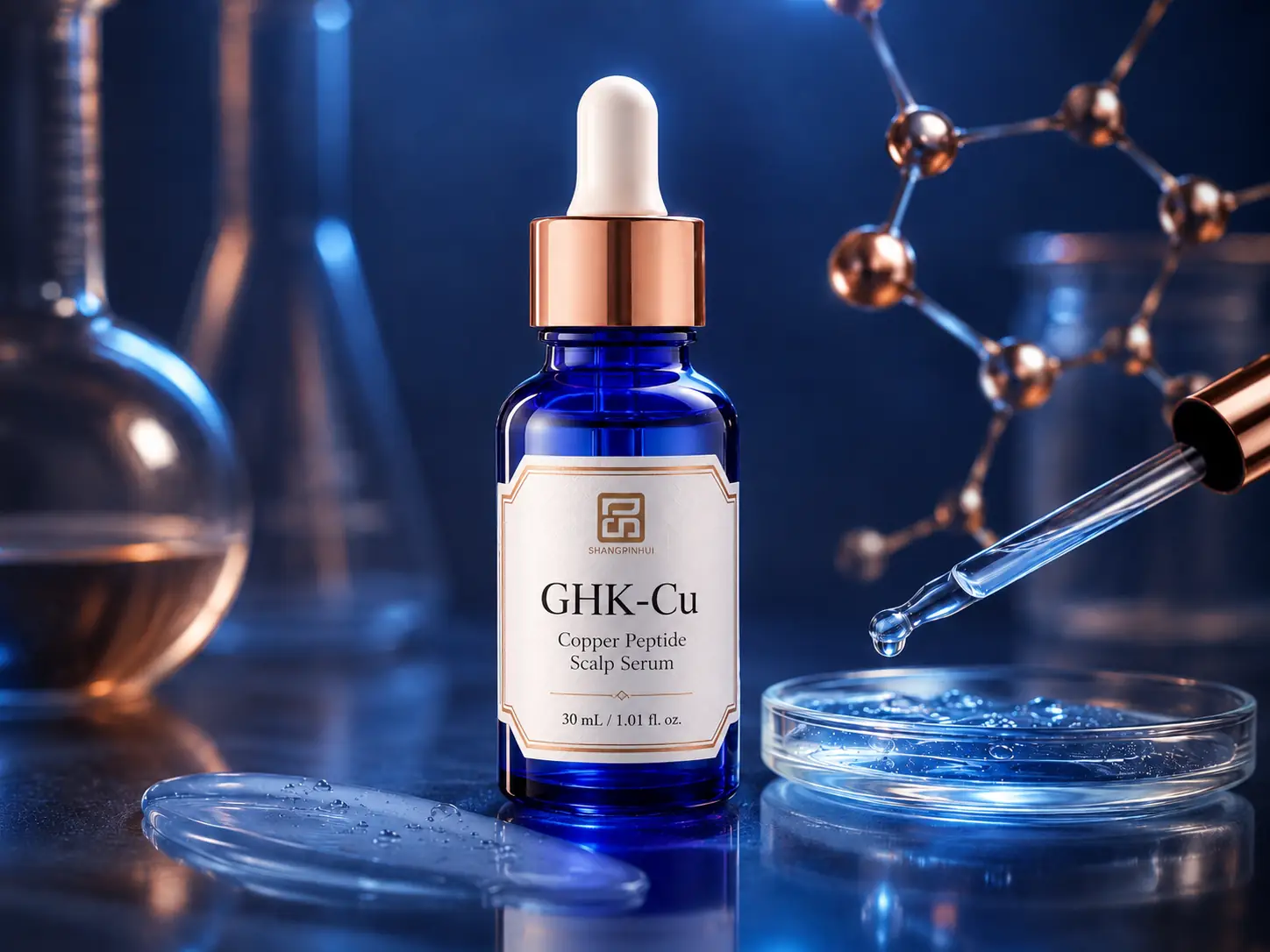
GHK-Cu: Best for Premium Scalp Repair and Peptide Care
GHK-Cu, often called copper tripeptide-1 or copper peptide, is familiar to many skincare brands because it is widely associated with premium anti-aging, repair-inspired, and skin revitalization concepts. In hair care, it has moved into scalp serums and peptide scalp treatments because consumers increasingly understand the idea that “scalp is skin.”
For private label hair care, GHK-Cu is not usually the best ingredient for a low-cost mass-market shampoo. It is more suitable for premium leave-on scalp products where the brand wants a high-value ingredient story.
Best Positioning for GHK-Cu
GHK-Cu works best when the brand wants to communicate scalp care, peptide technology, scalp vitality, and stronger-looking hair from the root area. It fits well into skincare-inspired scalp care, scalp anti-aging concepts, and premium hair density serum lines.
A GHK-Cu scalp serum can be positioned as more advanced than a simple rosemary oil or biotin shampoo. It is especially suitable for brands that already sell premium skincare or want to extend their skincare authority into scalp care.
OEM Formulation Notes for GHK-Cu
GHK-Cu requires careful formula design. The OEM/ODM manufacturer should consider pH, oxidation, heat exposure, color shift, preservative system, packaging, and compatibility with other active ingredients. It is usually better suited to leave-on products than rinse-off shampoos if it is the hero ingredient.
In private label development, GHK-Cu is often paired with supporting ingredients such as panthenol, niacinamide, hyaluronic acid, amino acids, Centella-style soothing systems, or mild botanical extracts. These combinations help build a premium scalp care story without relying on drug-style hair regrowth claims.
Best formats: GHK-Cu scalp serum, peptide scalp ampoule, premium hair density serum, scalp care essence, targeted scalp applicator product.
Redensyl: Best for Hair Density and Performance Growth Support
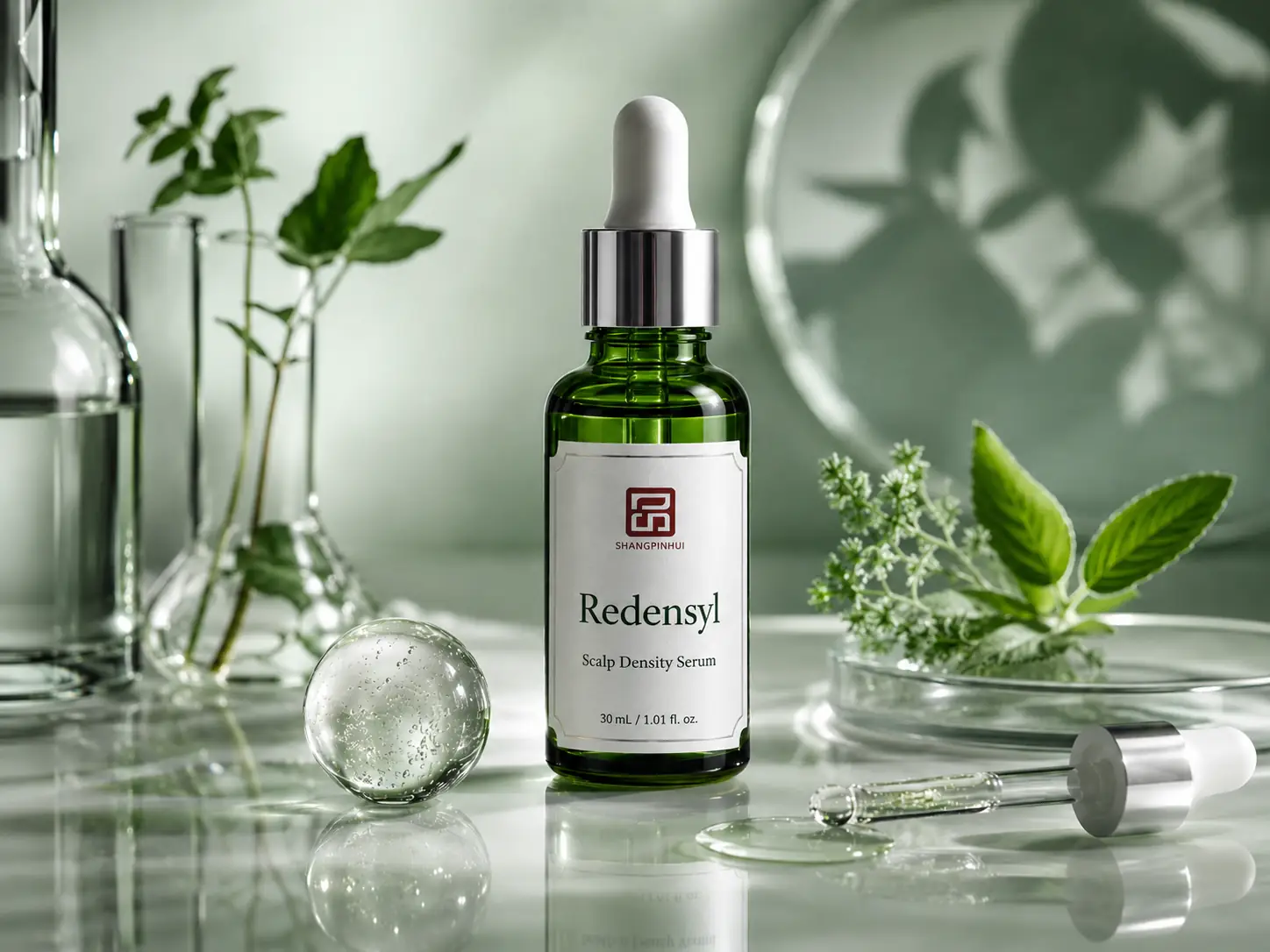
Redensyl is a well-known trademarked active used in hair density and anti-thinning support products. Compared with GHK-Cu, Redensyl has a more direct performance-driven hair care story. It is often used by brands that want to build a product around hair density, fuller-looking hair, and intensive scalp serum positioning.
For private label brands, Redensyl is commercially attractive because it is already recognized in many hair growth serum and scalp tonic conversations. It can make a product feel more technical and performance-oriented than a basic botanical blend.
Best Positioning for Redensyl
Redensyl is a strong fit for hair density serums, anti-thinning support products, intensive scalp programs, and ecommerce-friendly hair growth support lines. It works especially well when a brand wants the product to feel science-backed, modern, and performance focused.
If your brand is targeting consumers who are already searching for hair growth serum, scalp serum, thinning hair products, or density support formulas, Redensyl can be a clear hero active.
OEM Formulation Notes for Redensyl
Redensyl should be sourced from a reliable supplier and used according to supplier documentation. The brand should ask the OEM manufacturer to confirm the active source, INCI information, recommended use level, stability data, and compatibility with the planned formula system.
It is usually more meaningful in leave-on formats such as scalp serum, tonic, or spray serum than in rinse-off shampoo. Shampoo can support the product line, but the strongest Redensyl product story usually comes from a leave-on scalp treatment.
Best formats: Redensyl scalp serum, hair density serum, anti-thinning support tonic, leave-on scalp spray, intensive scalp program.
Capixyl: Best for DHT-Related Support and Root Anchoring
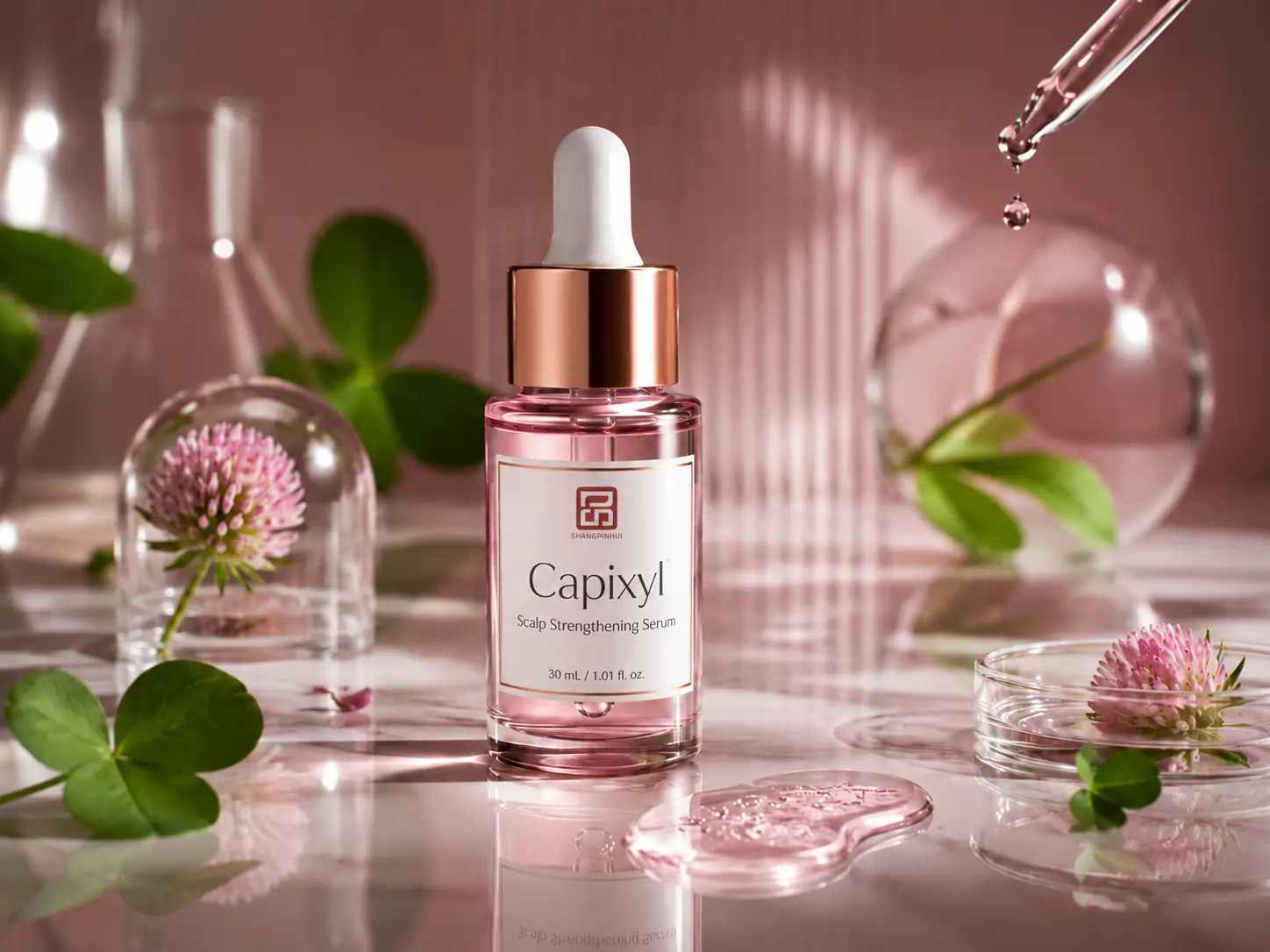
Capixyl is commonly positioned as a peptide + botanical active complex. Its ingredient story combines biomimetic peptide technology with red clover extract, which makes it attractive for brands that want both a science-driven and plant-based scalp care narrative.
Compared with Redensyl, Capixyl often feels softer and more botanical in brand storytelling. Compared with GHK-Cu, it is usually easier to position in both men’s and women’s anti-thinning support products because its story connects peptide technology, root care, scalp environment, and fuller-looking hair.
Best Positioning for Capixyl
Capixyl is useful for brands building anti-hair-loss support products, root-care scalp serums, fuller-looking hair formulas, and men’s scalp care lines. It can also work in gender-neutral scalp care products where the brand wants a botanical-performance ingredient story rather than a purely clinical one.
For brands that want to avoid a harsh or medical-looking image, Capixyl can support a more balanced message: peptide technology plus botanical scalp care.
OEM Formulation Notes for Capixyl
Capixyl should also be used according to supplier guidance. In formulation, the OEM/ODM team should review pH, preservative compatibility, botanical extract stability, fragrance impact, packaging compatibility, and final claim direction.
Capixyl can be used as a hero active or paired with Redensyl, caffeine, niacinamide, panthenol, rosemary extract, or mild scalp-soothing ingredients. If the brand is building a premium anti-thinning serum, the Redensyl + Capixyl combination is often easier to understand for consumers than a long list of unrelated actives.
Best formats: Capixyl scalp serum, anti-thinning support tonic, peptide botanical scalp spray, men’s scalp care serum, premium shampoo support line.
GHK-Cu vs Redensyl vs Capixyl: Full B2B Comparison
For private label brands, ingredient comparison should go beyond mechanism. The more important question is how each active fits the product’s price point, format, claim direction, packaging, and target market.
| Brand Decision Factor | GHK-Cu | Redensyl | Capixyl |
|---|---|---|---|
| Best Brand Type | Premium skincare-inspired scalp care brand | Performance hair density or anti-thinning serum brand | Natural-performance, peptide botanical, or men’s scalp care brand |
| Best Hero SKU | Peptide scalp serum or ampoule | Hair density serum or intensive scalp tonic | Anti-thinning support serum or root-care scalp product |
| Best Support SKU | Scalp mask, repair shampoo, soothing scalp spray | Caffeine shampoo, scalp spray, density support set | Men’s shampoo, scalp oil, botanical tonic, anti-dandruff support product |
| Best Claim Direction | Supports scalp vitality and stronger-looking hair | Improves the look of hair density and fuller-looking hair | Supports root care, fuller-looking hair, and anti-hair-loss support positioning |
| Best Price Tier | Premium / high-end | Mid-premium / performance-focused | Mid-premium / botanical-performance |
| Formula Difficulty | Higher due to peptide stability and oxidation concerns | Medium; supplier source and compatibility need review | Medium; botanical and peptide system need stability review |
| Best Packaging | Airless bottle, dropper, ampoule, targeted scalp applicator | Dropper, scalp nozzle, spray serum, tonic bottle | Dropper, scalp nozzle, spray serum, premium shampoo bottle |
Which Ingredient Should Private Label Brands Choose?
There is no single “best” ingredient for every brand. The right choice depends on the customer group, price tier, claim direction, product format, and whether the brand wants a simple hero ingredient or a multi-active scalp care system.
Choose GHK-Cu for Premium Peptide Scalp Care
Choose GHK-Cu if your brand wants a premium, skincare-inspired scalp care product. It is a strong fit for brands that already sell anti-aging skincare, barrier repair products, peptide serums, or luxury scalp care products.
The product story can focus on scalp vitality, peptide technology, stronger-looking hair, scalp comfort, and high-end daily scalp care.
Choose Redensyl for Performance Hair Density Positioning
Choose Redensyl if your brand wants a clearer performance-driven hair density serum. It is suitable for ecommerce brands, salon professional lines, and anti-thinning support products that need a strong hero active.
Redensyl is especially useful when your product needs to communicate fuller-looking hair, visible density support, intensive scalp care, and a more technical formula direction.
Choose Capixyl for Peptide + Botanical Anti-Thinning Support
Choose Capixyl if your brand wants to combine botanical positioning with peptide technology. It works well for men’s scalp care, gender-neutral anti-hair-loss support products, root-care formulas, and natural-performance hair density concepts.
Capixyl can also be useful when the brand wants a softer, less clinical story than Redensyl, while still keeping the product positioned as active-driven and premium.
Choose a Multi-Active Formula for a Premium Scalp Serum
Mature brands often do not choose only one active. A premium hair growth support serum may combine Redensyl, Capixyl, caffeine, niacinamide, panthenol, botanical extracts, or a GHK-Cu peptide system depending on the product positioning.
The important point is not to add every trending ingredient at once. The formula should have a clear hierarchy: one or two hero actives, supporting scalp care ingredients, a stable base, suitable packaging, and claim language that the brand can defend.
If your brand is planning an oil-based route rather than a water-based serum, our private label hair growth oil manufacturer guide covers rosemary oil, castor oil, peppermint oil, botanical oil blends, and scalp massage oil positioning in more detail.
Can GHK-Cu, Redensyl, and Capixyl Be Used Together?
Yes, they can be used together in some premium scalp serum concepts, but that does not mean every brand should combine all three.
A multi-active formula can look impressive on a product page, but it also increases raw material cost, compatibility pressure, stability risk, and claim complexity. The formula may become harder to preserve, harder to stabilize, and harder to explain if the brand adds too many hero ingredients without a clear product strategy.
A more practical approach is to define the product concept first:
- Premium peptide scalp serum: GHK-Cu + niacinamide + panthenol + soothing botanical system
- Hair density serum: Redensyl + caffeine + niacinamide + lightweight scalp base
- Peptide botanical anti-thinning serum: Capixyl + Redensyl + botanical extract complex
- Men’s scalp care line: Capixyl + zinc PCA + caffeine + anti-dandruff support system
- Scalp-first sensitive line: GHK-Cu or niacinamide + Centella-style soothing system + mild scalp care base
The best formula is not always the one with the longest ingredient list. It is the one where the hero actives, texture, packaging, target customer, and claim direction all support the same product story.
Claim Direction: What Private Label Brands Should Be Careful About
Hair growth is one of the most commercially attractive directions in scalp care, but it is also one of the most sensitive claim areas.
In some markets, a product that claims to treat hair loss, regrow hair, reverse baldness, or medically stimulate hair follicles may be reviewed differently from a normal cosmetic hair care product. This is especially important for private label brands selling across the US, EU, Middle East, Southeast Asia, or other export markets.
That does not mean brands cannot build effective and attractive hair growth support products. It simply means the product story needs to be carefully constructed around cosmetic claim language, formula positioning, testing support, and market-specific compliance.
Safer wording for private label cosmetic hair care brands may include:
- Supports a healthy-looking scalp environment
- Helps hair look thicker and fuller
- Improves the appearance of hair density
- Supports stronger-feeling hair from the root area
- Helps reduce the appearance of weak, brittle hair
- Refreshes and balances the scalp
- Designed for daily scalp care and hair density support routines
Stronger medical-style claims should usually be reviewed carefully before use, especially claims such as:
- Treats hair loss
- Regrows hair
- Cures baldness
- Stops alopecia
- Blocks DHT completely
- Guarantees new hair growth
- Works like a drug treatment
A responsible OEM/ODM manufacturer should guide brands to review claim wording, formula direction, product format, packaging, testing support, and target market requirements before moving into bulk production.
OEM/ODM Formulation Notes for Private Label Brands
Choosing GHK-Cu, Redensyl, or Capixyl is only the beginning. The final product still needs a stable base, suitable packaging, compatible support ingredients, reliable raw material sourcing, and claim-support documentation.
Before sampling, brands should ask their manufacturer:
- Is the active ingredient from an authorized or reliable supplier?
- What is the recommended use level based on supplier documentation?
- Is the active suitable for the target pH and formula base?
- Is the product leave-on or rinse-off, and does that match the claim direction?
- Will the formula be packed in a dropper, airless bottle, spray, scalp nozzle, tube, or jar?
- Has the manufacturer reviewed preservation, oxidation, color change, viscosity, and packaging compatibility?
- What documents can be provided for export markets, such as COA, MSDS, specifications, or stability support?
Shangpinhui Biotechnology Co., Ltd. supports OEM/ODM hair care development for brands building scalp serums, hair growth support oils, anti-dandruff shampoos, repair masks, leave-in sprays, and multi-active scalp care systems.
Our hair care formulation direction is built around scalp-first formula logic, botanical decoction extracts, fermentation-derived actives, Centella-based soothing systems, anti-dandruff active systems, and moisturizing film-forming technologies. These systems can be used to develop complete product lines rather than disconnected single SKUs.
For example, a brand may build a system around a scalp serum, a supporting shampoo, a leave-in spray, and a hair mask. This allows the hero ingredient story to remain consistent while each product format performs a different role in the routine.
Brands planning a complete product line can review our private label hair care product development capabilities to see how shampoo, conditioner, hair oil, scalp serum, repair mask, anti-dandruff care, and styling products can be organized into a private label hair care range.
Final Recommendation: Which One Is Best?
GHK-Cu, Redensyl, and Capixyl are all valuable hair growth support ingredients, but they are not the same tool.
- Choose GHK-Cu if your brand wants a premium peptide scalp serum or skincare-inspired scalp care product.
- Choose Redensyl if your brand wants a performance-driven hair density serum or intensive anti-thinning support product.
- Choose Capixyl if your brand wants a peptide + botanical scalp care story with fuller-looking hair and root-care positioning.
- Choose a multi-active system if your brand is building a premium scalp serum line and has the budget for stronger formulation, stability, and claim-support work.
For private label brands, the best choice is not only about the ingredient name. It is about the formula system, the product format, the target consumer, the price point, the claim wording, and the manufacturer’s ability to turn the concept into a stable finished product.
Recommended Reading
- Private Label Hair Care Manufacturers: Global Overview
- Top Private Label Hair Care Manufacturers in Europe
- Top Private Label Hair Care & Shampoo Manufacturers in the USA
- Hair Care Ingredients for Private Label Brands
- Private Label Hair Growth Oil Manufacturer
Frequently Asked Questions
Is GHK-Cu better than Redensyl for hair growth products?
Not necessarily. GHK-Cu is better suited for premium peptide scalp care, scalp repair-inspired positioning, and skincare-like scalp serums. Redensyl is usually easier to position as a performance hair density active. For private label brands, the better choice depends on product format, price point, claim direction, and the target customer.
What is the difference between Redensyl and Capixyl?
Redensyl is commonly positioned around hair density, fuller-looking hair, and performance scalp serum concepts. Capixyl combines peptide and botanical positioning, making it suitable for root-care, anti-thinning support, and fuller-looking hair products. Redensyl often feels more clinical and performance-driven, while Capixyl can feel more botanical and natural-performance oriented.
Can GHK-Cu, Redensyl, and Capixyl be used in one private label serum?
They can be used together in some premium scalp serum concepts, but the formula must be carefully designed. The manufacturer should review active compatibility, pH, preservation, oxidation, viscosity, packaging, stability, and final claim language. A multi-active formula may be attractive, but it should still have a clear hero ingredient hierarchy.
Can these ingredients be used in shampoo?
They can appear in shampoo concepts, but rinse-off products have shorter contact time than leave-on scalp serums. If GHK-Cu, Redensyl, or Capixyl is the hero active, a leave-on scalp serum, tonic, spray, or ampoule usually gives a stronger product story. Shampoo can still support the overall hair growth support line as a companion SKU.
Are GHK-Cu, Redensyl, and Capixyl cosmetic ingredients or drug ingredients?
They are commonly used in cosmetic scalp care and hair density products, but final classification depends on the market, formula, claim wording, and product positioning. Brands should avoid drug-style claims unless the product is being developed under the correct regulatory pathway. Cosmetic claim language should focus on scalp support, fuller-looking hair, hair density appearance, and stronger-feeling hair.
What should brands ask an OEM manufacturer before using these actives?
Brands should ask about supplier source, recommended use level, active concentration, pH compatibility, formula stability, preservation system, packaging compatibility, COA, MSDS, specifications, testing support, and claim wording. For export markets, brands should also confirm whether the formula and product claims match local cosmetic regulations.
What is the MOQ for private label hair growth serum manufacturing?
MOQ depends on formula type, packaging, active ingredients, customization level, and the manufacturer’s production model. Stock or semi-custom formulas usually have lower MOQ than fully custom formulas. Premium actives such as GHK-Cu, Redensyl, and Capixyl may also affect cost and minimum order planning because of raw material sourcing and stability requirements.