Australia is a strong market for private label face serum development, especially for brands focused on clean beauty, active skincare, native botanical ingredients, premium packaging, and Australian-made positioning.
However, choosing a serum manufacturer in Australia is not only about finding a local skincare factory. Face serums are more technically demanding than basic moisturizers or cleansers. Brands need to compare active ingredient systems, stability testing, packaging compatibility, regulatory claim boundaries, MOQ, sampling speed, and whether a local Australian supplier is the best fit — or whether a global OEM/ODM manufacturer may offer more formula flexibility and faster development.
This guide compares 8 private label face serum manufacturers in Australia and explains what to check before choosing a partner for brightening, anti-aging, hydrating, barrier repair, or custom OEM serum projects.
Building a serum project beyond Australia? You can also review our private label face serum manufacturer guide for formula types, MOQ, packaging, development process, and OEM/ODM planning.
Quick Comparison: Top Private Label Face Serum Manufacturers in Australia
| Manufacturer | Best Fit | Main Strength |
|---|---|---|
| Cellular Cosmetics | Low-MOQ private label serum and ready-to-brand active skincare | Fast private label serum options and active skincare product range |
| New Laboratories | Retail-ready beauty and personal care product development | Strong product development, retail exposure, and speed-to-market support |
| Auskin Lab | Custom skincare formulation and GMP-certified serum manufacturing | ISO 22716 GMP facility and organic formulation direction |
| Personal Care Innovations | Serums, creams, cleansers, masks, and certified organic skincare | Melbourne-based ISO 22716 Cosmetic GMP facility |
| Australian Private Label | Skincare, haircare, SPF, supplements, and multi-category development | Product development, formulation, testing, and production in Australia |
| My Skincare Manufacturer | Low-MOQ private label and custom skincare production | ISO 22716 cosmetic GMP and startup-friendly manufacturing |
| Imaginelle | Skincare, haircare, personal care, R&D, filling, packaging, and QC | End-to-end cosmetic manufacturing from a GMP ISO 22716 facility |
| Private Label Cosmeceuticals Australia | Clinical-grade private label skincare and active serum concepts | Evidence-based cosmeceutical positioning and high-performance serum range |
Why Australia Is Attractive for Private Label Face Serum Brands
Market Size and Active Skincare Demand
Australia has a mature beauty and personal care market. According to Expert Market Research, the Australia beauty and personal care market stood at AUD 17.25 billion in 2025 and is expected to continue growing over the next decade. Within this broader market, face serums remain a high-value category because they connect directly with consumer demand for targeted active ingredients, brightening, anti-aging, hydration, and functional skincare routines.
For brands, serum is often the product that carries the clearest efficacy story. A cleanser may introduce the routine, but a serum is usually where consumers expect visible benefits, stronger actives, and a premium price point.
Native Botanical Ingredient Story
Australia also has a strong ingredient story around native botanicals. Ingredients such as Kakadu plum, tea tree, eucalyptus, quandong, Davidson plum, and finger lime can support clean beauty, botanical, brightening, antioxidant, and sensitive-skin positioning when used appropriately.
Kakadu plum is especially relevant for brightening and antioxidant serum concepts because it is widely recognized as one of the richest natural sources of vitamin C. For private label brands, this creates a strong local ingredient story that can be paired with more stable vitamin C derivatives, niacinamide, peptides, hyaluronic acid, or other functional actives.
AICIS, TGA, and Regulatory Context
In Australia, standard cosmetic face serums are generally assessed through the cosmetic and industrial chemicals framework, including AICIS requirements for ingredients introduced into the Australian market. However, product classification depends on the formula, ingredients, intended use, and market-facing claims.
A moisturizing, brightening, hydrating, or anti-aging serum with cosmetic claims may remain within the cosmetic pathway. However, serum products with SPF claims, therapeutic claims, acne-treatment claims, or drug-like positioning may fall under a different regulatory pathway and may require review under TGA requirements. Brands should confirm the correct classification before launch, especially when using high-active formulas, sunscreen claims, strong pigmentation-related language, or before-after advertising.
What to Check Before Choosing an Australian Face Serum Manufacturer
Before choosing a private label face serum manufacturer in Australia, brands should compare practical development requirements rather than only looking at company size or location.
Serum Category Experience
A face serum is different from a basic cream or lotion. It may require higher active ingredient levels, a lighter skin feel, better viscosity control, stronger compatibility with dropper or pump packaging, and a more careful stability strategy.
Formula Direction
Brands should clarify whether they need a whitening serum, brightening serum, vitamin C serum, peptide serum, hyaluronic acid serum, anti-aging serum, barrier repair serum, microbiome serum, or multi-active serum. Each direction has different formulation risks and documentation needs.
MOQ and Launch Speed
Some Australian manufacturers are more suitable for low-MOQ private label launches, while others are better for custom formulation, larger production, or premium retail projects. The right partner depends on whether the brand is testing one SKU or building a full skincare line.
Packaging Compatibility
Serums are often filled into glass droppers, airless pumps, ampoules, tubes, or pump bottles. Active ingredients such as vitamin C, retinol alternatives, peptides, essential oils, and botanical extracts may require packaging compatibility checks before launch.
Claims and Documentation
Australia has a clear distinction between cosmetic claims and therapeutic claims. A supplier may help with formulation and basic documentation, but final claim wording, product classification, and market compliance should be reviewed carefully before the product is sold.
Top 8 Private Label Face Serum Manufacturers in Australia
1. Cellular Cosmetics
Best for: low-MOQ private label serum, ready-to-brand active skincare, and fast product testing.
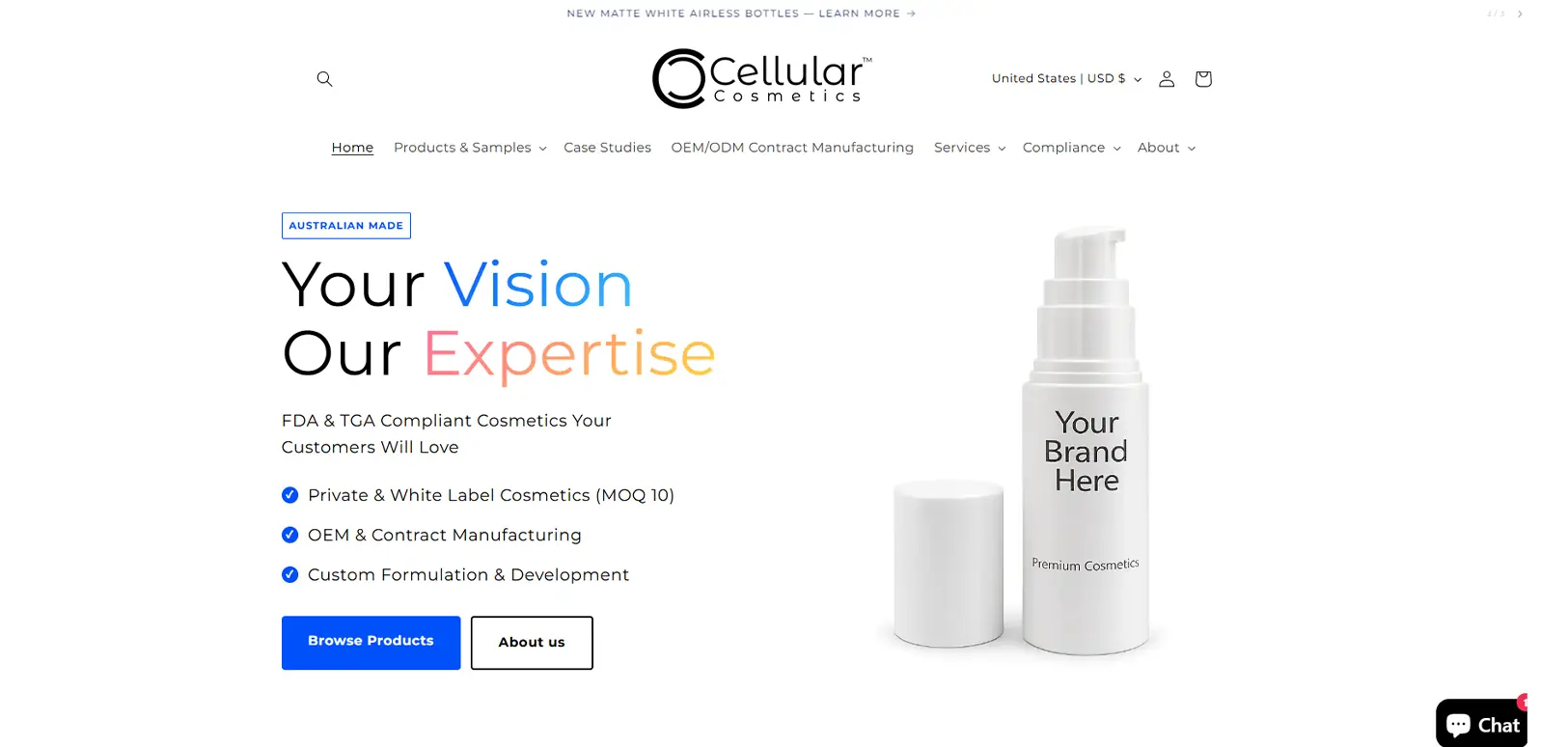
Cellular Cosmetics is an Australian private label cosmetic manufacturer with a ready-to-brand product range that includes active skincare products and serum-style formulas such as copper peptide serum and hyaluronic acid gel. Its website emphasizes private label cosmetics, low MOQ, and innovative cosmetic products.
This makes Cellular Cosmetics a practical option for brands that want to test an Australian-made serum concept without starting from a fully custom formula. It may be especially useful for small brands, clinics, beauty professionals, and online sellers that want a faster route to market.
Best-fit brand type: early-stage skincare brands, aesthetic clinics, small DTC brands, and businesses that want low-MOQ private label serums with a ready product base.
2. New Laboratories
Best for: retail-ready beauty concepts, speed-to-market programs, and multi-category cosmetic development.
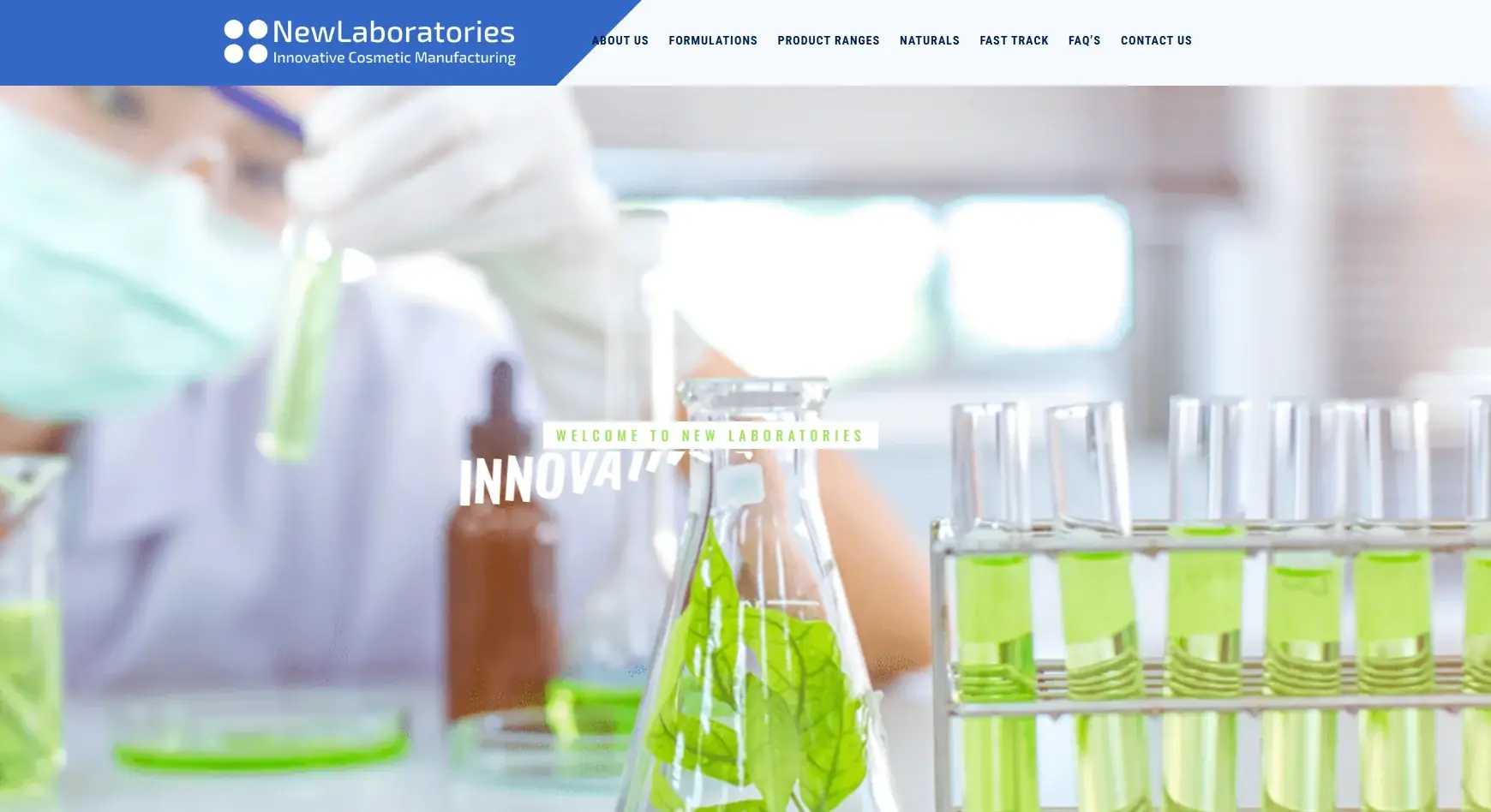
New Laboratories is an Australian cosmetic contract manufacturer with product development capabilities across beauty and personal care. Its website highlights product development, formulations, skincare, hair care, makeup, baby care, specialty cosmetics, natural products, GMP, and FDA-related support for MoCRA.
For face serum brands, New Laboratories may be suitable when the project needs stronger commercial product development rather than only simple filling. It is particularly relevant for brands thinking about retail, hero products, full collections, and faster launch programs.
Best-fit brand type: beauty startups with retail ambitions, established brands building new collections, and companies that need development support from concept to finished product.
3. Auskin Lab
Best for: custom skincare formulation, GMP-certified manufacturing, and organic or premium serum concepts.
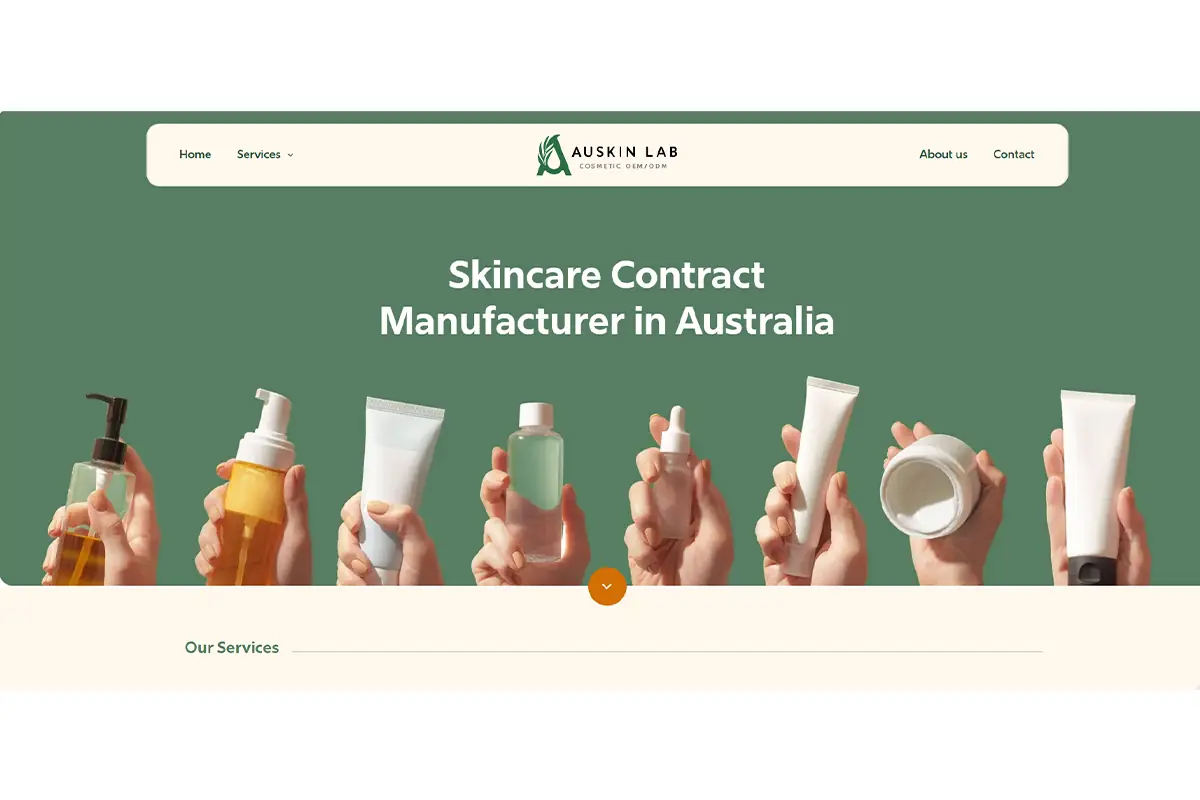
Auskin Lab is an Australian skincare contract manufacturer with an ISO 22716 GMP-certified facility. Its formulation development page highlights custom skincare formulation, body care, and pet care products tailored to brand-specific requirements.
For serum projects, Auskin Lab may be relevant for brands that need a custom formula direction rather than a ready-made serum base. It is a stronger fit for companies that want more control over texture, actives, ingredient story, packaging direction, and product positioning.
Best-fit brand type: premium skincare brands, natural or organic-oriented brands, and companies that need custom serum development under GMP manufacturing standards.
4. Personal Care Innovations
Best for: serums, creams, masks, cleansers, organic positioning, and controlled skincare manufacturing.
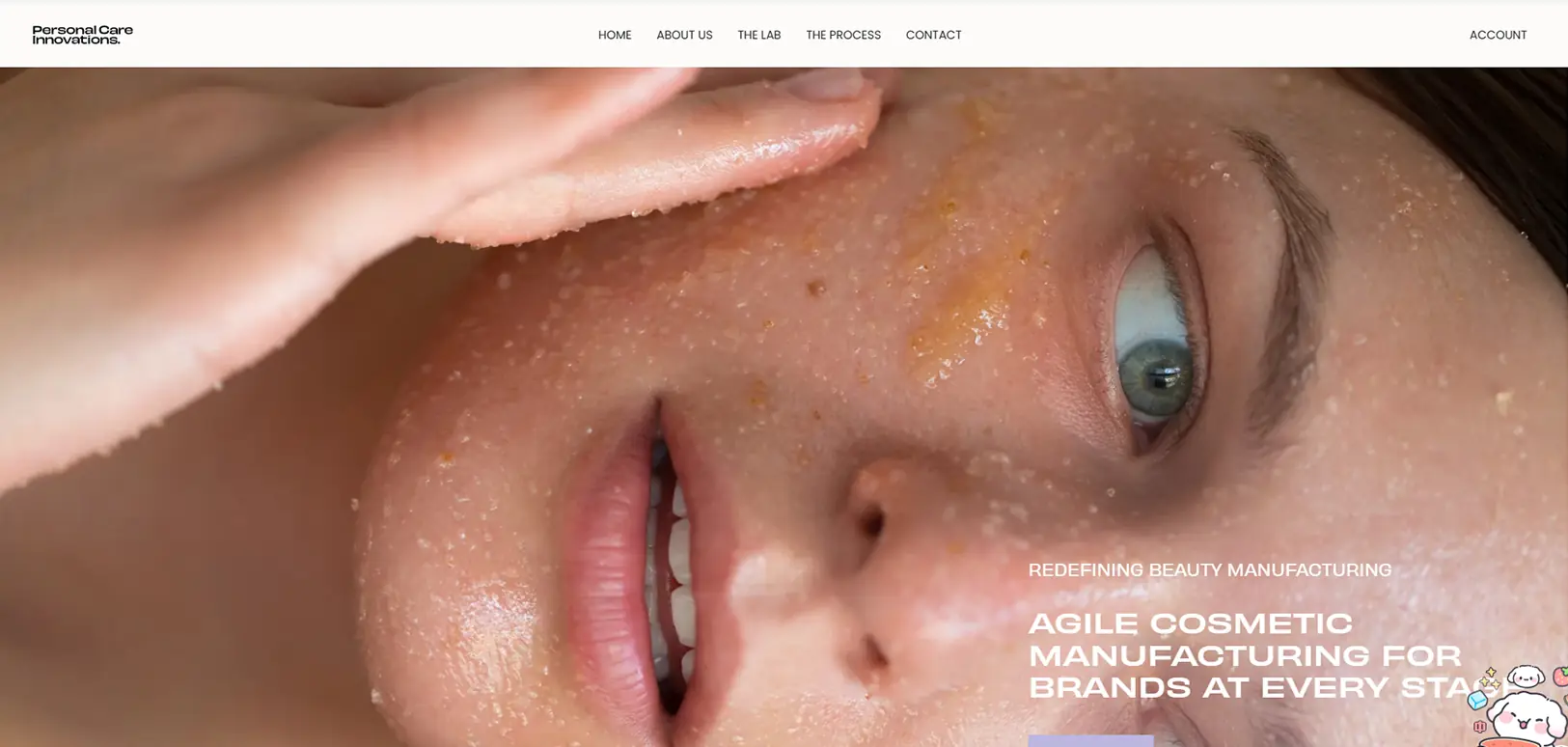
Personal Care Innovations operates a Melbourne-based skincare facility aligned with ISO 22716 Cosmetic GMP. Its skincare manufacturing page specifically references creams, serums, and treatments produced in a controlled environment, along with COSMOS and ACO organic certifications.
This makes PCI a strong option for brands that want Australian-made skincare with a more controlled manufacturing story. For face serum projects, it may be especially suitable for brands focused on quality consistency, organic positioning, and product safety standards.
Best-fit brand type: organic skincare brands, clean beauty brands, premium private label serum projects, and companies that need GMP-aligned production for serums and treatments.
5. Australian Private Label
Best for: multi-category product development, skincare manufacturing, SPF, hair care, and custom formulation projects.
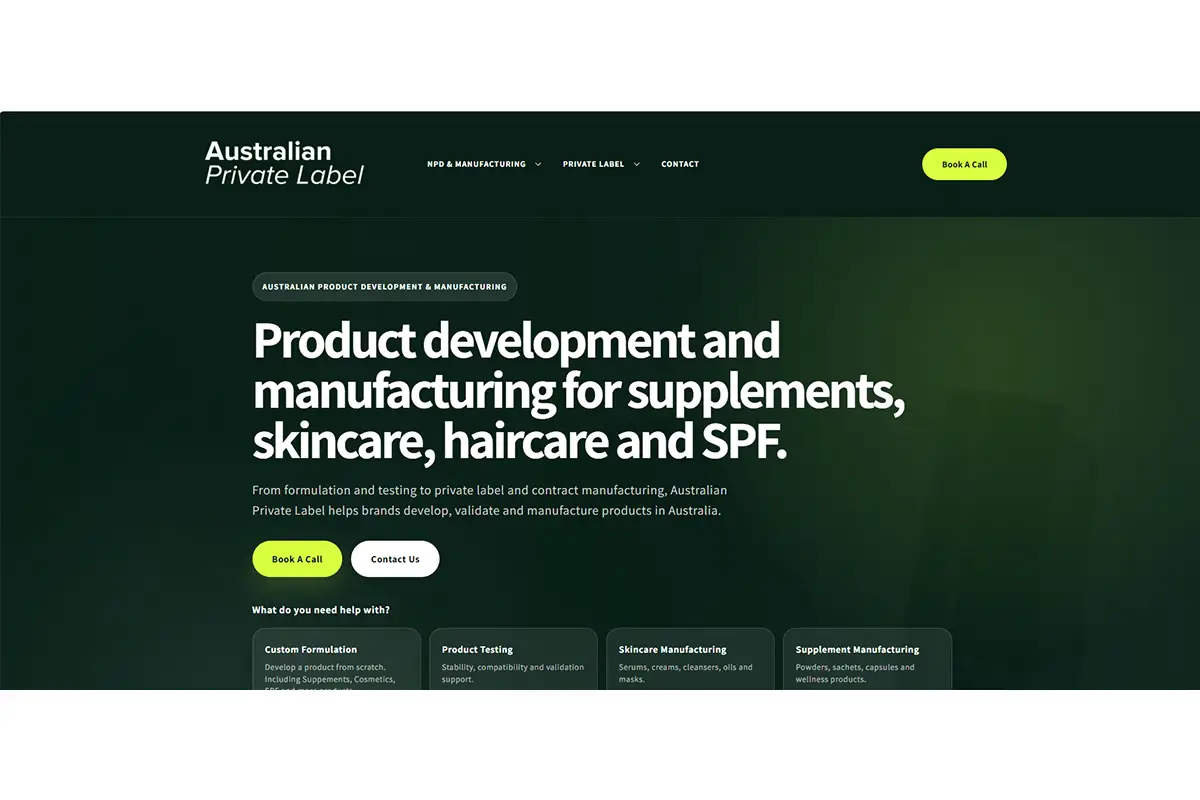
Australian Private Label supports product development and manufacturing across skincare, haircare, SPF, supplements, and related categories. Its website describes formulation, testing, private label, contract manufacturing, and production support in Australia.
For face serum brands, this type of partner may be useful when the project is not limited to one serum SKU. Brands planning a broader line — for example, serum, cleanser, moisturizer, SPF, and hair care — may prefer a manufacturer with multi-category development capability.
Best-fit brand type: brands building wider skincare or personal care portfolios, retailers, DTC startups, and companies that need formulation, testing, and production support from one supplier.
6. My Skincare Manufacturer
Best for: low-MOQ private label skincare, startup-friendly manufacturing, and scalable custom production.
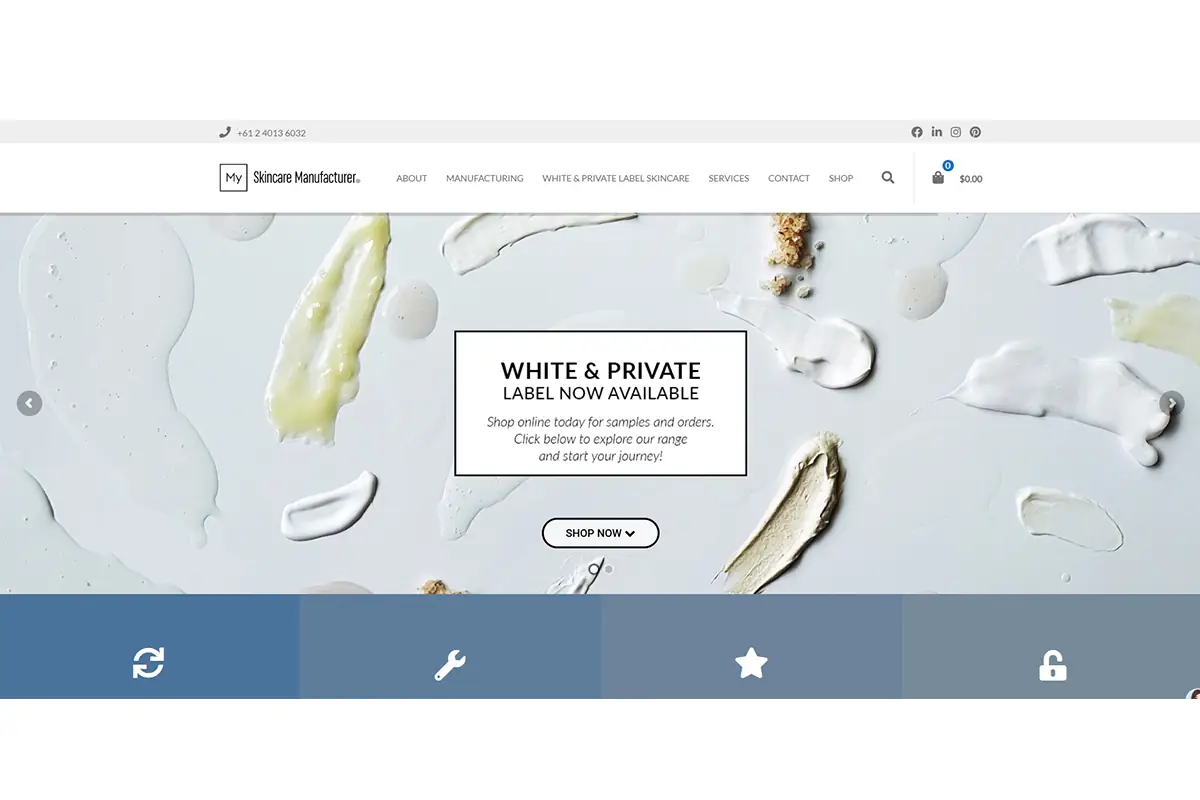
My Skincare Manufacturer offers contract skincare manufacturing in Australia and highlights low MOQs, ISO 22716 cosmetic GMP, natural ingredients, confidentiality, and the ability to scale production for growing brands.
For face serum projects, this supplier may be a good option for brands that want Australian-made private label or custom formulation support without immediately committing to very large volumes. It can be a practical fit for startups that want quality systems and flexibility.
Best-fit brand type: startup skincare brands, small online brands, boutique beauty businesses, and companies that want low-MOQ Australian skincare manufacturing.
7. Imaginelle
Best for: end-to-end cosmetic manufacturing, R&D, filling, packaging, and scalable skincare production.
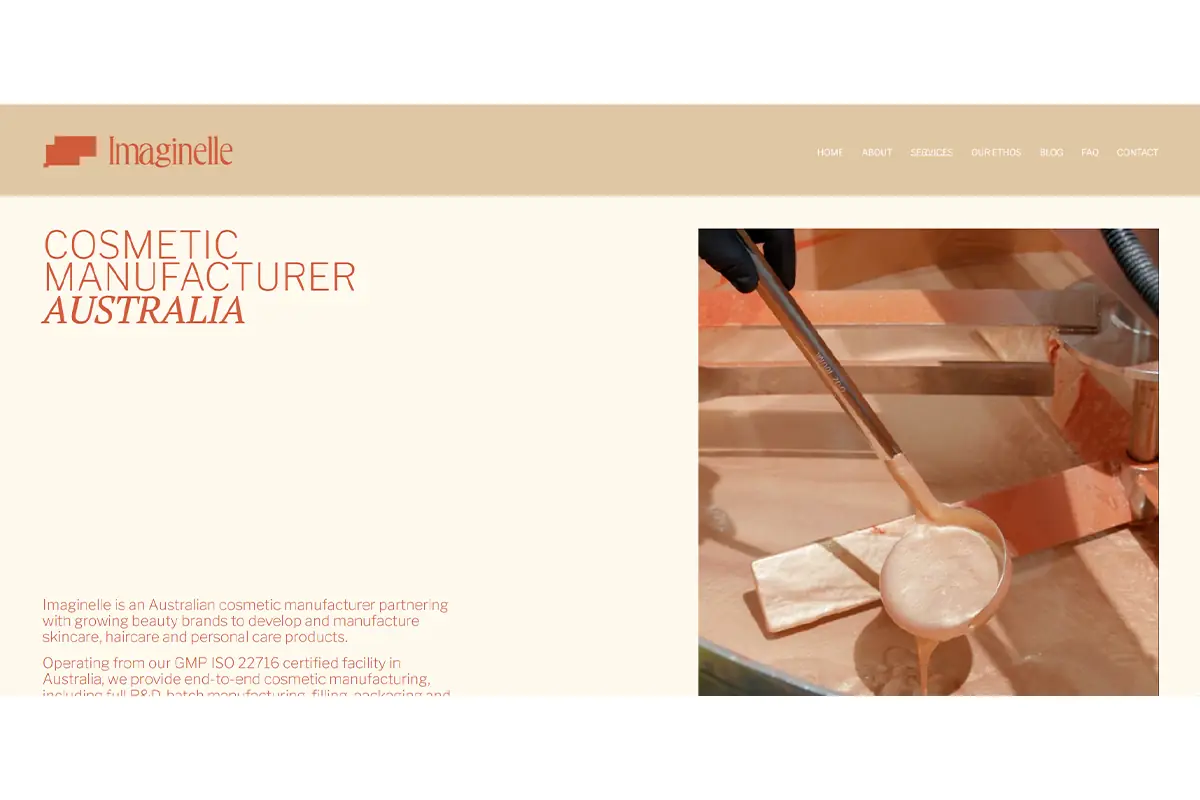
Imaginelle is an Australian cosmetic manufacturer specializing in skincare, haircare, and personal care. Its website highlights GMP ISO 22716 certification, in-house R&D, batch manufacturing, filling, packaging, and quality control.
For private label face serum projects, Imaginelle may be suitable when the brand needs more structured end-to-end manufacturing support. It can be relevant for brands looking beyond basic white label and needing R&D, QC, packaging, and scalable production in one workflow.
Best-fit brand type: growing beauty brands, multi-SKU skincare lines, and companies that need R&D plus production support from an Australian manufacturer.
8. Private Label Cosmeceuticals Australia
Best for: clinical-grade private label skincare, active serum concepts, and cosmeceutical positioning.
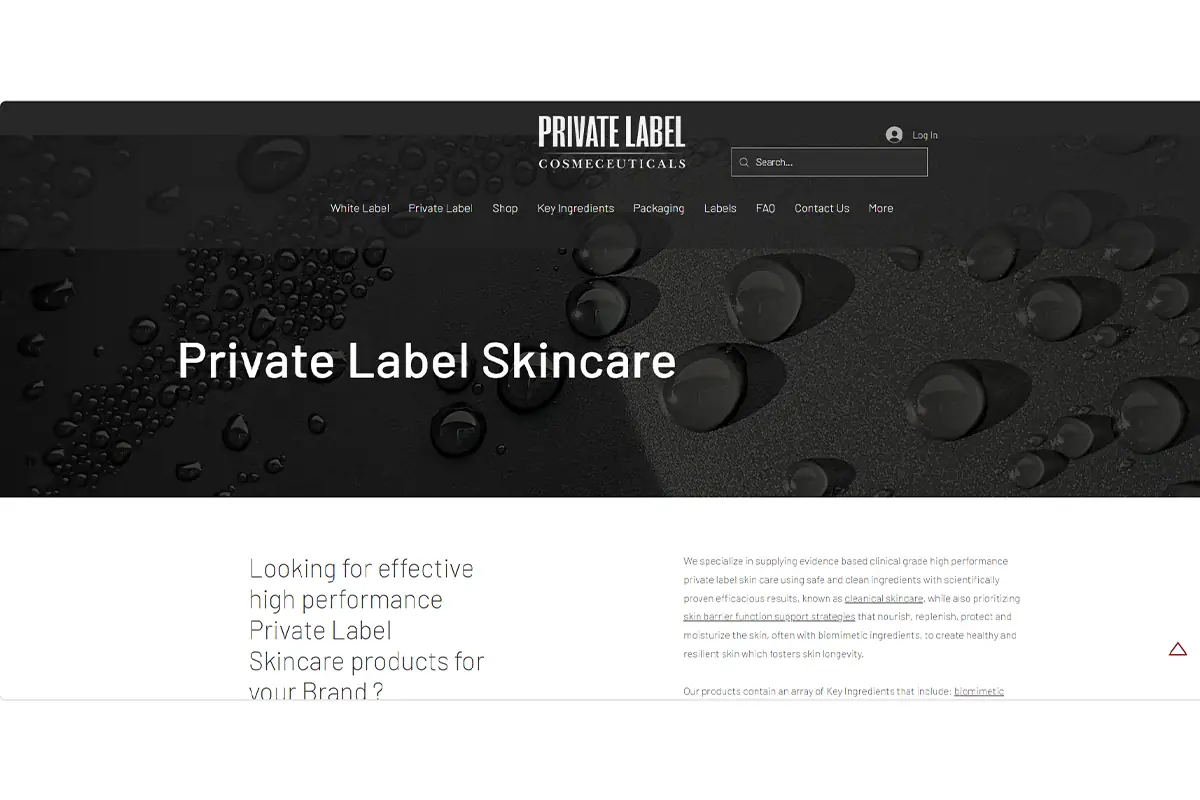
Private Label Cosmeceuticals Australia focuses on evidence-based clinical-grade high-performance private label skincare, including skin care serums, anti-aging creams, and related product directions.
For brands focused on active serum positioning, this supplier may be a useful option to evaluate. It appears more aligned with cosmeceutical-style skincare than simple beauty private label, which can be helpful for clinics, professional skincare brands, and brands wanting more active-led product stories.
Best-fit brand type: aesthetic clinics, professional skincare brands, active serum brands, and companies that want evidence-based private label skincare positioning.
Australia vs Global Serum OEM: Which Is Better for Your Brand?
Australia-based manufacturing can be the right choice when a brand needs Australian-made positioning, local supplier communication, domestic retail credibility, native botanical storytelling, or direct alignment with the Australian skincare market.
However, Australia is not always the most practical option for every private label serum project. Brands may also compare global OEM/ODM manufacturers when they need faster sampling, lower starting MOQ, broader packaging choices, advanced delivery systems, stronger cost flexibility, or a complete skincare line across serum, cream, toner, cleanser, mask, and SPF.
| Brand Situation | Australia Manufacturer May Fit | Global OEM May Fit Better |
|---|---|---|
| Brand positioning | Australian-made, local retail, native botanicals, domestic credibility | International brand, export-focused launch, cost-sensitive product line |
| Formula development | Natural, organic, botanical, white label, or local custom formulation | Fermentation-derived actives, liposome delivery, microencapsulation, multi-active systems |
| MOQ and speed | Useful when local supplier MOQ and capacity match the project | Useful when brands need fast sampling, broader packaging, and flexible scale-up |
| Product range | One serum SKU or a simple skincare set for local sale | Full skincare system including serum, cream, mask, cleanser, toner, SPF, and body care |
When to Consider Shangpinhui Biotechnology for Face Serum OEM
If your brand is comparing private label face serum manufacturers in Australia but also cares about speed, MOQ flexibility, formula depth, packaging range, and advanced serum technologies, a global OEM/ODM manufacturer may also be worth evaluating.
Shangpinhui Biotechnology Co., Ltd. is a China-based OEM/ODM manufacturer supporting private label and custom face serum development across whitening, brightening, anti-aging, hydrating, barrier repair, fermented, and multi-active serum directions.
For selected stock formula projects using available packaging, production can often be completed in around 10 days to 1–2 weeks after order confirmation. Semi-custom serum projects can often be completed within 2–3 weeks after sample approval and order confirmation. For many fully custom serum projects, development and production can often be completed within 4–7 weeks when formula direction, packaging, design, and sample confirmation move smoothly.
Formula support can include fermentation-derived actives, liposome delivery systems, microencapsulation, nano-microemulsion systems, multi-pathway brightening logic, peptide systems, GHK-Cu, hyaluronic acid, niacinamide, vitamin C derivatives, and barrier repair ingredients depending on the brand’s project direction.
For a full overview of formula types, MOQ, packaging, and OEM development steps, visit our private label face serum manufacturer guide.
Key Face Serum Formula Directions for Australian and Global Brands
Brightening and Vitamin C Serum
Brightening serums are popular in Australia because they fit antioxidant, glow, uneven tone, and active skincare positioning. Brands can combine native ingredient stories such as Kakadu plum with stable vitamin C derivatives, niacinamide, tranexamic acid, arbutin, or botanical extracts.
For brands developing stronger brightening systems, it is important to consider melanin synthesis, melanin transfer, and skin turnover together. You can read more in our guide to the three melanin pathways behind effective skin brightening.
Anti-Aging and Peptide Serum
Anti-aging serums can focus on peptides, retinol alternatives, bakuchiol, GHK-Cu, antioxidants, fermented actives, and barrier-supporting ingredients. For Australia, brands should be careful with drug-like claims and keep cosmetic language focused on visible signs of aging, firmness, smoothness, and skin appearance.
Hydrating and Barrier Repair Serum
Hydrating serum is a broad category, but more premium products usually combine hyaluronic acid, panthenol, ceramides, amino acids, microbiome-friendly ingredients, and film-forming moisturization systems. These formulas can work well for dry climates, post-sun skincare routines, and sensitive skin positioning.
Liposome and Microencapsulated Active Serum
Advanced delivery systems can help protect unstable actives and improve the formula story. Liposome delivery may support vitamin C derivatives, retinol alternatives, and brightening peptides, while microencapsulation can help improve stability and reduce direct high-concentration active exposure.
For more technical detail, see our guides on liposome whitening serum OEM and microencapsulation 377 whitening formulation.
Frequently Asked Questions
What is the minimum order quantity for private label face serum in Australia?
MOQ varies by manufacturer, formula type, packaging choice, and whether the project uses a ready-to-brand base or fully custom formulation. Some Australian private label suppliers may support low-MOQ testing, while custom active serum projects may require higher quantities and longer development timelines.
Are face serums regulated by TGA in Australia?
Not always. Standard cosmetic face serums are generally handled under cosmetic and industrial chemical requirements, including AICIS ingredient considerations. However, if a serum makes therapeutic, SPF, acne-treatment, or drug-like claims, it may require review under TGA-related requirements. Brands should confirm product classification before launch.
Can Australian manufacturers make vitamin C or Kakadu plum serums?
Yes, many Australian skincare manufacturers can support vitamin C, botanical, native extract, and Kakadu plum-inspired serum concepts. Brands should still confirm active form, concentration, stability, packaging compatibility, and whether the ingredient story is supported by appropriate documentation.
Should I choose an Australian serum manufacturer or a global OEM partner?
Choose an Australian manufacturer if local production, Australian-made positioning, or domestic supplier communication is your priority. Consider a global OEM partner if you need lower starting MOQ, faster development, broader packaging options, advanced serum technologies, or a full skincare system beyond one serum SKU.
How long does private label face serum development take?
Timelines vary. Ready-to-brand serum projects can move faster when packaging and artwork are already confirmed. Semi-custom or fully custom serum projects may require additional time for sampling, formula adjustment, stability observation, packaging compatibility checks, documentation preparation, and final approval.
Recommended Reading
Start Your Private Label Face Serum Project
Whether your brand is comparing Australian face serum manufacturers or looking for a faster global OEM/ODM partner, the right supplier should match your formula direction, MOQ, packaging plan, timeline, target market, and claim strategy.
Shangpinhui Biotechnology can support private label and custom face serum development across brightening, anti-aging, hydrating, barrier repair, fermented, liposome, microencapsulation, and multi-active serum directions.
Contact us to discuss your private label face serum project.