When a cosmetics contract manufacturer quotes an MOQ of 1,000 units at $3.00 per piece, the math seems simple: you write a check for $3,000, and retail-ready products arrive at your warehouse.
Then reality hits.
One manufacturer’s 1,000-unit quote includes the bulk formula, stock bottles, silk-screen printing, filling, and batch QC. Another manufacturer’s quote covers only the raw bulk liquid, leaving bottle tooling, stability testing, carton assembly, regulatory export documentation, and freight to be billed as sudden “surcharges.”
Before you know it, that $3,000 project balloons into a $6,500 cash drain before your product even clears customs.
If you are evaluating cosmetic OEM/ODM partners, judging a manufacturer solely by their stated MOQ or initial unit price is the fastest way to blow your runway. To protect your working capital, you need to understand:
- What mechanical and chemical bottlenecks physically enforce batch minimums?
- Why is the packaging supplier’s MOQ usually more restrictive than the liquid formula?
- Where do undisclosed factory fees hide after you approve your golden sample?
- How can emerging brands negotiate pilot-run flexibility without compromising product quality?
Here is how cosmetics manufacturing minimums actually work—and how to audit your quotations like a seasoned supply chain director.
The Physics of Bulk MOQ: Why Factories Can’t “Just Make 100 Bottles”
Emerging founders often ask: “If I am willing to pay a higher price per unit, why can’t the laboratory just compound a 100-bottle pilot batch of my custom cream?”
It is not stubbornness. It comes down to fluid mechanics, cleanroom sterilization, and industrial equipment engineering.
The Mechanical Bulk Production Chain:
- Step 1: Industrial Emulsifier — Batch volume must submerge the internal homogenizer blades and sweep-wall scrapers.
- Step 2: Transfer Lines & Filter Housings — Product is pressurized through sanitary lines where a portion adheres to inner walls.
- Step 3: Automated Filling Nozzles — Pneumatic nozzles require line priming and continuous head pressure to maintain dosage accuracy.
The Tank Agitation Threshold
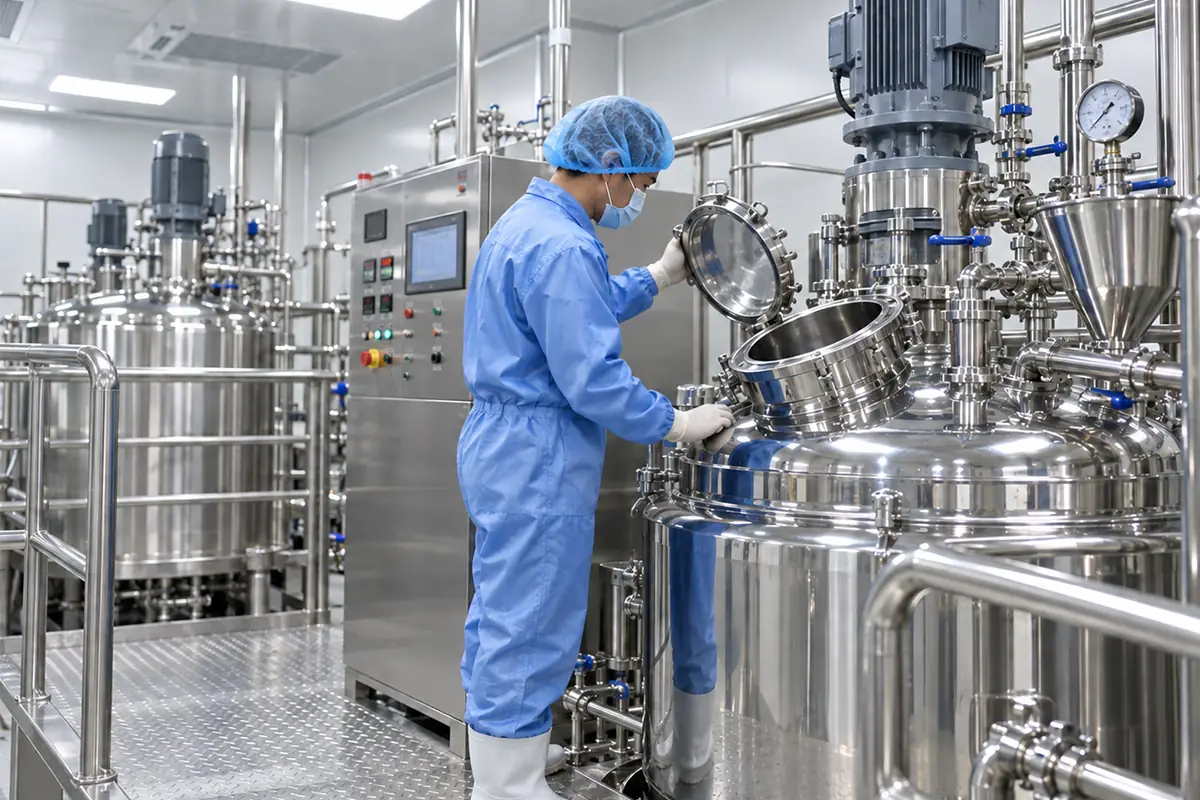
Commercial skincare is not compounded in 500ml glass beakers; it is processed in vacuum homogenizing emulsifiers ranging from 50kg to 2,000kg. To build a stable emulsion and prevent water and oil phases from separating over a two-year shelf life, high-shear homogenizer blades and sweep-wall agitators must be completely submerged in liquid. If you attempt to process 15kg of bulk in a 100kg tank, the blades whip air into the matrix, the batch overheats, and the emulsion breaks.
Dead Volume and Piping Losses
Between the mixing vessel and the automated filling line lies a network of sanitary stainless-steel piping, centrifugal transfer pumps, and particulate filter housings. At the conclusion of a production run, a residual amount of bulk—known in manufacturing as dead volume (typically 3kg to 8kg depending on product viscosity)—remains trapped in the system and cannot be pumped into bottles.
- If you run a commercial 10,000-unit batch of private label serum manufacturing, losing 3kg of bulk is a negligible 0.03% loss.
- If you run a 200-unit boutique batch, that same 3kg dead volume represents 20% to 30% of your total active ingredient budget washed down the drain during sanitization.
The Six-Layer MOQ Architecture Behind Every Cosmetic SKU
A finished cosmetic product is an assembly of multiple independent supply chains. The number a factory sales representative emails you is almost always the Filling MOQ, which is only one piece of the puzzle.
| MOQ Layer | What Enforces It? | Commercial Reality for the Brand |
|---|---|---|
| 1. Bulk Formula MOQ | Emulsification kettle size, shear requirements, and active material supplier pack sizes. | Governs the minimum volume of liquid, gel, or cream that can be safely blended. |
| 2. Primary Packaging MOQ | Glass/plastic bottle molding, custom color masterbatch injection, and tube extrusion. | Often set at 3,000 to 10,000 units by raw packaging component mills. |
| 3. Surface Decoration MOQ | Automated silk-screening setup, hot-stamping dies, matte spray coating, and UV metallizing. | Adding a second print color or soft-touch spray often doubles the component minimum. |
| 4. Secondary Packaging MOQ | Offset printing plate setups and die-cut folding machines for retail cartons. | High-end rigid boxes or embossed paper cartons frequently demand 2,000+ unit runs. |
| 5. Filling & Assembly MOQ | Machine calibration, cleanroom sterilization cycles, and conveyor line changeover downtime. | Determines the smallest batch size the factory will schedule onto an automated filling line. |
| 6. Commercial Project MOQ | Fixed engineering overhead, QC documentation, and export handling labor. | The minimum financial project turnover the manufacturer requires to take on an account. |
The Procurement Takeaway: Your factory might be perfectly equipped to fill 1,000 finished units for your pilot launch. However, if your custom-frosted dropper bottles required a 3,000-unit minimum from the packaging mill, you must pay for those 2,000 surplus empty bottles upfront. Understanding the boundary between private label vs. custom formulation routes is critical to avoiding component over-commitment.
Case Study: The True Math Behind a 1,000-Unit Facial Serum Run
To illustrate how hidden variables distort product economics, consider this real-world procurement scenario for a 30ml clinical brightening serum.
- Manufacturer A quotes a tempting initial unit price: $3.80 / unit ($3,800 total).
- Manufacturer B quotes what appears to be a higher unit price: $4.80 / unit ($4,800 total).
An inexperienced buyer instinctively selects Manufacturer A. Here is what the comprehensive invoice ledger looks like at final handover:
| Expenditure Item | Manufacturer A (Unbundled Bid) | Manufacturer B (All-Inclusive Proposal) |
|---|---|---|
| Stated 1,000-Unit Production Run | $3,800 ($3.80/unit) | $4,800 ($4.80/unit) |
| Formulation Stability & Compatibility Testing | +$600 (Billed separately) | $0 (Included in R&D package) |
| Preservative Challenge Testing (PET/ISO 11930) | +$450 (Billed post-approval) | $0 (Pre-validated stock base) |
| Silk-Screen Tooling & Mesh Setup | +$180 (Billed at printing) | $0 (Included in unit packaging) |
| Outer Unit Carton Production & Folding | +$650 (Not included in original bid) | $0 (Standard carton included) |
| Surplus Component Storage (2,000 extra bottles) | +$200 (Billed after 30 days) | $0 (Sourced from factory stock) |
| Export Documentation Dossier (COA, MSDS, Batch Records) | +$300 (Administrative surcharge) | $0 (Provided as standard service) |
| True Landed Project Outlay | $6,180 | $4,800 |
| Actual Effective Cost Per Sellable Unit | $6.18 / piece | $4.80 / piece |
The true financial formula for evaluating any contract manufacturing bid is:
Effective Unit Cost = Total Capital Outlay ÷ Sellable Finished Units Handed Over
Manufacturer A appeared 21% cheaper on paper, but wound up costing the brand 28% more in total cash outlay.
The 7 Non-Negotiable “Hidden Fees” to Audit Before Paying a Deposit
When reviewing an OEM quote, verify whether these seven operational expenses are bundled into the unit price or will appear as surprise invoice lines later:
- Stability and Compatibility Testing Fees: If you select a bespoke formula or house liquid inside unverified custom containers, the formulation must undergo accelerated thermal incubation (45°C for 12 weeks), freeze-thaw cycles (-10°C to 40°C), and high-speed centrifugation. Confirm whether this validation is covered or billed as an auxiliary $500 to $1,500 laboratory fee.
- Preservative Efficacy Testing (PET / Challenge Test): Under international standards like ISO 11930 or USP 51, all water-containing topical cosmetics must prove they inhibit microbial proliferation. A challenge test typically costs between $300 and $600 per formulation.
- Surplus Component Storage: If your custom-printed packaging required an MOQ of 3,000 units, but you only filled 1,000 units of bulk formula, ask upfront: does the factory offer 60 to 90 days of free warehouse staging, or will you incur monthly pallet charges?
- Line Tooling & Puck Surcharges: Automated rotary filling lines require dedicated silicone guide pucks and pneumatic capping chucks configured to your exact bottle geometry. For production batches under 3,000 units, factories often bill a $150 to $300 line setup fee.
- Plate, Film, and Mesh Setup Fees: Screen printing, hot-foil stamping, and embossed outer cartons require mechanical tooling. Clarify whether setup fees are one-time charges, whether they are waived on reorders, and whether the brand owns the physical plates.
- Regulatory Dossier Compilation: While an overseas OEM should provide the Certificate of Analysis (COA), Safety Data Sheets (MSDS), and production batch records at no cost, preparing technical dossiers for international markets requires thorough documentation. For brands launching in Europe, referencing a structured UK and EU cosmetic regulation checklist ensures safety assessment costs and Responsible Person (RP) filing requirements are accounted for upfront.
- Trade Incoterms & Landed Freight: An attractive EXW (Ex-Works) quote means you are responsible for retrieving palletized cargo from the factory floor, handling export customs declarations, paying port handling fees, and securing cargo insurance. Always ask for an FOB or door-to-door DDP (Delivered Duty Paid) logistics estimate to understand your true landed margin.
Strategic Ways to Negotiate Lower MOQs Without Sacrificing Formula Quality
If you have a disciplined budget and cannot commit to 5,000 units per SKU across a multi-product collection, leverage these proven supply chain tactics during negotiations:
Strategy 1: The “Unified Chassis” Architecture
Instead of asking a laboratory to formulate three completely unrelated products (e.g., one gel serum, one thick barrier balm, one fluid lotion), instruct the R&D team to engineer one versatile base chassis.
Example: The 3-Way Split from a Single 3,000-Unit Bulk Run
- Base Bulk Masterbatch: 3,000 units of a high-compatibility hyaluronic acid and squalane hydration base.
- Variant A (1,000 units): Dosed with 2% microencapsulated active delivery systems for clinical brightening.
- Variant B (1,000 units): Dosed with multi-ceramides and ectoin for advanced barrier-repair formulation technologies.
- Variant C (1,000 units): Dosed with bio-fermented copper peptides for anti-aging restoration.
By keeping the primary water-oil-emulsifier matrix identical, the factory compounds a single 3,000-unit bulk masterbatch in their primary emulsification tank. In the final phase of compounding, they split the bulk into three finishing vessels, dosing specific therapeutic actives into each. You satisfy the factory’s 3,000-unit equipment threshold while launching three distinctive SKUs for your brand.
Strategy 2: Pre-Purchase Component Inventory, Split Your Bulk Fills
Packaging factories have much higher MOQs than compounding laboratories. You can negotiate to purchase 5,000 units of custom-decorated bottles upfront to secure volume pricing, but contract your OEM to mix and fill only 1,500 units in the initial production cycle. The factory holds the remaining empty packaging in clean storage for your replenishment run. This preserves working capital and eliminates product expiration risks during your proof-of-concept phase.
Strategy 3: Standardize Packaging Profiles Across Collections
Select a single, premium bottle silhouette across your entire brand catalog—such as an amber glass 30ml dropper bottle for your brightening serum, exfoliating acid, and scalp oil. Consolidating your procurement around one component profile allows you to hit packaging tier discounts effortlessly while differentiating your SKUs using affordable digital labels or color-coded cartons.
Category Benchmark: Typical Manufacturing MOQs Across Core Formats
| Product Category | Stock Private Label MOQ | Semi-Custom Formula MOQ | Bespoke Custom R&D MOQ | Benchtop Sampling |
|---|---|---|---|---|
| Facial Serums & Essences | 500 – 1,000 pcs | 1,000 – 2,000 pcs | 3,000 pcs | 3 – 5 business days |
| Emulsion Creams & Balms | 1,000 pcs | 1,000 – 2,000 pcs | 3,000 – 5,000 pcs | 3 – 5 business days |
| Foaming & Gel Cleansers | 1,000 pcs | 2,000 pcs | 3,000 – 5,000 pcs | 3 – 5 business days |
| Sunscreens (OTC / High-SPF) | 2,000 – 3,000 pcs | 3,000 – 5,000 pcs | 5,000 – 10,000 pcs | 3 – 5 business days |
| Scalp & Hair Treatment Oils | 500 – 1,000 pcs | 1,000 pcs | 2,000 – 3,000 pcs | 3 – 5 business days |
| Sachets & Sample Packettes | 20,000 – 30,000 pcs | 30,000 pcs | 50,000 pcs | Coordinated with bulk run |
The Shangpinhui Agile Advantage: High-Performance OEM/ODM Without Corporate Bloat
At Shangpinhui Biotechnology Co., Ltd. (BeautyOEM), our facility was engineered specifically to solve the emerging brand dilemma: accessing advanced clinical formulation technology without being forced into restrictive five-figure production commitments.
- Flexible 1,000-Unit Custom Baselines: For standard private label and semi-custom projects, our commercial production runs start from approximately 1,000 finished units.
- Rapid Benchtop Formulation Protocol: Access thousands of pre-tested, stability-cleared clinical formulas spanning multi-pathway brightening, barrier defense, and scalp health. Benchtop prototypes for established formulation chassis typically ship within 3 to 5 business days.
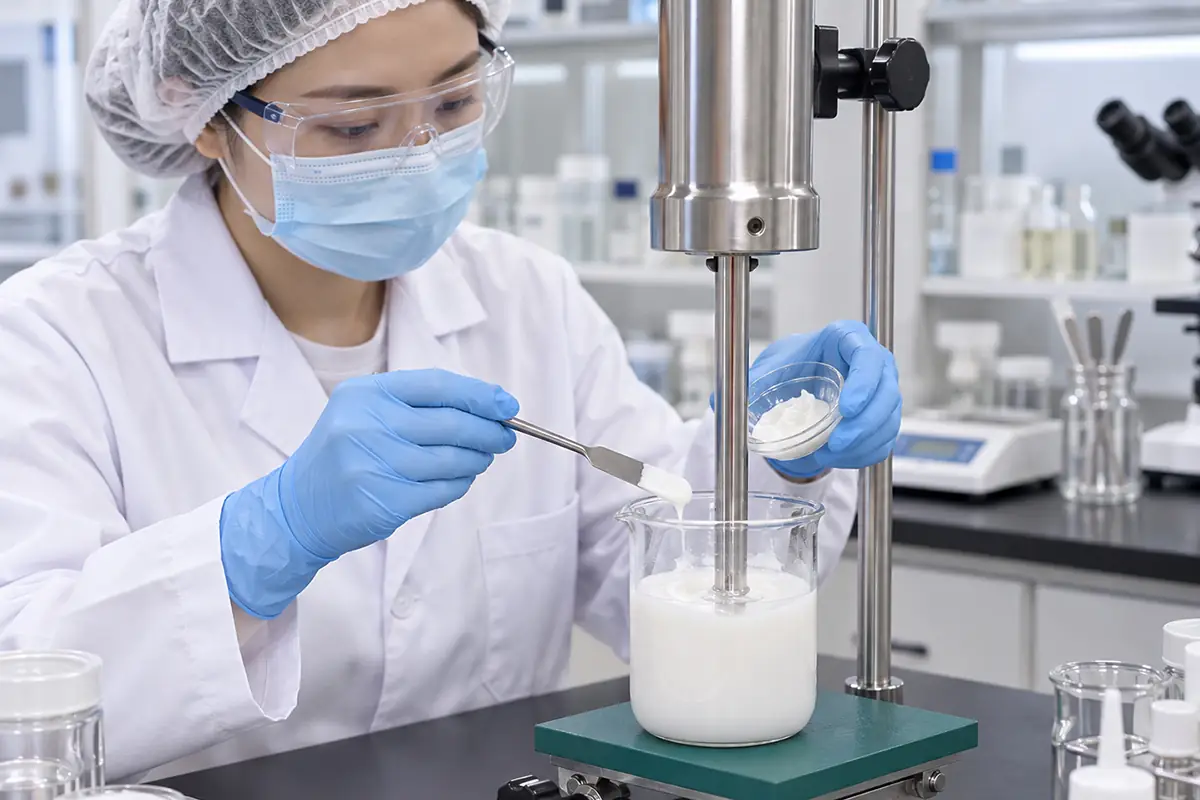
- Proprietary Delivery Systems: We don’t just dilute commodity ingredients. Our laboratories specialize in high-efficacy cosmetic delivery architectures—including microencapsulated 377, liposomal active stabilization, bio-fermented peptides, and anhydrous formulations.
- Transparent Export Compliance: Operating under strict ISO 22716 and GMPC cleanroom standards, we provide complete technical transparency for international customs, safety assessors, and retail compliance—including free COAs, full SDS disclosures, stability data packages, and microbiological clearance. For brands mapping their overall production schedule, reviewing our skincare development and launch timeline provides a predictable path from lab bench to finished inventory.
What to Prepare Before Requesting an MOQ Quotation
If you send a factory a generic message like “Hi, how much for 1,000 face serums?”, you will receive an inflated price designed to cover unknown risks. Reviewing our checklist on information to prepare before requesting an OEM quote will help you organize your project parameters.
To command professional respect and secure the sharpest tiered pricing from day one, provide a structured Product Brief covering:
- Target Product Format: (e.g., 30ml concentrated brightening serum in an amber glass dropper bottle)
- Formula Route: (Mature private label base, semi-custom active enhancement, or bespoke formula development)
- Key Marketing Actives & Claims: (e.g., 2% Alpha Arbutin, Niacinamide, fragrance-free, vegan-compliant)
- Benchmark Texture & Skin Feel: (e.g., Rapid-absorbing, silky aqueous slip, non-sticky dry-down)
- Initial Order Volume vs. Growth Forecast: (e.g., 1,000 units for test launch, projected 3,000-unit replenishment within 90 days)
- Primary Regulatory Destination: (e.g., United States / FDA MoCRA, United Kingdom / SCPN, European Union / CPNP)
- Target Launch Date: (e.g., Products required in 3PL warehouse within 14 weeks)
Frequently Asked Questions
Can I split a 1,000-unit serum order across two different fragrances or colors?
Generally, no. Each distinct scent profile or pigment shade requires an isolated compounding batch, clean-in-place (CIP) kettle washdown, filling line purge, and separate batch release documentation. In manufacturing terms, two fragrances mean two separate 500-unit runs, which frequently falls below minimum agitation volume limits.
Does a custom formulation always require a higher MOQ than private label?
Not necessarily. A custom formulation can often be filled at the same 1,000-unit threshold as a stock formula. However, upfront R&D development fees, specialized active ingredient purchasing minimums, and analytical testing costs will be amortized across fewer pieces, increasing your initial cost per unit.
Why are sunscreen and aerosol MOQs significantly higher?
Sunscreen is governed as an Over-The-Counter (OTC) drug in the United States and a high-risk functional category worldwide. Commercial SPF emulsification requires large-capacity high-pressure homogenization to prevent UV filter clumping, and mandated multi-wavelength SPF/broad-spectrum clinical testing makes small production volumes economically non-viable.
Are sample development fees credited back to my bulk production order?
At Shangpinhui, benchtop sampling costs for our mature formula libraries are routinely credited back toward your commercial production invoice once your bulk purchase contract is executed. Bespoke formulation projects requiring rare, non-stock raw material procurement are evaluated on a case-by-case basis.
Ready to Calculate Your Next Production Run?
Navigating manufacturing minimums should empower your business growth, not exhaust your startup capital. Get clear, itemized pricing backed by clinical R&D expertise.