
What First-Time Beauty Founders Should Evaluate Before Starting Product Development
はじめに
Choosing a skincare OEM manufacturer is one of the first major decisions a new beauty brand will make.
Many founders begin by comparing product catalogs, packaging styles, or quoted prices. Those things matter, but they are not enough to tell you whether a manufacturer is actually the right fit for your project.
For a new brand, the real question is not simply who can produce skincare. It is who can help turn your product idea into something realistic, stable, and launch-ready for your stage.
A good OEM partner should not only offer formulas. They should also help you evaluate feasibility, clarify product direction, and move the project forward in a way that matches your budget, quantity, packaging plan, and timeline.
That is why choosing a skincare OEM manufacturer should never be based on appearance alone. It should be based on fit, communication, technical support, and whether the manufacturer can work with your project in a practical way.
A New Brand Should Not Choose an OEM Manufacturer the Same Way an Established Brand Does
Established beauty brands and first-time founders usually evaluate manufacturers from very different angles.
A mature brand may care more about scale, procurement efficiency, internal product planning, or long-term supply chain coordination. A new brand, however, usually needs more support in the early stages. The first batch is often not about launching as many SKUs as possible. It is about choosing the right product direction, controlling avoidable mistakes, and making sure the project can actually move forward smoothly.
That changes how the manufacturer should be evaluated.
For a new brand, it is usually more important to ask questions like these:
- Can this manufacturer understand my product direction clearly?
- Are they able to recommend a realistic development path?
- Do they support small-batch flexibility where possible?
- Can they explain the difference between mature formula adjustment and full custom development?
- Are they communicating in a way that helps reduce confusion instead of increasing it?
The best manufacturer for a new brand is not always the one with the biggest product list or the lowest price. More often, it is the one whose development style, communication process, and execution ability match what a first project actually needs.
Start by Checking Whether the Manufacturer Matches Your Product Direction
Before asking for quotations, you need to know whether the manufacturer is aligned with the kind of product you want to launch.
This sounds basic, but it is one of the most overlooked parts of the selection process. Many brands contact several factories at once without first checking whether those factories are actually a good fit for the category, formula direction, and product positioning they want.
A useful starting point is to ask three practical questions.
1. Do they make the type of product you want to launch?
Not every skincare manufacturer is equally strong across all product types. Some are better at serums, some at creams, some at masks, and some are more mature in functional products that require better texture control or formula stability.
If your first launch is centered around a whitening serum, an anti-aging essence, or a sensitive-skin formula, the manufacturer should not only “make skincare” in a general sense. They should already understand the kind of formula challenges that come with that category.
2. Do they understand the positioning behind your product?
A skincare product is not defined by one active ingredient alone. It is also shaped by market direction, skin feel, expected result, target customer, and price range.
If you want to develop something for sensitive skin, premium anti-aging, lightweight brightening, or a more results-driven clinical concept, the manufacturer should be able to discuss those directions in a way that goes beyond generic formula descriptions.
Before comparing manufacturers in more detail, it helps to understand what technical capability actually changes in OEM development.
3. Can they support the technical direction behind the concept?
Some projects require more than basic filling capability. They may involve texture optimization, stability control, delivery systems, fermentation-based actives, or balancing performance with mildness.
A manufacturer that can explain why a formula should go in one direction instead of another is often much more valuable than one that simply says yes to every request.
Evaluate the Manufacturer’s Development Capability, Not Just Their Catalog
A large catalog can look impressive, but it does not automatically mean strong development capability.
This is especially important for new brands. At the early stage, many founders assume that a manufacturer with more ready-made products will automatically be easier to work with. In reality, what matters more is whether the manufacturer can help adjust and refine a formula so it fits your actual project.
A catalog shows range. Development capability shows flexibility.
That difference matters because even when a manufacturer starts from a mature formula, your project may still need adjustments in areas like:
texture
color
fragrance level
active combination
product feel
market positioning
cost fit
packaging compatibility
For new brands, mature formulas are often a smart starting point. In many cases, it is more practical to begin with a stable base and make targeted adjustments than to insist on full custom development from zero on the first project.
That does not make the product less strategic. It often makes the development process more efficient and better aligned with launch reality.
A capable OEM manufacturer should be able to explain:
what can be adjusted
what should stay stable
what affects formula cost
what affects stability and scale-up
what kind of route makes sense for your current stage
That kind of guidance is much more valuable than simply showing a long list of existing products.
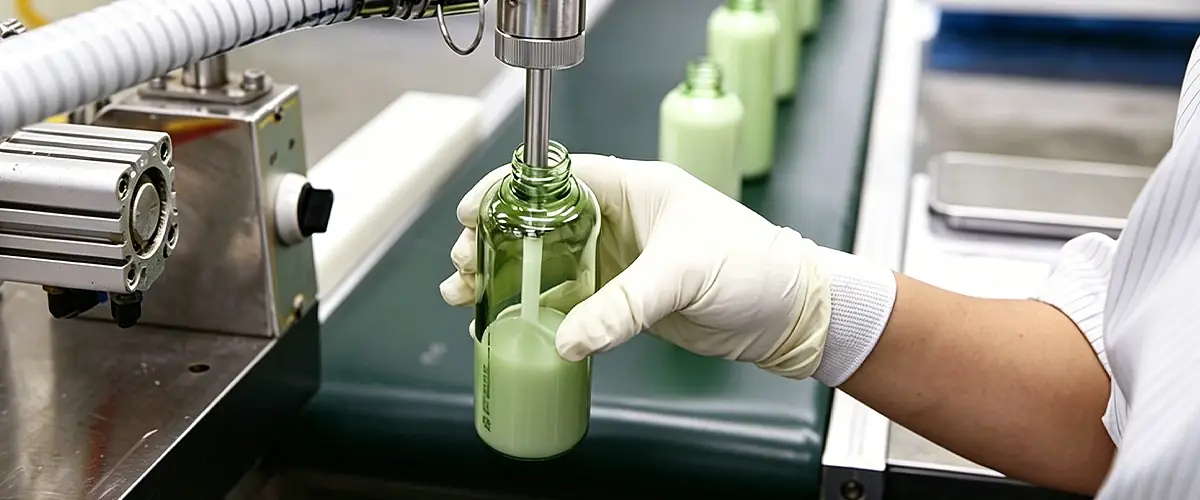
Ask About MOQ, Sampling, and Project Flexibility Early
One of the fastest ways to lose time in OEM development is to delay practical questions until too late.
For a new brand, MOQ, sampling logic, and project flexibility should be discussed early, because these factors affect nearly everything that comes after.
MOQ should be understood in context
MOQ is not always one fixed number.
In many skincare OEM projects, a regular MOQ may start around 1,000 bottles. If in-stock packaging is used, some projects may be able to start from 500 bottles. If custom packaging requires mold development, however, MOQ can rise significantly, often reaching 5,000 to 10,000 units or more depending on the packaging plan.
There can also be differences by format. For example, very small trial sizes such as 2ml or 5ml samples are not always practical as standalone low-volume runs. If the client is already producing a bulk order and wants to add sachet-style samples alongside it, that is a different situation. But sample-size packaging often comes with its own minimum production requirements.
That is why MOQ should never be discussed as a single number without context. The real question is what MOQ applies to your formula type, packaging route, and launch plan.
Ask how the sampling process is usually handled
Sampling is where the manufacturer’s working style becomes visible.
For many new brand projects, the most efficient path is often:
- clarify the product goal first
- provide direction on texture, color, effect, and approximate price range
- start from a mature formula recommendation where appropriate
- adjust based on feedback
In practice, two rounds of sampling are often common and workable for many projects. That does not mean every project is identical, but it gives a more realistic expectation than assuming everything will be perfect in one step.
Confirm what happens after sample approval
Once basic fit has been confirmed, the next question is how the actual development process will move from idea to launch.
The Whitening Serum OEM Development Process
Sample confirmation is important, but it is not the last operational step. After a sample is approved, the project usually still needs confirmation on details such as:
quantity
packaging selection
bottle finish or decoration
carton specification
packing method
shipping-related dimensions
production notes and handling points
A professional manufacturer should be able to guide these next steps clearly instead of leaving the brand to figure them out alone.
Check Whether the Manufacturer Can Support a New Brand Beyond Formula Filling
For a new brand, the manufacturer’s value should not stop at producing the formula.
A smoother project often depends on how well the manufacturer can support the full development path, including communication, packaging coordination, production planning, and expectation setting.
That is why it helps to evaluate whether the manufacturer can support areas such as:
- packaging discussion
- formula-to-packaging fit
- production planning
- basic launch coordination
- practical lead-time communication
- project detail confirmation before bulk order
This matters because new brands often do not get delayed by one major mistake. They get delayed by many small gaps that were never clarified early enough.
A more reliable OEM partner is often one that can reduce those gaps.
That includes simple but important things like:
- answering questions clearly
- identifying unrealistic assumptions early
- explaining what information is needed before sampling
- suggesting a more workable route when the original idea is too broad or inefficient
For brands still deciding between different cooperation paths, it is also important to compare OEM and ODM based on project stage rather than labels alone.
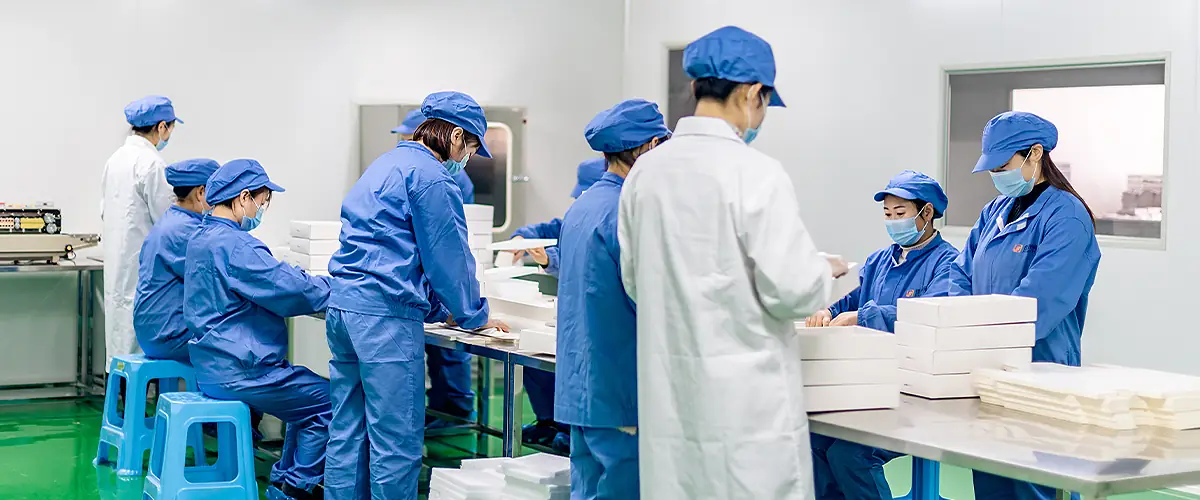
Do Not Choose Only Based on Price or Surface-Level Impressions
Many first-time founders make the same mistake during manufacturer comparison: they focus too heavily on what is easiest to compare quickly.
That usually means price, packaging appearance, or first sample impression.
Those things matter, but they should not be the only decision basis.
Mistake 1: Choosing only by the lowest quotation
A lower quote may come from many different factors, including formula simplicity, packaging route, active level, or project scope. A lower number is not automatically a problem, but it should be understood in context.
The better question is whether the quotation matches your positioning, first-batch goal, and quality expectation.
Mistake 2: Assuming a good first sample tells you everything
A sample is supposed to help confirm whether the direction is right. That is a normal and necessary part of OEM development.
But a good first impression should still be followed by practical confirmation. The brand should make sure that key points have been clarified, such as:
whether the texture direction is correct
whether the formula matches the intended effect and price level
whether packaging compatibility has been considered
whether the manufacturer has explained what can still be adjusted
whether the approved sample can be translated into a stable bulk-production route
In other words, the issue is not that sample confirmation is insufficient. The issue is whether the brand is confirming the right things before moving forward.
Mistake 3: Believing every factory that says everything is possible
A good manufacturer does not need to sound restrictive, but they should be realistic. If a factory always says yes without explaining trade-offs, that is usually not a sign of strong support. It may simply mean the project has not been evaluated carefully enough yet.
The better partner is usually the one that can combine flexibility with clear judgment.
A Better OEM Partner Helps You Launch More Safely, Not Just More Quickly
For a new skincare brand, choosing an OEM manufacturer is not just about finding someone who can produce products. It is about finding a partner who can help reduce avoidable mistakes in the first launch stage.
The right manufacturer should help you move through the project with more clarity in areas like:
product direction
formula fit
sampling route
MOQ expectations
packaging coordination
launch readiness
That does not mean the manufacturer needs to do everything for the brand. It means they should be able to work with your stage realistically and provide the kind of support that makes the project easier to manage.
For many first-time brands, this matters far more than simply choosing the company with the widest catalog or the lowest number on the first quotation sheet.
結論
Choosing a skincare OEM manufacturer for a new brand should never be based on product catalogs, price, or quick impressions alone.
A better decision usually comes from evaluating whether the manufacturer matches your product direction, supports a workable development path, communicates clearly, and can guide the project from sample stage into packaging and production with fewer avoidable problems.
For a first launch, the goal is not only to make a product. It is to start with a project structure that is realistic, efficient, and aligned with the brand’s stage.
If you are preparing your first skincare OEM project, choosing the right development partner early can make the entire launch process much easier to manage.
Before moving into the FAQ section, here are a few quick questions that often come up when new brands start comparing OEM manufacturers.
FAQ
Q1:What is the difference between an OEM manufacturer and a private label supplier?
An OEM manufacturer usually supports product development and production based on the project route being used, while private label often refers to products developed from existing mature formulas that can be branded and adjusted within a more limited scope. In real projects, the distinction can overlap, so it is better to ask what level of formula adjustment, packaging customization, and development support is actually included.
Q2:How many manufacturers should a new skincare brand compare before deciding?
There is no fixed number, but comparing a small group of qualified manufacturers is usually more practical than sending the same request to too many factories at once. The goal is not to collect the most quotations. It is to compare fit, communication quality, development thinking, and execution ability.
Q3:Should a new brand start with custom formulation or a mature base formula?
That depends on the project stage. For many new brands, starting from a mature and stable base formula with targeted adjustments is often a more efficient route than building a fully custom formula from zero. It can reduce unnecessary risk while still allowing the product to match the brand direction.
Q4:What is the most common mistake when choosing a skincare OEM manufacturer?
One of the most common mistakes is evaluating the manufacturer only by price, appearance, or broad claims, without confirming whether the factory really matches the product category, quantity plan, packaging route, and development needs of the brand.
If you are preparing your first skincare project, we can help you review your product direction, quantity plan, and development route before you move into sampling.
Recommended Reading
To make the next step easier, here are a few related guides that can help you evaluate manufacturers, technical capability, and development workflow more clearly.

 Japanese
  English
  Uzbek
Uzbek  Kazakh
  Turkish
  Russian
  Arabic
  Spanish
  Portuguese
  French
  German
  Korean