
What beauty brands should compare before choosing a facial cleanser OEM partner, from formula strategy and packaging compatibility to MOQ, timelines, and quote preparation.
Introduction
Choosing a cleanser manufacturer may look simple at first.
Compared with serums, creams, or advanced anti-aging formulas, facial cleansers are often seen as “basic” skincare products. Many new beauty brands assume that cleanser development mainly depends on fragrance, foam, bottle design, and price.
In reality, a cleanser project can shape how customers experience your entire skincare line.
As the first step in a daily routine, a cleanser sets the tone. If it feels too harsh, leaves the skin tight, rinses poorly, or does not match the target user’s expectations, customers may lose confidence before they even try the rest of your products.
For private label skincare brands, choosing the right cleanser manufacturer is not only about finding a factory that can produce facial wash. It is about finding an OEM partner that understands formula strategy, skin type positioning, packaging compatibility, MOQ, timelines, and market requirements.
This guide explains what beauty brands should compare before choosing a cleanser manufacturer for private label skincare.
Beyond the “Basic” Formula: Why Strategy Matters
A facial cleanser is a rinse-off product, but it still needs careful formula planning.
The challenge is not simply to make a cleanser that removes oil and dirt. A good cleanser should clean effectively while still matching the user’s skin type, climate, routine, and price expectations.
For example, oily skin users may expect a refreshing wash and a cleaner after-feel. Dry skin users may prefer a softer, creamier texture that does not leave the skin feeling stripped. Sensitive-skin users usually care more about mildness, skin comfort, and reduced irritation risk.
A professional cleanser manufacturer should help you think through several decisions:
- How strong should the cleansing power be?
- Should the formula focus on mildness, oil control, hydration, or daily comfort?
- What skin type is the product designed for?
- What foam level does the target market expect?
- Should the cleanser be fragrance-free or essential-oil-free?
- What texture best fits the packaging and price point?
- What claims are suitable for the target country?
This is why cleanser development should not be treated as “one formula with different packaging.”
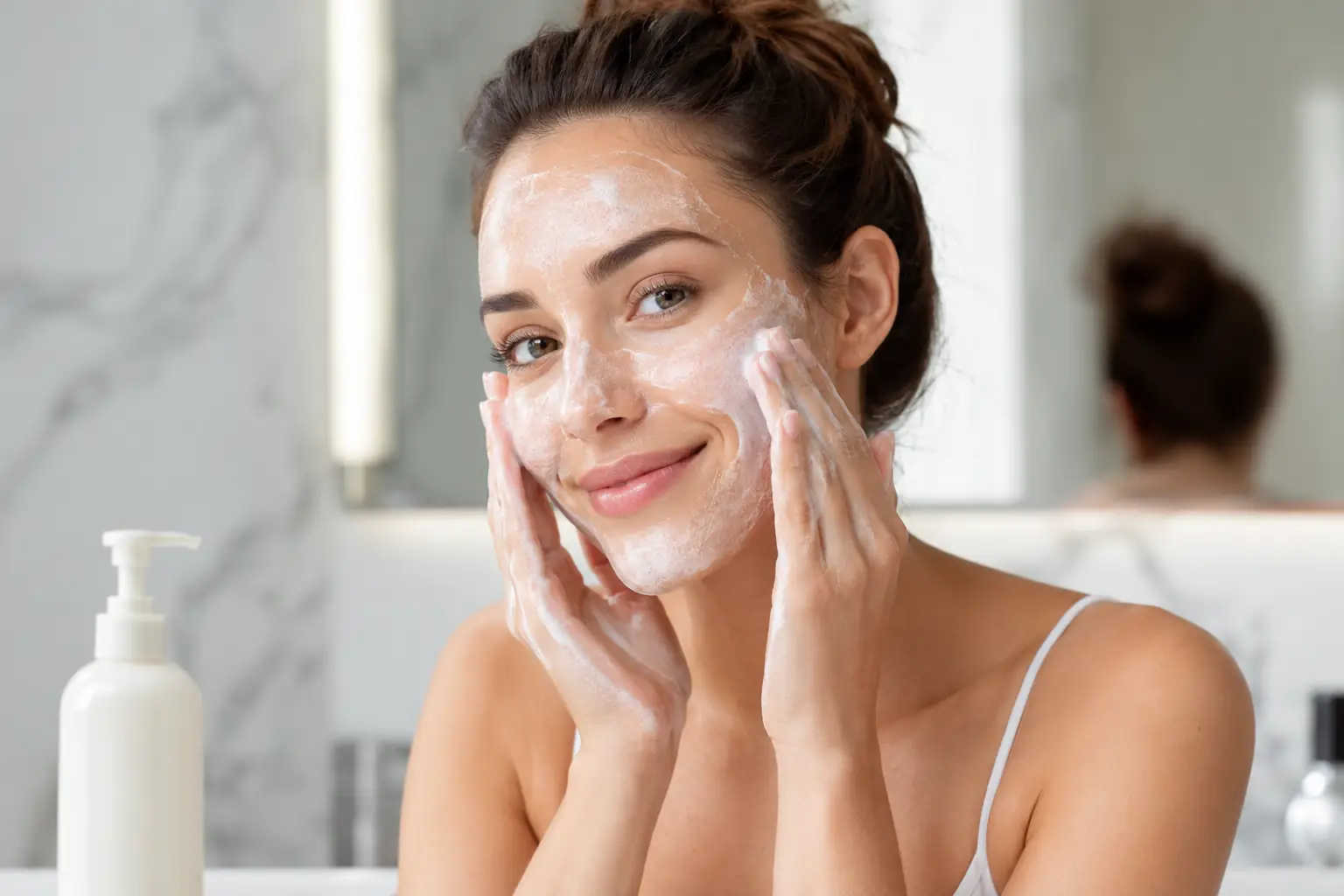
If you are building a wider facial care line, it helps to see how cleansers fit with other skincare categories such as toners, serums, creams, masks, and targeted treatments.
For a broader view of facial skincare category development, you can review our Private Label Facial Care Manufacturer page.
What Types of Cleansers Can a Manufacturer Support?
Not every cleanser manufacturer supports the same product formats.
Some suppliers focus mainly on basic facial wash formulas. Others can support wider cleanser development across different textures, skin types, packaging formats, and brand positions.
Before choosing a supplier, check whether they can support the type of cleanser your brand wants to launch.
Gel Cleansers
Gel cleansers are often used for refreshing, lightweight, and oily-skin positioning. They can work well for younger consumers, humid climates, minimalist skincare routines, or brands that want a clean and modern texture.
Cream Cleansers
Cream cleansers usually focus on comfort, softness, and a lower-stripping after-feel. They are often suitable for dry skin, mature skin, gentle skincare lines, or premium daily cleansing concepts.
Foam or Mousse Cleansers
Foam and mousse cleansers can create a stronger sensory impression because consumers can immediately see and feel the foam. These products often require better coordination between formula viscosity and pump-head performance.
Amino Acid Cleansers
Amino acid cleansers are often used for mild daily cleansing and sensitive-skin positioning, especially when brands want a softer, lower-stripping skin feel.
Exfoliating Cleansers
Exfoliating cleansers may include fine particles, fruit-acid-inspired positioning, enzyme-related concepts, or mild resurfacing claims. These projects need careful formula and claim control because over-exfoliation or harsh sensory effects can increase complaint risk.
Makeup-Removing Cleansers
Makeup-removing cleansers are designed to remove sunscreen, light makeup, or daily impurities. They need a different balance between cleansing performance, rinse-off feel, and skin comfort.
The right cleanser type depends on your target users, sales channel, market climate, price range, and product line strategy.
Evaluating Formulation Capability
When comparing cleanser manufacturers, price should not be the only factor.
A low-cost formula may look attractive at the beginning, but if it causes skin tightness, unstable texture, poor foam quality, leakage, or weak repeat purchase, it may cost more in the long run.
A stronger OEM partner should be able to explain the logic behind the formula, not just send a sample and a unit price.
You can ask questions such as:
- What type of cleansing system is used?
- Is the formula designed for a specific pH range?
- Is the product more suitable for oily, dry, sensitive, or combination skin?
- Can the texture and foam level be adjusted?
- Can the formula be made fragrance-free?
- Can the formula be adapted for different markets?
- What testing or quality checks are recommended?
- Is this formula better for private label, light customization, or deeper custom development?
For new brands, formulation capability does not always mean using the most complex formula. It means the manufacturer understands how to match the formula to the product’s target users, brand positioning, packaging, and expected price range.
If you are still deciding how much flexibility your project needs, our guide to Private Label vs Custom Formulation in Skincare explains how ready-made formulas and deeper customization differ.
Packaging and Texture Must Work Together
For cleanser products, packaging is not only about appearance.
A beautiful bottle or tube is not useful if the formula does not dispense smoothly, the pump jams, the tube leaks, or the viscosity does not match the packaging structure.
This is especially important for cleansers because texture and packaging are closely connected.
A thick cream cleanser may work better in a tube or suitable pump bottle. A gel cleanser may need a bottle or soft tube that supports clean dispensing. A foam cleanser depends heavily on pump quality because the pump affects the richness and consistency of the foam.
When choosing a cleanser manufacturer, brands should compare whether the supplier can help evaluate:
- Tube, pump bottle, or foam pump options
- Bottle material and thickness
- Cap or pump compatibility
- Formula viscosity and dispensing behavior
- Labeling and printing method
- Travel-size or full-size packaging
- Outer box design and retail presentation
- Packaging MOQ and production timeline
Formula and packaging should be confirmed together, not treated as two separate decisions.
This is one reason why a cleanser project should involve both R&D and packaging coordination from the beginning.
MOQ, Timelines, and Production Reality
Realistic planning is the difference between a smooth launch and a delayed project.
Cleanser project timelines depend on formula choice, packaging availability, sample confirmation, testing needs, labeling, and target market requirements.
If you use an existing mature formula with ready packaging and only need simple label changes, shipment may be possible in about one week when materials are already prepared.
If your project involves customized packaging, new bottle selection, formula adjustment, special printing, outer box design, or additional testing, the timeline is usually longer.
For many customized skincare projects, a more realistic timeline is often around 4–8 weeks, depending on packaging complexity, confirmation speed, testing needs, and production schedule.
Packaging sample confirmation can also affect timing. If the bottle height, pump style, bottle thickness, color, or surface process needs adjustment, this may add around 3–5 days or more because the revised sample needs to be confirmed before bulk packaging production.
Different target countries may also require different documentation, testing, labeling review, or claim control, which can influence the final schedule.
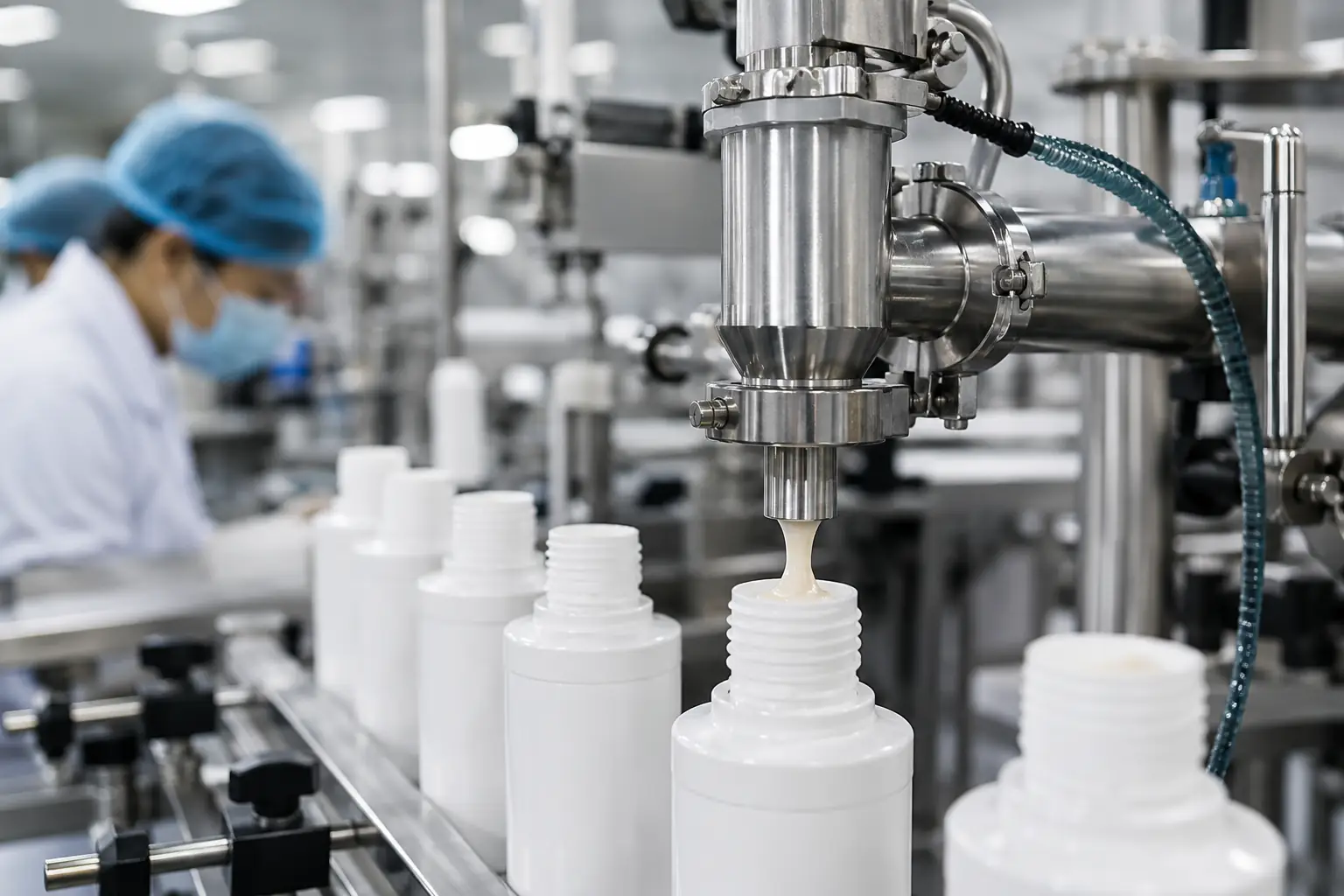
For brands that want a clearer view of skincare OEM timing, our article on How Long Does Custom Skincare Product Development Really Take? explains how formula, packaging, testing, and market requirements can affect the development timeline.
How to Prepare for an OEM Quote
A good cleanser manufacturer can guide your project, but the process will be much smoother if you prepare the right information before asking for a quote.
You do not need to have every detail finalized. However, you should be clear about your target market, product type, formula direction, packaging preference, estimated quantity, and expected launch schedule.
| Category | Details to Prepare |
|---|---|
| Target Market | The country or region where the cleanser will be sold, such as the United States, Europe, Southeast Asia, or the Middle East. This may affect claims, labeling, documentation, and testing needs. |
| Target Users | Oily skin, dry skin, sensitive skin, acne-prone skin, mature skin, men’s grooming, teenagers, or daily family use. |
| Product Type | Gel cleanser, cream cleanser, foam cleanser, amino acid cleanser, exfoliating cleanser, or makeup-removing cleanser. |
| Formula Positioning | Mild daily cleansing, oil control, hydrating cleanser, sensitive-skin cleanser, fragrance-free cleanser, deep cleansing, or premium facial care positioning. |
| Packaging Preference | Tube, pump bottle, foam pump bottle, bottle size, color direction, printing method, outer box, or reference packaging images. |
| Estimated Quantity | Your expected starting order quantity. MOQ may vary depending on formula, packaging, bottle availability, printing method, and customization level. |
| Launch Timeline | Your expected launch date or purchasing schedule. This helps the OEM team judge whether ready-made formulas, in-stock packaging, or customized development is more suitable. |
The more specific your information is, the easier it is for the manufacturer to recommend the right route.
For example, a brand that wants a fragrance-free amino acid cleanser for sensitive skin may need a different formula and testing direction from a brand that wants a refreshing gel cleanser for oily skin.
A brand using in-stock packaging may also have a different timeline and MOQ from a brand that wants a custom-colored bottle, special pump, or printed outer box.
If you want a complete checklist before contacting an OEM factory, you can read What Information Should You Prepare Before Asking for an OEM Quote?.
Why Choose Shangpinhui as Your Cleanser Partner?
At Shangpinhui Biotechnology Co., Ltd., cleanser projects are developed as part of a broader private label skincare solution.
We do not only provide a formula. We help brands connect formula selection, texture adjustment, packaging coordination, sampling, production, and global B2B support.
For cleanser projects, this means we can help you think through:
- The right cleanser type for your target users
- Formula positioning for oily, dry, sensitive, or daily-use skincare
- Texture and foam adjustment
- Fragrance-free or mild cleansing directions
- Packaging compatibility and sample confirmation
- MOQ and production planning
- Labeling and market documentation support
- Future expansion into a complete facial care line
Whether your brand wants to launch a gentle amino acid cleanser, a refreshing gel cleanser, a cream cleanser, or a cleanser that fits into a larger facial care routine, the goal is the same: to create a product that feels right for the customer and supports long-term brand trust.
If you are still comparing different OEM partners, this broader guide may help you evaluate supplier capability more clearly: How to Choose a Skincare OEM Manufacturer for a New Brand.
Conclusion
Choosing a cleanser manufacturer is not just about finding a factory that can produce facial wash.
For private label skincare brands, cleanser development should connect formula strategy, skin type positioning, texture, packaging, MOQ, compliance, production timeline, and long-term product planning.
A good cleanser should match your target users, support repeat purchase, work smoothly with the selected packaging, and fit the positioning of your wider skincare line.
Before starting your project, prepare your target market, product type, formula direction, packaging preference, estimated order quantity, and expected launch date. These details will help your OEM partner recommend a more realistic and suitable development route from the beginning.
To make the decision easier, the following FAQ section answers common questions beauty brands often ask before starting a cleanser OEM project.
FAQ
Q1:What is a cleanser manufacturer?
A cleanser manufacturer is a company that develops and produces facial cleanser products for beauty brands. Depending on the project, the manufacturer may support ready-made formulas, private label production, custom formulation, packaging coordination, filling, labeling, quality control, and documentation support.
Q2:What is the difference between private label cleanser and custom cleanser formulation?
Private label cleanser usually uses an existing or mature formula that can be adjusted with packaging, labeling, fragrance, texture, or positioning changes.
Custom cleanser formulation involves deeper formula development based on your target skin type, texture, ingredient direction, claims, packaging, and brand concept.
Private label is usually faster. Custom formulation offers more flexibility but may require more development time.
Q3:How long does it take to produce a private label cleanser?
The timeline depends on formula choice, packaging, testing, labeling, and market requirements.
If the project uses an existing product with simple label changes and ready packaging, it may move faster. If customized packaging, formula adjustment, or additional testing is required, the process is usually longer and may take around 4–8 weeks depending on the details.
Q4: What MOQ is common for cleanser OEM projects?
MOQ depends on the formula, packaging, bottle availability, printing method, and customization level.
Some projects may support lower starting quantities when using existing formulas and in-stock packaging, while customized bottles, special printing, or unique packaging materials usually require higher MOQ.
The best approach is to share your product type, packaging preference, and estimated quantity with the manufacturer first.
Q5:Can a cleanser manufacturer help with packaging?
Yes. A cleanser OEM manufacturer can usually help coordinate packaging options such as tubes, pump bottles, foam pump bottles, caps, labels, printing, and outer boxes.
Packaging should be confirmed together with the formula because texture, viscosity, dispensing performance, and bottle compatibility can affect the final user experience.
Q6:What should I prepare before asking for a cleanser quote?
You should prepare your target market, target users, cleanser type, formula positioning, packaging preference, estimated order quantity, and expected launch timeline.
If you already have reference products or packaging images, share them with the manufacturer. This will help the OEM team understand your expectations faster.
Q7:Can a cleanser be developed for sensitive skin?
Yes, cleanser formulas can be designed for sensitive-skin positioning.
However, sensitive-skin cleanser development should not rely only on words like “gentle” or “mild.” The formula should focus on mild cleansing, lower irritation potential, comfortable after-feel, and suitable claim control for the target market.
Ready to Develop Your Private Label Cleanser?
If you are planning a cleanser project, Shangpinhui Biotechnology Co., Ltd. can help you compare formula options, packaging routes, sample development, MOQ, and production timelines.
You can start by exploring our Facial Care manufacturing options or contact our team to discuss your cleanser project.
Recommended Reading
If you are still comparing skincare OEM partners or preparing your first cleanser project, these guides can help you plan more clearly:

 French
  English
  Uzbek
Uzbek  Kazakh
  Turkish
  Russian
  Arabic
  Spanish
  Portuguese
  German
  Japanese
  Korean