
A Practical OEM Timeline from Sampling to Packaging and Shipment
Quick Answer: How Long Does Skincare OEM Development Take?
The custom skincare development timeline can range from about one week to several weeks or longer, depending on the development route.
If an existing finished product is available and the brand only needs label customization, shipment may be possible in about one week after stock, label files, quantity, and packaging details are confirmed.
For mature formula projects, initial samples can often be prepared within 3–5 days after requirements are confirmed, excluding delivery time. For many feasible custom formulation projects, an initial custom sample may also be prepared within about 7 days, depending on formula complexity.
If packaging materials need customization without new mold development, they may often arrive at the factory in about one week after confirmation. If a new mold is required, the packaging timeline may extend to around 12–20 days, depending on the bottle design and supplier schedule.
After raw materials and packaging materials arrive at the factory and pass inspection, production and shipment can often be arranged within about one week, depending on production scheduling and final confirmation details.
The total timeline may become longer if sample feedback requires multiple adjustment rounds, packaging samples need changes, or the target market requires additional testing, documentation, or compliance review.
Why Some Online Timelines Look Much Longer Than Real OEM Timelines
When brands search online, they may see skincare product development timelines described as several months or even longer.
Those longer timelines are not always wrong, but they often refer to a different type of process.
Some articles describe the full brand launch journey, including:
- concept creation
- market research
- full formula development
- extended stability testing
- regulatory review
- packaging procurement
- marketing preparation
- retail launch planning
From an OEM manufacturer’s perspective, the timeline is usually discussed differently. The focus is more practical:
- Can an existing formula or finished product be used?
- Is the brand requesting mature formula adjustment or custom formulation?
- How quickly can samples be prepared?
- How soon can the client confirm feedback?
- Is the packaging available, customized, or mold-developed?
- Are raw materials and packaging materials ready?
- What testing or market-specific documentation is required?
So when a brand asks, “How long does skincare product development take?” the better answer is not one universal number. The answer depends on which timeline is being discussed: full brand launch planning or practical OEM project execution.
A Practical Skincare OEM Timeline at a Glance
The table below gives a practical view of how different project situations may affect the timeline.
| Project Situation | Practical Timeline Logic |
|---|---|
| Existing finished product with label customization | If stock, label files, quantity, and confirmation details are ready, shipment may be possible in about one week. |
| Mature formula sampling | Initial samples can often be prepared within 3–5 days after requirements are confirmed, excluding delivery time. |
| Feasible custom formula sampling | Initial custom samples can often be prepared within about 7 days, depending on formula complexity and requirements. |
| Domestic sample delivery | Usually faster; samples may arrive the same day or the next day depending on city and courier schedule. |
| Overseas sample delivery | Depends on destination country, courier service, customs handling, and shipping arrangement; timing should be confirmed case by case. |
| Sample adjustment | Each adjustment round adds formula revision time, delivery time, and client review time. |
| Raw material preparation | Raw materials may commonly arrive within about 5–7 days, depending on formula and supply situation. |
| Packaging customization without new mold | Packaging materials may often arrive at the factory in about one week after confirmation, depending on supplier and decoration process. |
| Packaging sample adjustment | If packaging samples need changes, this may add about 3–5 days before a new sample is confirmed. |
| Packaging with new mold | New mold development may take around 12–20 days depending on bottle design and supplier schedule. |
| Production after materials are ready | After raw materials and packaging pass inspection, production and shipment can often be arranged within about one week, depending on scheduling. |
| Target-market testing or compliance | Depends on destination country, product type, claims, testing requirements, and documents. |
This table is not meant to replace project-specific confirmation. Instead, it helps brands understand why different OEM projects may move at very different speeds.
The Fastest Route: Finished Product with Label Customization
The fastest skincare OEM route is usually an existing finished product with label customization.
This means the formula and product format are already available, and the brand mainly needs to confirm:
- product selection
- order quantity
- label design files
- packaging details
- shipping arrangement
- required documents
When stock is available and all confirmation details are ready, this route may allow shipment in about one week.
This type of project is suitable for brands that want to move quickly, test a product category, or launch with a more manageable first step. However, it is less suitable for brands that need deeper formula differentiation or a highly customized product story.
Before estimating a development timeline, brands should first understand whether they are choosing a mature formula route or a deeper custom formulation route.
Private Label vs. Custom Formulation in Skincare: Which Is Right for Your Brand?
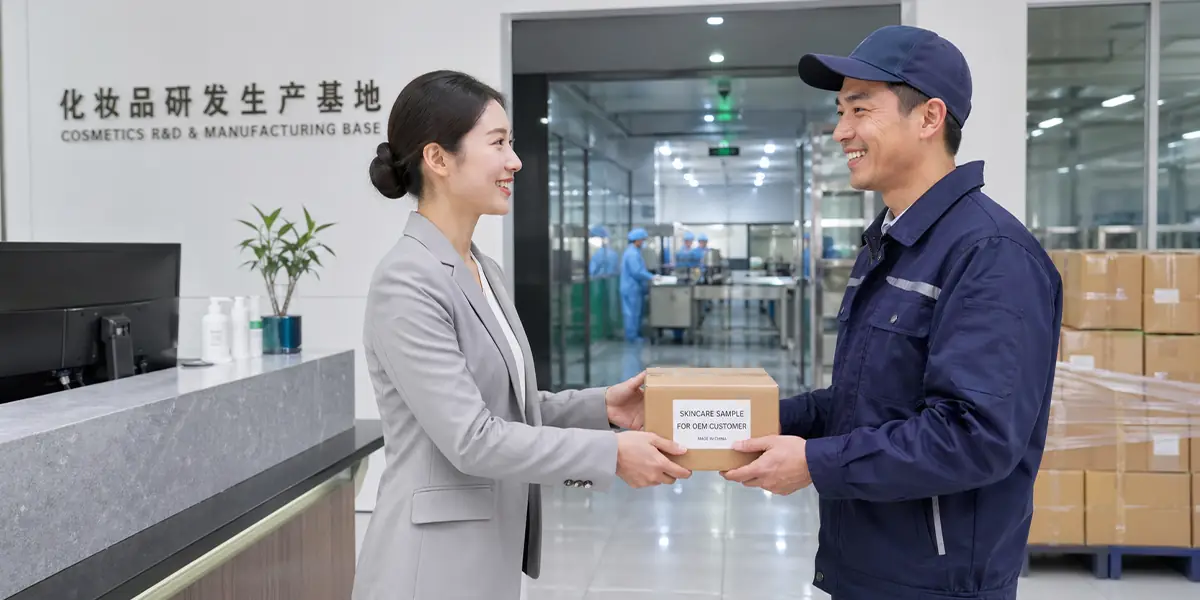
Mature Formula Sampling: Why Initial Samples Can Be Prepared Quickly
For many skincare OEM projects, mature formula sampling can move quickly.
Once the product direction is confirmed, initial samples based on mature formula systems can often be prepared within 3–5 days, excluding delivery time.
This does not mean the entire project is finished in 3–5 days. It means the first formula sample can often be made quickly when the direction is clear.
The full project timeline still depends on:
- sample delivery
- client testing and feedback
- whether the sample is approved in the first round
- whether adjustments are needed
- packaging confirmation
- material preparation
- production scheduling
This is why a fast sample does not always mean an immediate bulk shipment. But it does mean that brands do not always need to wait months before seeing the first sample, especially when a mature formula route is suitable.
A clearer project brief usually makes sample preparation and timeline estimation more efficient from the beginning.
What Information Should You Prepare Before Asking for an OEM Quote?
Custom Formula Sampling Does Not Always Mean Waiting for Months
Custom formulation often sounds like a long process, but the first sample does not always take months.
For many feasible cosmetic concepts, an initial custom formula sample may be prepared within about 7 days after the requirements are confirmed, excluding delivery time.
This is possible when:
- the formula direction is technically feasible
- the product concept is clear
- the requested ingredients are available
- the active strategy is realistic
- the texture and product format are not overly complex
- there are no unusual regulatory or testing barriers at the sample stage
However, custom formulation may take longer when the project involves unusual ingredients, difficult texture goals, complex performance expectations, special claims, or market-specific restrictions.
The key point is that custom formulation should not automatically be understood as a six-month or one-year process. In many OEM situations, the first development sample can be prepared much faster, while the total launch timeline depends on what happens after sampling.
Sample Delivery and Feedback Often Add More Time Than Sample Making
In many projects, sample preparation itself is not the longest part. The time is often added during delivery, review, feedback, and adjustment.
For domestic sample delivery, express shipping is usually faster. Depending on the city and courier schedule, samples may arrive the same day or the next day.
For overseas clients, sample delivery time depends on the destination country, courier service, customs handling, and shipping arrangement. Sample packages are usually small and light, but the exact delivery time should still be confirmed case by case.
After the client receives the sample, they may need time to evaluate:
- skin feel
- texture
- scent
- color
- product concept fit
- packaging compatibility
- market positioning
If the sample matches expectations, the project can move forward quickly. If adjustments are needed, another round may be required.
For example, one adjustment round may include:
- formula adjustment
- new sample preparation
- sample delivery
- client testing
- new feedback confirmation
This is why repeated sample adjustment can add days or even weeks to the total project timeline.
The purpose of sampling is not to delay the project. It is to confirm the product direction before bulk production so that the final product is closer to the brand’s expectations.
Packaging Confirmation Can Affect the Timeline More Than Brands Expect
Packaging is one of the most important timeline factors in skincare OEM projects.
If the brand accepts available packaging, the project can usually move faster. But if packaging needs customization, the timeline depends on how quickly the packaging sample is confirmed.
Before bulk packaging materials are produced, brands usually need to confirm packaging samples first. This may include:
- bottle height
- pump style
- bottle thickness
- color
- decoration process
- surface finish
- printing or labeling position
- overall appearance
Once the packaging sample is approved, the packaging supplier can produce bulk materials according to the confirmed sample.
If the brand requests changes to the packaging sample, this may add about 3–5 days for adjustment before a new sample is sent for confirmation.
For packaging customization without new mold development, packaging materials may often arrive at the factory in about one week after confirmation, depending on the supplier and decoration process.
If a new mold is required, the timeline may be longer. New mold development may take around 12–20 days, depending on the bottle design and supplier schedule. Mold costs are usually paid by the client and vary depending on the packaging structure.
In many skincare OEM projects, however, new mold development is not necessary. Suitable existing packaging options can often be selected, especially for first-batch projects or brands that want to move faster.
Raw Materials, Packaging Arrival, and Production Scheduling Also Matter
After the formula and packaging direction are confirmed, the project moves into production preparation.
This stage usually includes:
- contract confirmation
- deposit payment
- raw material preparation
- packaging material production or arrival
- incoming material inspection
- production scheduling
Raw materials may commonly arrive within about 5–7 days, depending on the formula and supply situation.
Once raw materials and packaging materials arrive at the factory and pass inspection, production and shipment can often be arranged within about one week, depending on production scheduling and project details.
This stage is important because a formula may already be confirmed, but production cannot move smoothly until materials, packaging, and final order details are ready.
Before bulk production, the brand and manufacturer usually need to confirm:
- final order quantity
- packaging details
- bottle or jar finish
- carton specifications
- packing method
- shipping-related dimensions
- production notes
- quality requirements
This is why production timeline is not only about how fast the factory can manufacture. It also depends on how quickly all required materials and final confirmations are completed.
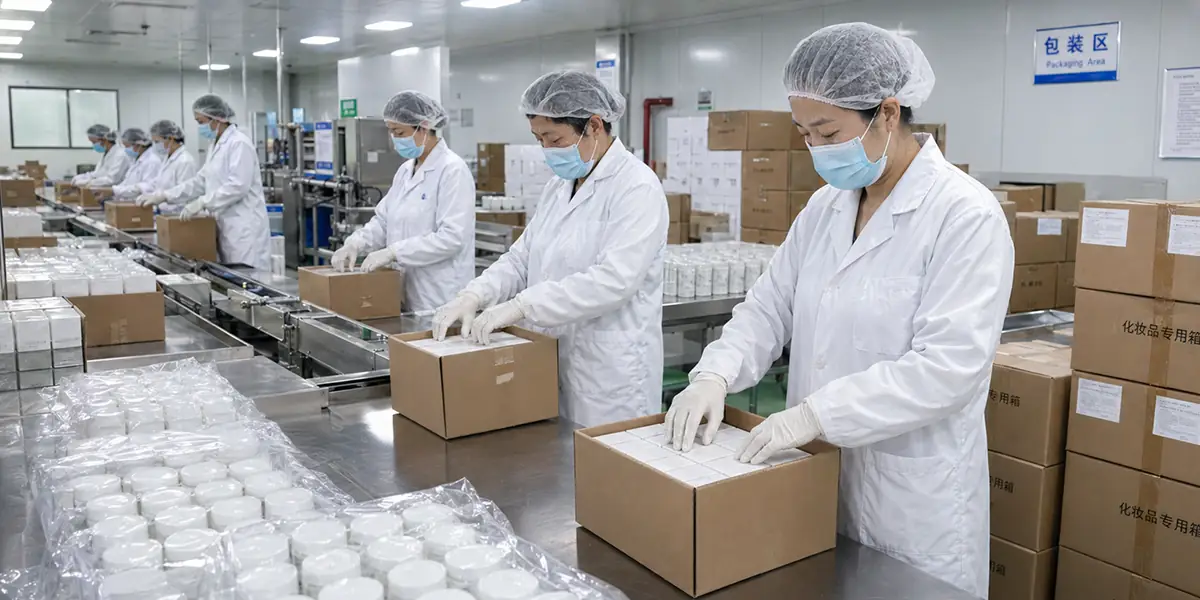
Testing, Inspection, and Target-Market Requirements Can Change the Final Schedule
The final timeline can also be affected by testing, inspection, and market-specific requirements.
After production, finished products may need inspection based on product type, quality standards, and destination market requirements.
This may include checks such as:
- appearance inspection
- physical and chemical indicators
- microbiological testing
- sensory evaluation
- packaging sealing
- batch records
- outgoing inspection reports
Different countries may have different requirements for cosmetics. Some markets may require additional documentation, testing, registration, notification, or compliance review before the product can be sold.
This means the factory production timeline and the market launch timeline are not always the same.
A product may be ready for shipment from the factory, but the brand may still need to complete local import, testing, registration, or market compliance steps depending on the destination country.
That is why brands should discuss the target market early when planning a skincare OEM timeline.
What Usually Delays a Skincare OEM Project?
Skincare OEM projects are often delayed by confirmation issues rather than formula making alone.
Common delays include:
- unclear project direction
- changing product expectations
- slow sample feedback
- vague comments after testing samples
- repeated packaging sample adjustments
- label design files not being ready
- packaging supplier delays
- raw material supply changes
- target-market compliance requirements
- late confirmation of quantity or packing details
- too many decision-makers involved in feedback
For example, if a formula sample is prepared within 3–5 days but the client takes a long time to review it or gives unclear feedback, the timeline will still extend.
Similarly, if a packaging sample needs to be adjusted several times, the overall schedule may become longer even if the formula is already approved.
The timeline becomes easier to control when each decision point is handled clearly and early.
How Brands Can Keep the Timeline More Predictable
Brands can often make the OEM timeline more predictable by preparing and confirming key decisions earlier.
Useful steps include:
- decide whether the project uses a finished product, mature formula, or custom formulation route
- confirm whether available packaging is acceptable
- discuss packaging customization early
- prepare label files as early as possible
- clarify target market and compliance needs
- give specific sample feedback
- avoid changing the product direction repeatedly
- confirm quantity and packing requirements before production planning
The goal is not to rush every step. The goal is to reduce avoidable uncertainty.
A clear project route, efficient sample feedback, and early packaging confirmation usually help the project move faster and more smoothly.
Conclusion
Custom skincare product development does not have one universal timeline.
Some projects can move quickly. If an existing finished product is available and only label customization is needed, shipment may be possible in about one week after key details are confirmed. Mature formula samples may often be prepared within 3–5 days, while feasible custom formula samples may often be prepared within about 7 days, excluding delivery time.
However, the full OEM timeline can become longer when sample delivery, feedback, packaging sample confirmation, packaging adjustment, raw material preparation, production scheduling, testing, and target-market compliance are included.
The real question is not only “How long does skincare development take?” but also:
Which route are you choosing, and how clearly are the key decisions confirmed?
The best way to shorten a skincare OEM timeline is not to skip important steps. It is to make each step clearer from the beginning.
Before moving into the FAQ section, here are a few quick questions brands often ask when estimating skincare development timelines.
FAQ
Q1:Can a skincare product really be ready in about one week?
Yes, in some cases. If an existing finished product is available and the brand only needs label customization, shipment may be possible in about one week after stock, label files, quantity, and packaging details are confirmed. This applies to simpler relabeling routes, not every custom development project.
Q2:How fast can initial skincare samples be prepared?
For mature formula routes, initial samples can often be prepared within 3–5 days after requirements are confirmed, excluding delivery time. For feasible custom formulation projects, initial samples may often be prepared within about 7 days, depending on product complexity.
Q3:Does overseas sample delivery take longer?
It depends on the destination country, courier service, customs handling, and shipping arrangement. Sample packages are usually small and light, but international delivery time should still be confirmed case by case rather than assumed as a fixed number.
Q4:Does custom packaging make the OEM timeline longer?
It can. Packaging customization often requires sample confirmation before bulk packaging production. If packaging samples need adjustment, this may add about 3–5 days. If new mold development is required, the timeline may be longer, often around 12–20 days depending on the bottle design and supplier schedule.
Q5:What usually delays skincare OEM projects the most?
Common delays include unclear feedback, repeated sample adjustment, late packaging confirmation, unfinished label files, packaging supplier delays, changing product requirements, and market-specific testing or compliance needs.

 French
  English
  Uzbek
Uzbek  Kazakh
  Turkish
  Russian
  Arabic
  Spanish
  Portuguese
  German
  Japanese
  Korean