
Why Anti-Aging Formulations Need More Than Collagen Support
Introduction
Why do some users invest in premium antioxidant products, yet still experience dullness, sagging, and deep wrinkles?
In many cases, the answer lies beyond oxidative stress.
While antioxidant strategies are essential, they do not fully explain why skin gradually becomes less flexible, more yellow in tone, and develops deeper, more fixed wrinkles over time.
In addition to free radical damage, another important but often overlooked process—glycation—plays a major role in how skin ages.
If oxidative stress can be compared to “rusting,” glycation works more like a slow internal “caramelization” process that affects the skin’s structural proteins.
Understanding this mechanism is increasingly important for brands developing advanced anti-aging products in today’s functional skincare market.
What Is Glycation in Skin Aging?
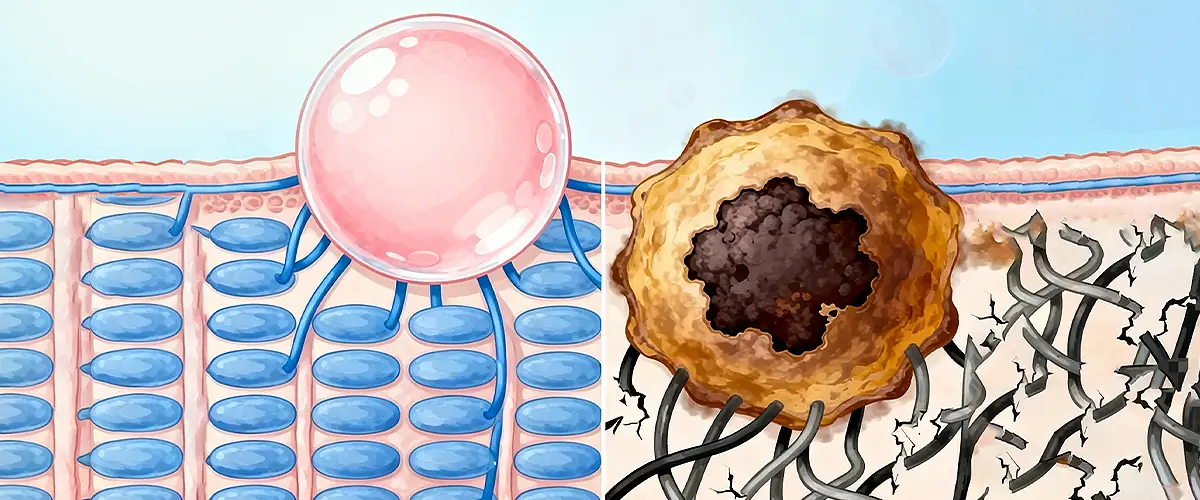
Glycation is a non-enzymatic reaction in which excess sugars bind to proteins such as collagen and elastin.
Over time, this process leads to the formation of Advanced Glycation End Products (AGEs), which alter the structure and function of these proteins.
Instead of remaining flexible and resilient, collagen fibers become stiffer, more brittle, and more prone to structural damage.
This transformation affects the skin’s ability to maintain smoothness, elasticity, and overall vitality.
The Visible Impact of Glycation on Skin
Although glycation occurs at a microscopic level, its effects are clearly visible in aging skin.
1. Dullness and Yellowing
AGEs often have a brownish tone, which contributes to a sallow or tired-looking complexion.
2. Deeper Wrinkles
Glycation causes cross-linking between collagen fibers, making them rigid and less responsive.
This leads to wrinkles that are deeper and more difficult to improve through basic hydration or surface-level care.
3. Reduced Skin Resilience
Glycated proteins weaken the skin’s natural repair ability, making it more vulnerable to environmental stress and slower to recover.
Why Collagen Support Alone Cannot Solve Glycation-Related Aging
Many anti-aging products focus heavily on collagen stimulation or supplementation.
However, if the surrounding protein environment has already been affected by glycation, simply increasing collagen levels may not fully address the problem.
This is also why a broader understanding of anti-aging mechanisms is important. As discussed in our guide on How Anti-Aging Skincare Works: Why Collagen Alone Is Not Enough
effective anti-aging strategies require multiple layers of protection rather than relying on a single pathway.
In other words, supporting collagen production is important—but preserving its structural integrity is equally critical.
Why Glycation Is Often Overlooked in Skincare
Compared to hydration or antioxidant protection, glycation is less visible and less frequently discussed.
It develops gradually and does not always produce immediate, noticeable symptoms.
As a result, many formulations emphasize more familiar claims such as “firming” or “anti-wrinkle,” without addressing the underlying structural changes caused by glycation.
For brands looking to differentiate in a competitive anti-aging market, this represents a valuable opportunity to introduce more advanced formulation logic.
Anti-Glycation Strategies in Formulation
From an OEM formulation perspective, addressing glycation requires a structured and multi-layer approach.
1. Prevention
Ingredients such as Carnosine can act as protective agents by reacting with sugars before they bind to collagen, helping reduce glycation at an early stage.
2. Deglycation / Repair
Certain botanical extracts and advanced peptides are designed to help reduce the accumulation of glycation-related compounds or support structural repair over time.
3. Synergistic Protection
Combining anti-glycation strategies with antioxidant systems (such as Vitamin C and Vitamin E) can help create a more comprehensive defense against skin aging.
To better understand how these formulation strategies are translated into real product development workflows, you can refer to How to Start a Skincare Project with an OEM Manufacturer
Glycation Works Alongside Oxidative Stress, Not Separately
Skin aging is rarely driven by a single factor.
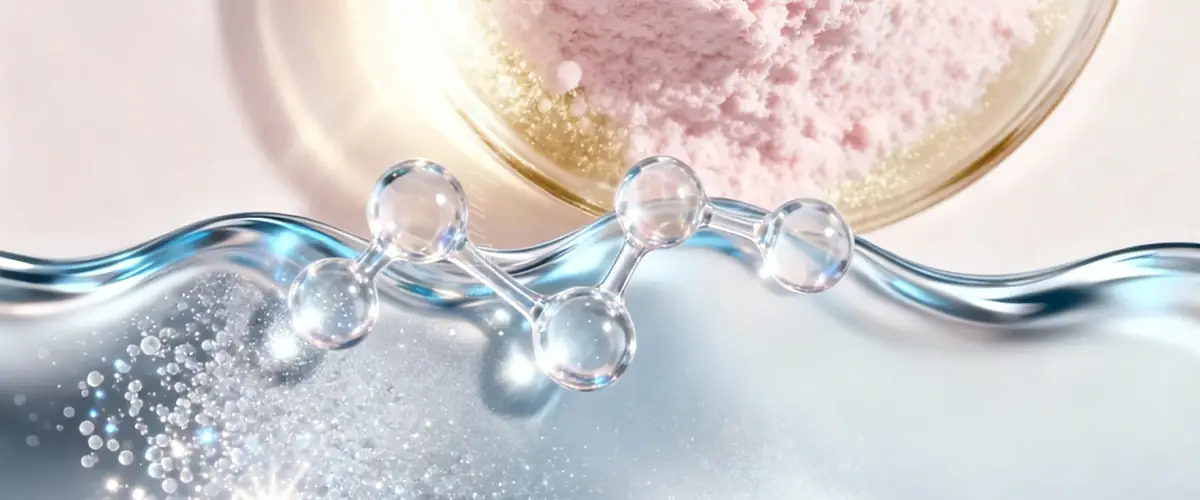
Glycation and oxidative stress often occur together, reinforcing each other’s effects on the skin.
As explained in our previous article on How Oxidative Stress Drives Skin Aging (SOD in Anti-Aging OEM), free radical damage can weaken structural proteins, making them more vulnerable to additional processes such as glycation.
Understanding how these mechanisms interact allows brands to design more effective, multi-dimensional anti-aging products rather than focusing on isolated solutions.
Conclusion
Glycation is one of the most overlooked contributors to skin aging, yet it plays a critical role in the development of dullness, stiffness, and deep wrinkles.
For brands aiming to move beyond basic anti-aging positioning, incorporating anti-glycation strategies into formulation design offers a more advanced and differentiated approach.
Developing an effective anti-glycation formula requires balancing ingredient stability, compatibility, and delivery—ensuring that active components perform effectively within real-world product systems.
To make this topic easier to review, here are a few common questions brands may still have about glycation and anti-aging formulation design.
FAQ
1. What is glycation in skincare?
Glycation is a process in which sugars bind to proteins like collagen, leading to structural changes that contribute to skin aging.
2. Can collagen-based products solve glycation-related aging?
Not entirely. While collagen support is important, glycation affects the surrounding structural environment, which requires additional formulation strategies.
3. Why should brands consider anti-glycation formulation in OEM development?
Because glycation is directly linked to visible concerns such as dullness, stiffness, and deep wrinkles, making it a valuable direction for advanced anti-aging product positioning.
If you’re exploring advanced anti-aging product development, our team can support you with ingredient selection, formulation design, and OEM production planning tailored to your brand positioning.
 Uzbek
Uzbek  English
  Kazakh
  Turkish
  Russian
  Arabic
  Spanish
  Portuguese
  French
  German
  Japanese
  Korean