
From sensitive-skin anti-aging creams to premium multi-peptide night repair formulas, polypeptide cream is becoming one of the most attractive private label skincare directions for 2026.
Your customers are getting smarter.
They still want anti-aging results. They still want firmer-looking skin, smoother texture, fewer visible fine lines, and products that feel premium. But they are also tired of harsh routines that leave the skin dry, reactive, or over-treated.
Aggressive exfoliation is losing its shine. Overcomplicated skincare routines are losing patience.
People want performance without the punishment.
That is exactly why peptides are becoming so important.
When your customers see words like peptide cream, multi-peptide serum, or collagen-support peptide moisturizer, they already understand the basic idea: firming, elasticity, repair, and premium anti-aging care.
No heavy education needed.
And this shift is backed by both trend coverage and market data. Vogue UK’s 2026 skincare trend coverage says peptides will “take centre stage” as beauty moves toward barrier-repairing, microbiome-friendly, healing skincare. The same report explains that peptides act as messengers that support collagen, elastin, and anti-inflammatory benefits.
Allure’s 2026 skincare trend coverage also points to more sophisticated peptides and advanced delivery systems as part of the next stage of skincare innovation.
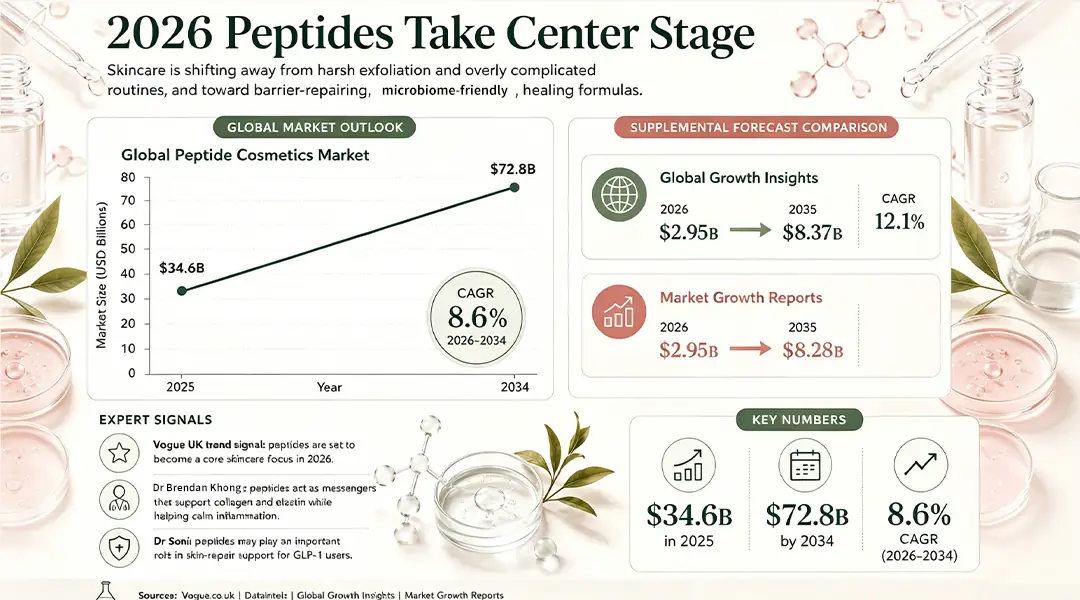
The market numbers are even harder to ignore. According to DataIntelo, the global peptide cosmetics market was valued at USD 34.6 billion in 2025 and is projected to reach USD 72.8 billion by 2034, with an estimated 8.6% CAGR from 2026 to 2034.
For private label skincare brands, this is not just a trend to watch.
It is a product window.
2026 is the right time to build peptide-based anti-aging products because the consumer mindset is already there. Your customers want formulas that feel more advanced than basic moisturizers, but less intimidating than aggressive actives.
That is the sweet spot for polypeptide cream.
You can position it for firming, fine lines, barrier support, sensitive-skin anti-aging, night repair, or premium mature-skin care. You can also build it into a wider peptide skincare line with serum, cream, eye cream, or repair moisturizer.
But here’s the catch.
Most peptide creams on the market are not worth copying.
Many low-cost peptide creams are built as label claims, not real products. They put “peptide” on the front label, but the formula has no clear peptide system, no strong supporting actives, no serious delivery logic, no texture strategy, and no clear target user.
That is where a real polypeptide cream OEM strategy matters.
The question is not:
“Can we add peptides?”
The better question is:
“How do we build a peptide cream that customers understand, feel, trust, and buy again?”
Which Brands Are Most Suitable for Developing a Polypeptide Cream Line?
Polypeptide cream is not the same opportunity for every brand.
For some brands, it should become a premium anti-aging hero product. For others, it works better as a barrier-repair cream, a sensitive-skin moisturizer, or a retinol-alternative product.
The key is positioning.
Sensitive-Skin Skincare Brands
Sensitive-skin brands are a strong fit for polypeptide cream.
Why?
Because your customers want anti-aging care, but they do not want formulas that wreck their skin barrier.
A sensitive-skin peptide cream can be developed around:
- Peptides + ceramides
- Peptides + panthenol
- Peptides + beta-glucan
- Peptides + ectoin
- Fragrance-free or low-fragrance options
- Lightweight but comforting textures
- Barrier-repair positioning
This direction works well if your brand wants to say:
“This is anti-aging care for skin that cannot tolerate aggressive formulas.”
For brands targeting sensitive-skin consumers, gentler alternatives can also be compared during the early product planning stage, especially when building a product story around a gentler retinol alternative for sensitive skin.
Anti-Aging Skincare Brands
Anti-aging brands are the most direct fit.
A polypeptide cream can support product positioning around firming, fine lines, elasticity, mature skin, and long-term skin care. It can also sit naturally beside peptide serum, retinol serum, bakuchiol cream, collagen-support moisturizer, or eye cream.
But the product story needs to be sharp.
Ask these questions first:
- Is it for early aging?
- Is it for mature skin?
- Is it for fine lines?
- Is it for loss of firmness?
- Is it for dry skin and night repair?
- Is it a premium multi-peptide cream?
A basic moisturizing cream with a tiny peptide claim is not enough. If your brand wants to sell a peptide anti-aging product, the formula should feel like one.
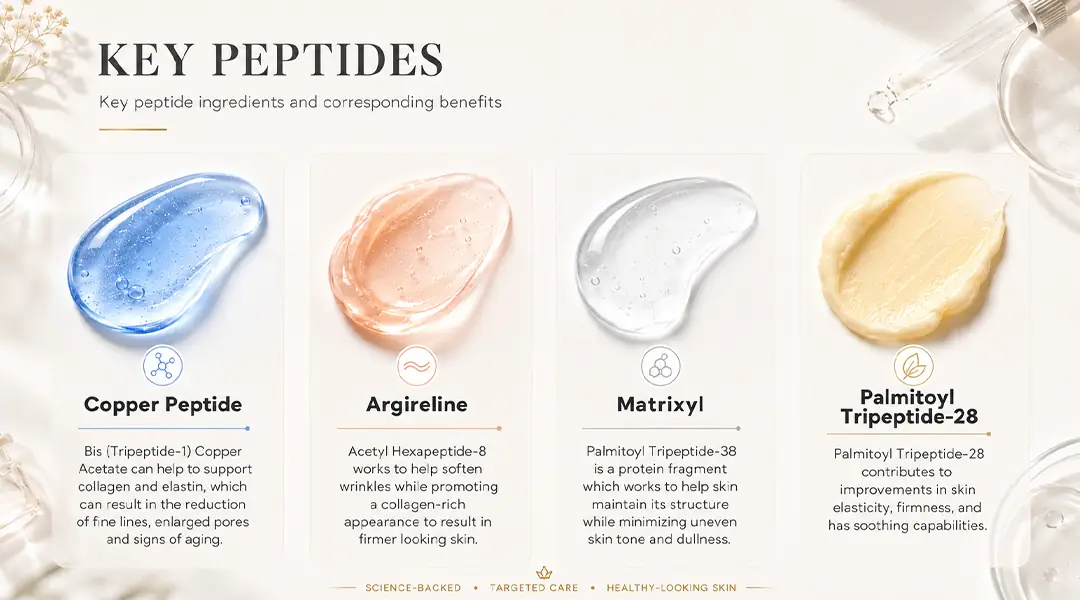
For brands that want to understand peptide mechanisms before selecting a product direction, it is useful to review how peptide-based anti-aging skincare formulation is usually structured.
Natural or Clean Beauty Brands
Natural and clean beauty brands can also use peptide cream as a smart upgrade.
The point is not to say that all peptides are natural. That would be too simplistic.
The stronger angle is this:
Peptide cream helps natural-positioned brands move from basic gentle skincare into performance-driven anti-aging.
Your customers may like clean formulas, but they still want visible skin benefits. They want smoother-looking skin. Better elasticity. Stronger moisture retention. A healthier skin feel.
A peptide cream can help connect:
- Gentle skincare
- Barrier support
- Plant-based or fermentation-derived actives
- Premium anti-aging positioning
- Fragrance-free or sensitive-skin friendly formulas
When a brand wants a stronger technical story, peptide creams can also be developed together with fermented peptide actives for anti-aging skincare.
Mass-Market Brands Moving Into Premium Skincare
Polypeptide cream is also a smart move for mass-market brands that want to upgrade.
Maybe your brand already sells basic moisturizers, cleansers, or body care products. But now you want a higher-margin product line. Something that looks more premium. Something that feels more advanced.
Peptide cream is easy for customers to understand. It sounds more technical than a basic moisturizer, but not as intimidating as some medical-style anti-aging concepts.
You can use polypeptide cream to create:
- A premium night cream
- A mature-skin care line
- A peptide serum + cream set
- A gift-box product
- A higher-margin anti-aging SKU
- A first premium skincare line for existing customers
Here, packaging matters.
A peptide cream in cheap packaging will not support a premium price point. The formula, texture, jar or pump, visual design, claim language, and product image all need to tell the same story.
Why Cheap Peptide Creams Often Become a Label Claim, Not a Real Product
Peptides are valuable.
But many peptide creams are not.
The problem is not the ingredient. The problem is lazy formulation.
A product may say “peptide cream” on the label, but the actual formula may have no clear direction. It may not be built for sensitive skin, mature skin, firming, barrier repair, night repair, or any specific target user.
That kind of product is hard to remember.
And if customers do not remember it, they do not repurchase it.
The peptide story is too weak
A serious peptide cream should have a clear formula logic.
Is it based on signal peptides? Multi-peptide complex? Copper peptide? Collagen-support peptide? Peptide + ceramide repair system?
If the brand cannot explain why the peptide system was selected, the product story becomes weak.
The formula does not support peptide stability
Peptides are not magic words.
You cannot just add them into any cream and expect the formula to feel premium. The formula environment, ingredient compatibility, texture system, and manufacturing process all affect the final product quality.
If the cream feels sticky, unstable, too heavy, or poorly absorbed, the peptide claim will not save it.
The delivery system is too basic
This is where many peptide products fall flat.
For high-value peptide skincare, delivery systems such as liposome encapsulation can create a stronger technical story around active protection, formula stability, skin feel, and premium positioning.
This matters especially for peptide serums, multi-peptide creams, and anti-aging repair products.
Before finalizing a peptide cream, many brands also compare peptides with other anti-aging ingredient systems to build a more complete roadmap for anti-aging ingredient selection for OEM skincare.
The product has no clear target user
A peptide cream for dry mature skin should not feel like a peptide cream for sensitive combination skin.
A night repair cream should not feel like a daytime gel moisturizer.
A peptide eye cream should not use the same positioning as a full-face rich cream.
Trying to be everything usually makes the product forgettable.
A better OEM approach starts with the target user first.
Five High-Value Polypeptide Cream Formula Directions for Private Label Brands
A strong peptide cream does not start with:
“Which peptide should we add?”
It starts with:
“Who is this product for?”
That question changes everything.
Five High-Value Polypeptide Cream Formula Directions
| Formula Direction | Main Formula Logic | Suitable Market Positioning |
|---|---|---|
| Basic Wrinkle-Care Peptide Cream | Signal peptides combined with hydration and skin-smoothing ingredients. | Entry-level anti-aging, fine lines, first anti-aging cream, daily moisturizer upgrade. |
| Firming & Elasticity Peptide Cream | Collagen-support peptide complex with a richer, more elastic skin-feel texture. | Mature skin, premium anti-aging, firmness care, elasticity support. |
| Barrier-Repair Peptide Cream | Peptides combined with ceramides, panthenol, beta-glucan, or other barrier-support ingredients. | Sensitive skin, compromised barrier, gentle anti-aging, retinol-alternative positioning. |
| Night Repair Peptide Cream | Multi-peptide system with humectants, emollients, and a richer overnight repair texture. | Dry skin, mature skin, night care, premium repair cream, high repeat purchase. |
| Multi-Effect Peptide Cream | Multi-peptide complex combined with hydration, barrier support, and optional brightening or soothing actives. | Premium all-in-one anti-aging cream, hero product, complete skincare line extension. |
A basic wrinkle-care peptide cream is suitable for brands that want an easy-to-understand anti-aging product. It can focus on fine lines, dryness lines, and first signs of aging.
A firming and elasticity peptide cream is more suitable for mature-skin positioning. This formula should feel more premium, more nourishing, and more connected to visible skin firmness.
A barrier-repair peptide cream is especially valuable for sensitive-skin brands. Instead of pushing a harsh anti-aging message, this direction focuses on comfort, skin resilience, and daily repair.
A night repair peptide cream is suitable for dry skin, mature skin, and customers who prefer richer textures. Night creams often carry stronger repair and premium care expectations, so this format can support higher price positioning.
A multi-effect peptide cream can become a hero product. It can combine multi-peptide systems with moisturizing, barrier-support, soothing, or brightening-support ingredients, depending on your brand’s market.
For brands that want a stronger technical angle, these formula directions can also be developed with liposome encapsulation, fermentation-derived actives, or advanced emulsion systems.
That is how a peptide cream becomes more than a label claim.
It becomes a product concept.
Serum, Cream, or Eye Cream: Which Peptide Product Should Your Brand Start With?
Not every brand needs to start with a cream.
If you want a high-active image, peptide serum may be the better first product.
If you want stronger repurchase, polypeptide cream may be the better choice.
If you want a high-margin targeted product, peptide eye cream is worth serious attention.
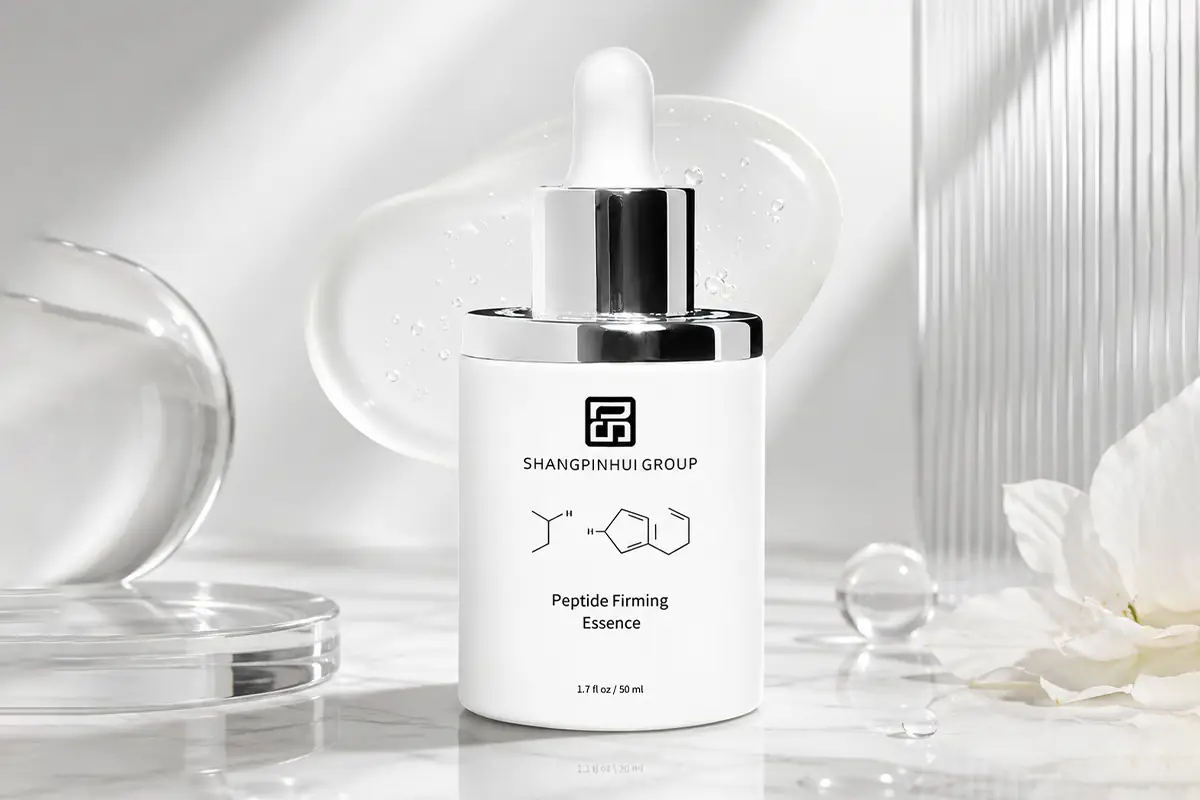
Peptide Serum vs Polypeptide Cream vs Peptide Eye Cream
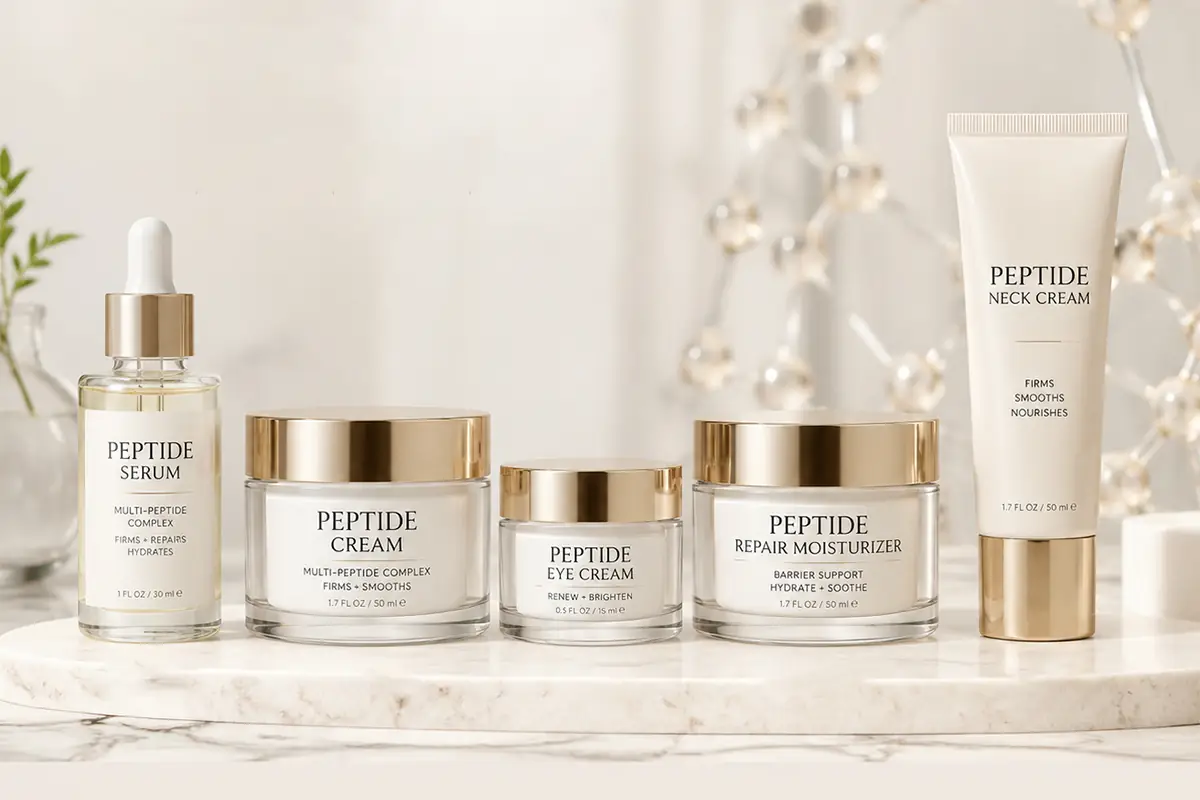
| Product Type | Best For | Commercial Value |
|---|---|---|
| Peptide Serum | High-active positioning, lightweight texture, fast absorption, daily anti-aging care. | High perceived efficacy, suitable for most skin types, strong premium pricing potential. |
| Polypeptide Cream | Moisturizing, barrier repair, mature skin, dry skin, night care. | Strong repeat purchase, easier to build premium packaging, suitable for hero product development. |
| Peptide Eye Cream | Fine lines, eye-area firmness, targeted premium care. | High unit price, strong profit margin, suitable for premium anti-aging sets. |
| Peptide Repair Moisturizer | Sensitive skin, daily repair, low-irritation anti-aging, retinol-alternative concept. | Wider audience, lower education barrier, good for clean beauty and sensitive-skin brands. |
| Peptide Neck Cream | Mature-skin niche, firming care, targeted body-area anti-aging. | High-margin extension product, suitable for complete anti-aging product lines. |
If your brand wants a high-performance image, start with peptide serum.
It feels concentrated. It feels active-driven. It is easy to position as a premium product.
If your brand wants repeat purchase, polypeptide cream is usually stronger.
Cream is part of a daily routine. It works especially well for dry skin, mature skin, night care, and barrier repair.
If your brand wants high-margin targeted care, peptide eye cream can be a smart choice.
Small size. High perceived value. Clear concern. Strong profit potential.
If your brand focuses on sensitive skin, a peptide repair moisturizer may be better than a very active serum. It can give customers anti-aging support without making the product feel harsh.
You can also review our broader product development categories through the Products Center to plan how peptide skincare may fit into a complete private label product line.
How Our Polypeptide Cream OEM Service Helps Brands Build Better Products
At Shangpinhui Biotechnology Co., Ltd., we support private label skincare brands with peptide cream, peptide serum, peptide eye cream, and custom anti-aging formulation development.
We are not here to help you add “peptide” as a decoration.
We help you build a product with a clear target user, suitable texture, stronger technical story, and commercially workable launch plan.
Mature Peptide Formula Library
For brands that want a faster private label route, we can provide mature formula options for peptide cream, peptide serum, peptide eye cream, and peptide repair moisturizer.
This is suitable for brands that want to test the market quickly, build a first anti-aging line, or launch a hero product without starting from zero.
Custom Peptide Combination and Concentration Planning
Different brands need different peptide systems.
A product for mature skin should not be built the same way as a sensitive-skin peptide moisturizer. A lightweight peptide serum should not feel like a rich night cream.
We can help brands adjust:
- Peptide combination
- Supporting active ingredients
- Texture and skin feel
- Fragrance or fragrance-free direction
- Target skin type
- Product positioning
- Packaging compatibility
This makes the product feel like it belongs to your brand, not like another generic peptide cream.
Liposome Delivery System Support
For premium peptide skincare, delivery systems can become part of the product value.
Liposome encapsulation can help brands build a more advanced formula concept around active protection, stability, skin feel, and premium positioning.
This is especially suitable for peptide serums, multi-peptide creams, and high-value anti-aging repair products.
Fermentation-Derived Active Support
Peptide creams can also be combined with fermentation-derived actives to create a more differentiated anti-aging or barrier-repair concept.
This is useful for brands that want more than a basic peptide claim.
A peptide + fermented active concept can be suitable for:
- Premium anti-aging creams
- Sensitive-skin repair creams
- Barrier-support peptide moisturizers
- Night repair formulas
- High-end private label skincare lines
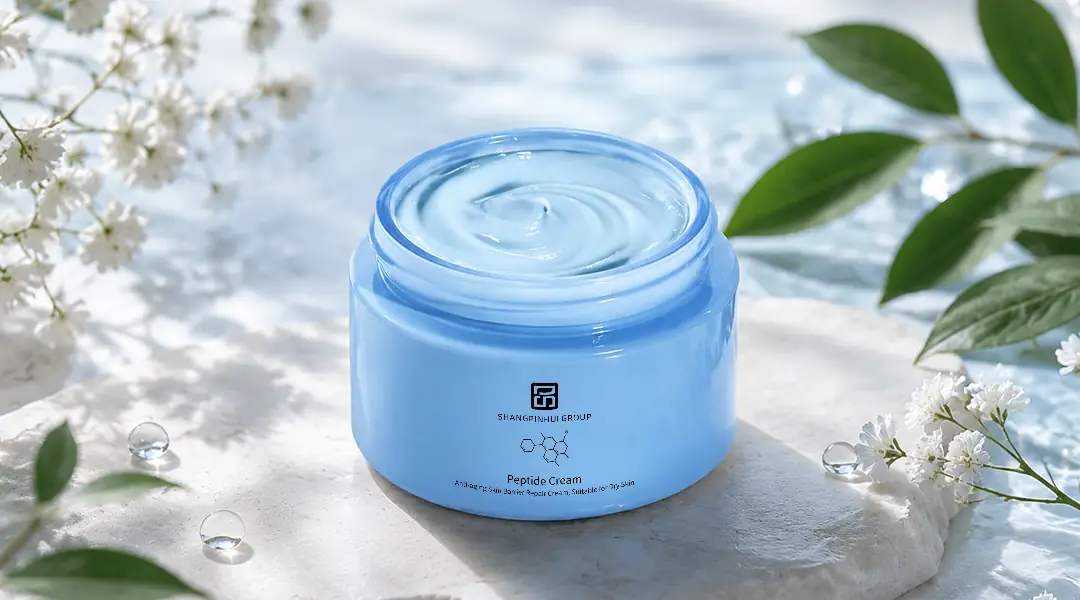
Texture and Packaging Customization
A peptide cream should not only sound good.
It needs to feel good.
We can help develop different texture directions, such as:
- Lightweight gel cream
- Soft moisturizing cream
- Rich night cream
- Fragrance-free repair cream
- Premium silky cream
- Fast-absorbing peptide serum
- Nourishing eye cream texture
Packaging can also be selected based on your product concept. Options may include jars, airless pumps, tubes, premium bottles, or custom packaging solutions.
For peptide skincare, packaging is not just decoration.
It affects product image, user experience, stability consideration, and price perception.
ISO 22716, GMPC, and EU GMP Certified Manufacturing Support
Our manufacturing and quality-control system is supported by ISO 22716, GMPC, and EU GMP certifications.
For brands targeting different markets, we can also support cosmetic project documentation, ingredient review, testing coordination, and compliance-oriented preparation based on the product type and destination market.
This matters because anti-aging claims need to be handled carefully.
A good peptide cream should have a strong marketing story, but it should not sound like a medical product.
Instead of saying a peptide cream “removes wrinkles” or “rebuilds skin,” a more suitable cosmetic expression may focus on:
- Helps improve the appearance of fine lines
- Supports firmer-looking skin
- Helps maintain skin elasticity
- Supports barrier comfort
- Helps skin look smoother and more resilient
That is safer. More professional. More suitable for international private label skincare projects.
Flexible OEM Support for Trial Orders
For suitable in-stock packaging and mature formula options, we can support lower trial-order quantities to help brands test the market before scaling.
This is especially useful for new brands, e-commerce sellers, beauty distributors, and brands that want to validate a peptide skincare concept before placing larger production orders.
If the project involves custom packaging, special formula development, testing, or market-specific documentation, the timeline and MOQ may vary.
A simple mature formula with in-stock packaging can move faster. A fully customized peptide cream with custom packaging may require more time for sample confirmation, packaging production, testing, and final approval.
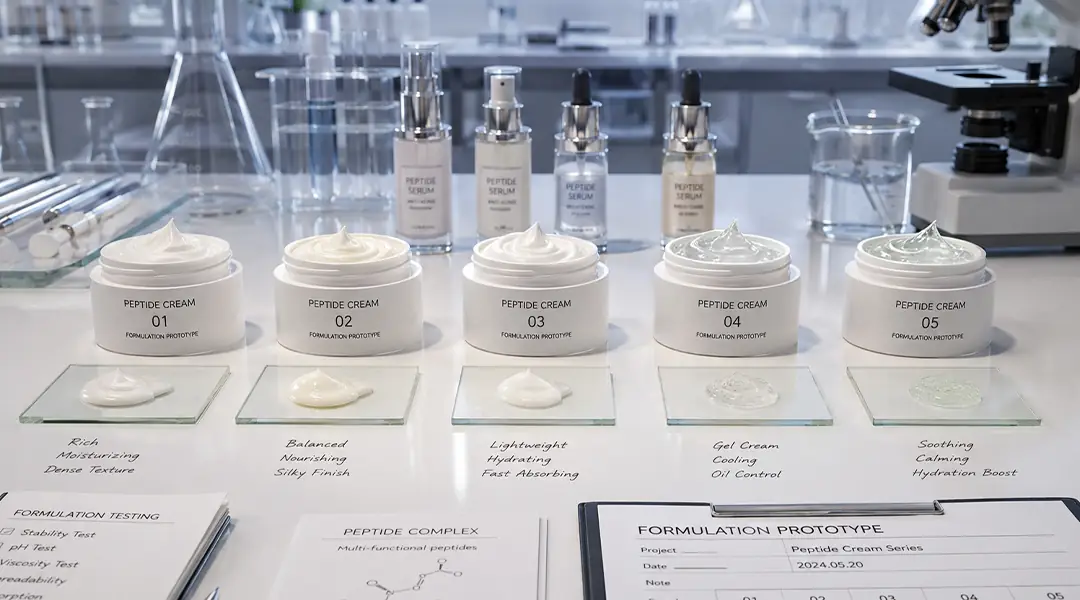
What Should a Brand Prepare Before Starting a Peptide Cream OEM Project?
You do not need to know every technical detail before starting.
But you do need a direction.
The most useful information includes:
- Target market or country
- Target consumer group
- Preferred product format
- Skin concern focus
- Texture preference
- Packaging direction
- Estimated order quantity
- Price positioning
- Mature formula or custom formulation route
For example, a sensitive-skin brand may need a fragrance-free peptide repair cream with ceramides and panthenol.
A mature-skin brand may need a richer night cream with a multi-peptide system and premium packaging.
A younger anti-aging brand may start with a lightweight peptide serum or gel cream.
A premium brand may build a peptide serum + cream + eye cream set.
The clearer your positioning, the easier it is to build the right formula.
Conclusion
Polypeptide cream is not just another anti-aging trend.
It is a real product opportunity for private label skincare brands that want to connect consumer interest, premium positioning, barrier repair, sensitive-skin care, and long-term anti-aging routines.
But the value of a peptide cream does not come from adding a peptide ingredient alone.
A strong peptide cream needs a clear target user, a suitable peptide system, stable formula design, good texture, supportive actives, quality packaging, and a market story customers can understand.
For some brands, the best first product may be a high-active peptide serum.
For others, it may be a polypeptide cream, peptide eye cream, or sensitive-skin peptide repair moisturizer.

 Uzbek
Uzbek  English
  Kazakh
  Turkish
  Russian
  Arabic
  Spanish
  Portuguese
  French
  German
  Japanese
  Korean