
Why Popular Whitening Ingredients Deliver Very Different Long-Term Results
Introduction:
Many whitening formulas appear effective in the short term, yet fail to deliver consistent, lasting brightening.
This is not due to ingredient quality alone — but rather how each ingredient interacts with melanin biology over time.
Niacinamide, Vitamin C, and Glabridin are three of the most widely used brightening actives.
However, their mechanisms, system impact, and long-term limitations differ significantly.
This article explains why similar “brightening claims” often lead to very different outcomes.
Start Here: How Whitening Performance Is Actually Determined
Before comparing niacinamide, vitamin C, and glabridin, it helps to understand why many whitening products underperform, how melanin is regulated across multiple biological stages, and what formulation strategies influence real-world results.
Start here:
Why many whitening serums fail despite high active percentages
How nano-delivery systems improve brightening efficacy without harsher actives
The three melanin pathways that determine long-term skin brightening outcomes
Setting realistic performance expectations for private-label whitening products
Niacinamide:
Broad Modulation Without Direct Enzyme Suppression
Niacinamide is often described as a “multi-functional brightening ingredient,” but its strength lies in regulation rather than inhibition.
Its advantages:
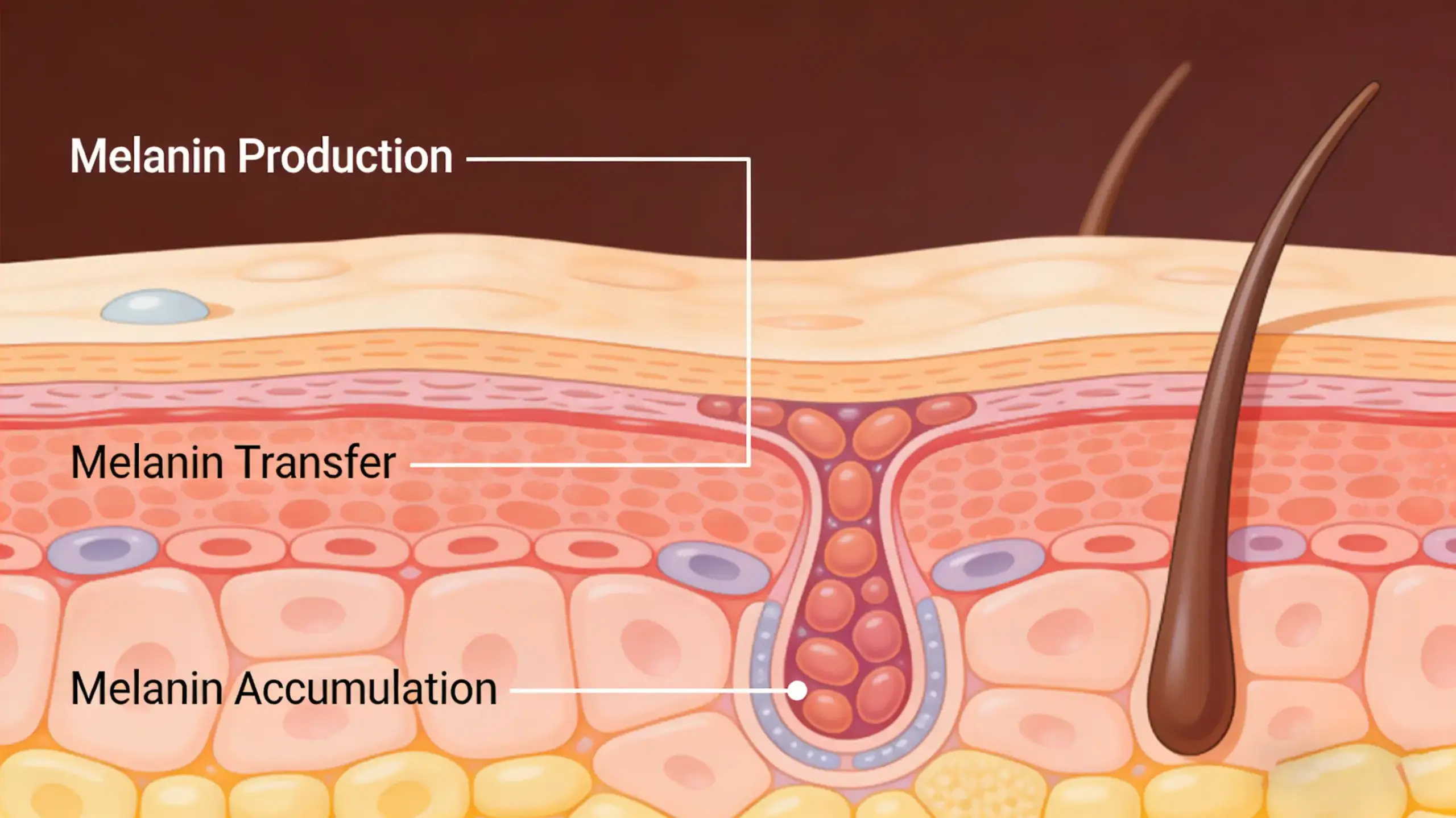
Reduces melanosome transfer from melanocytes to keratinocytes
Improves barrier function and reduces inflammation-related pigmentation
Supports more even tone with long-term use
Its limitations:
Does not directly suppress tyrosinase activity
Results appear gradually rather than immediately
Interpretation:
Niacinamide influences pigment distribution and skin environment, not melanin production itself.
Vitamin C:
Antioxidant Brightening With Stability Constraints
Vitamin C is valued for its antioxidant capacity and its ability to reduce oxidized melanin.
Its advantages:
Neutralizes oxidative stress that stimulates melanogenesis
Lightens existing pigmentation through reduction reactions
Enhances overall skin radiance
Its limitations:
Highly unstable and formulation-sensitive
Limited penetration without delivery optimization
Does not influence pigment transfer or clearance
Interpretation:
Vitamin C improves pigment appearance, but has limited control over pigment lifecycle.
Glabridin:
Targeted Tyrosinase Inhibition With Narrow Scope
Glabridin is often highlighted as a “strong whitening active” due to its tyrosinase inhibition.
Its advantages:
Precise action on melanin synthesis enzymes
High potency at low usage levels
Its limitations:
Minimal influence on pigment transfer
No role in clearance or skin renewal
Requires careful delivery design
Interpretation:
Glabridin treats production, not distribution or resolution.
Most classic whitening approaches focus on suppressing tyrosinase activity or reducing melanin synthesis. However, melanin regulation requires more than enzyme inhibition, as pigmentation is controlled across multiple biological stages rather than a single enzymatic step.
Why Long-Term Results Differ:
Despite sharing the same “brightening” label, these ingredients operate at different biological stages.
Niacinamide modulates transfer and inflammation
Vitamin C reduces oxidative pigmentation
Glabridin suppresses melanin synthesis
Without addressing the full pigment lifecycle, results remain inconsistent.
Treating Symptoms vs Addressing Root Behavior:
| Ingredient | Primary Action | Long-Term Limitation |
|---|---|---|
| Niacinamide | Modulates pigment transfer | Indirect brightening |
| Vitamin C | Reduces oxidized melanin | Stability and penetration limits |
| Glabridin | Inhibits tyrosinase | Single-pathway dependency |
Conclusion:
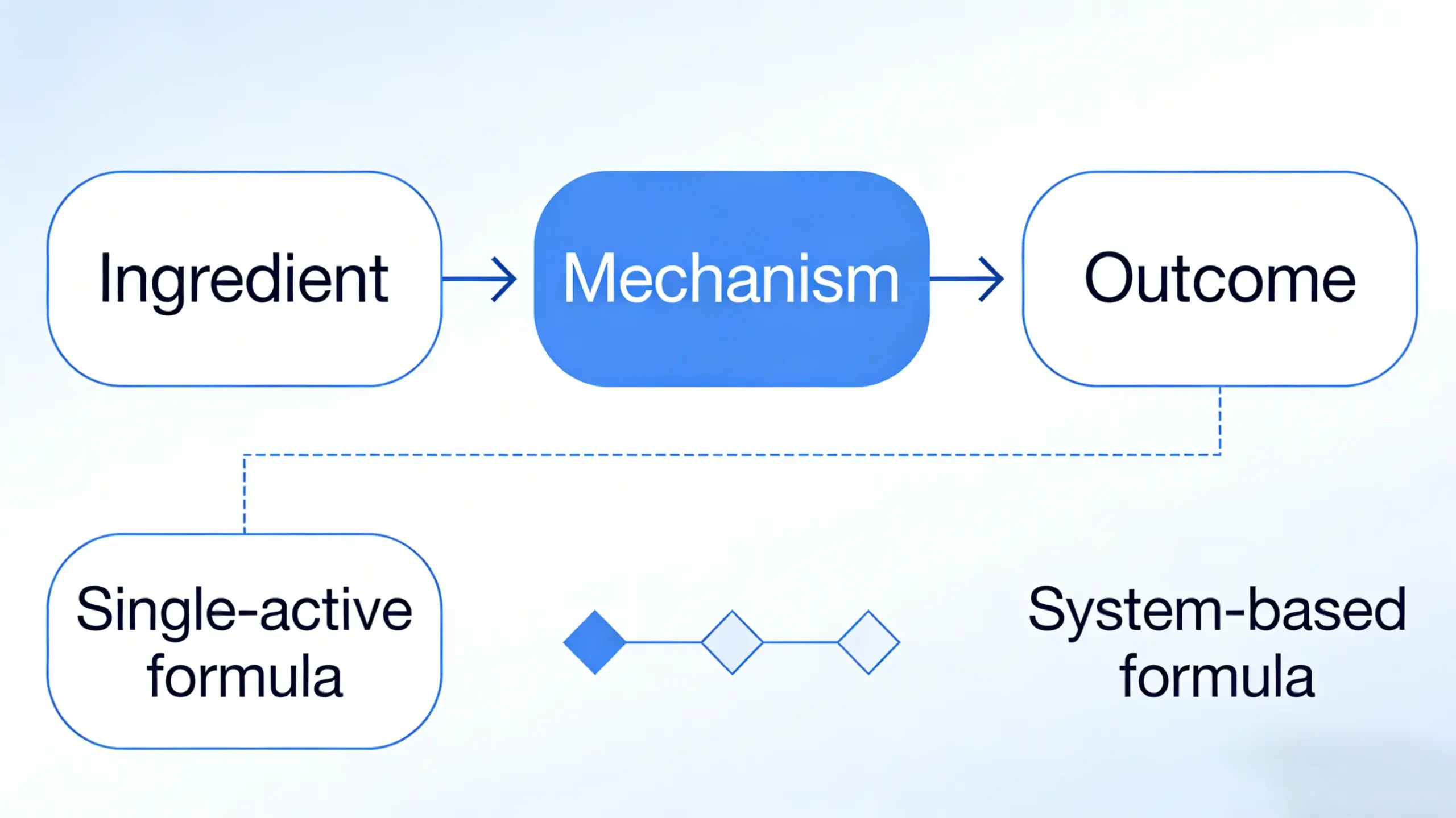
Effective skin brightening requires system-level thinking, not ingredient stacking.
Short-term inhibition may reduce pigment, but long-term clarity depends on regulating production, transfer, and clearance together.
Related Guides for Product Development Teams
If your current formulations struggle to deliver consistent brightening results, understanding why whitening serums fail in practice can help identify structural issues early. Delivery strategies such as nanotechnology-based systems further influence how actives perform without increasing irritation risks. At a deeper level, long-term brightening depends on how formulations interact with the three core melanin pathways. Finally, aligning ingredient strategy with realistic performance expectations is essential when launching a private-label whitening line.
Frequently Asked Questions About Brightening Ingredient Selection
Q1: Which brightening ingredient delivers the most stable long-term results for private-label products?
A:Long-term stability depends on both the active ingredient and the formulation system. Niacinamide generally offers the most consistent performance across markets, while vitamin C and glabridin require tighter formulation control to maintain efficacy over time.
Q2: Can different brightening ingredients support different product positioning strategies?
A:Yes. Ingredient selection directly affects cost structure, claim flexibility, regulatory considerations, and target market positioning. Many brands use different actives to build tiered whitening or brightening product lines
Q3: Should brands prioritize fast visible results or long-term tone stability?
A:Fast brightness and long-term tone correction are driven by different biological mechanisms. Ingredient choice should align with the product’s core promise, expected usage cycle, and consumer expectations rather than speed alone.
Q4: Can delivery technologies compensate for weaker brightening actives?
A:Advanced delivery systems can improve penetration and consistency, but they cannot fully replace the biological role of the active itself. Ingredient strategy sets the upper limit of achievable performance.

 English
  Uzbek
Uzbek  Kazakh
  Turkish
  Russian
  Arabic
  Spanish
  Portuguese
  French
  German
  Japanese
  Korean