
An insider-style guide to Chinese cosmetics OEM/ODM factories, comparing category strengths, R&D depth, product fit, and practical buyer considerations.
Quick Summary
Finding the right beauty product manufacturers in China in 2026 requires looking far beyond unit price. As regulatory standards tighten (EU PIF, US MoCRA) and brands shift from mass-market to high-efficacy, clinical-grade products, the ideal factory for your business depends on your brand size, product category, and technical needs.
Some factories are stronger in sheet masks. Some are better for body care, scalp care, makeup, baby care, or fast e-commerce products. Others are more suitable for private label skincare, serums, whitening, anti-aging, sensitive-skin formulas, and active ingredient systems.
This guide compares 10 beauty product manufacturers in China from a buyer’s point of view, not just by factory size, but by product fit, formulation direction, and the type of brand each manufacturer may serve best.
はじめに
Most “Top 10 beauty product manufacturers in China” lists look clean on the surface.
The problem is that many of them feel like directory pages. They mention factory names, add a few generic words like “high quality” and “professional OEM,” and then leave buyers with the same question:
Which manufacturer is actually suitable for my product?
That question matters more in 2026 than it did a few years ago.
Private label beauty is no longer just about putting your logo on a stock formula. Brands now need better formula logic, stable ingredients, packaging that matches the product, and documentation that can support the target market.
So instead of ranking factories only by size, this guide looks at a more practical question:
Which beauty product manufacturer in China is the right fit for your brand’s product strategy?
How This List Was Built
This is not a perfect ranking, and it should not be read as one.
No factory is equally strong in every category. That is the first thing buyers should accept.
A sheet mask manufacturer is not automatically the best choice for a peptide serum. A makeup factory is not automatically the right partner for sensitive-skin skincare. A fast e-commerce supplier may help you launch quickly, but it may not be the right factory for long-term formula differentiation.
For this list, the comparison is based on five practical points:
- What product categories the manufacturer appears stronger in
- Whether the factory is more production-led or R&D-led
- Whether the manufacturer is suitable for private label, OEM, ODM, or deeper custom formulation
- What type of buyer may fit the factory best
- Whether the manufacturer’s strengths match real B2B product development needs
The goal is not to say one factory is good and another is bad.
The goal is to help buyers shortlist faster.
Quick Comparison: Top Beauty Product Manufacturers in China
| Manufacturer | Stronger Fit | Why Buyers Compare Them | Best-Fit Brand Type |
|---|---|---|---|
| Nox Bellcow Cosmetics | Sheet masks, wipes, skincare | Strong presence in mask and large-scale beauty manufacturing. | Retail chains, sheet mask brands, high-volume buyers |
| Shangpinhui Biotechnology Co., Ltd. | Efficacy skincare, serums, whitening, anti-aging | R&D-led skincare, fermentation-derived actives, liposome delivery, flexible OEM support. | Brands building performance skincare lines |
| Xiran Skincare | Body care, hair care, baby care, general skincare | Broad product coverage and strong online visibility. | Buyers looking for wide-category private label support |
| Bawei Bio-Technology | Broad skincare, testing, established OEM/ODM | Strong quality-control and testing positioning. | Mature skincare and personal care brands |
| Homar Group / Homar Bio-Technology | Botanical, spa, essential oil-style products | Plant-based and natural-style product positioning. | Spa, aromatherapy, natural beauty brands |
| Easycare Group | Scalp care, hair care, facial skincare, body care | Hair and scalp category relevance. | Salon, scalp care, and hair care brands |
| Livepro Beauty | Makeup and color cosmetics | More suitable for color cosmetics and powder formats. | Makeup-focused brands |
| Cosmax China | Large-scale ODM and global trend formulas | International ODM experience and strong texture development. | Larger brands with higher volume |
| Ausmetics | Personal care, baby care, specialized formats | Broader OEM/ODM experience with personal care and baby care positioning. | Baby care, spray, personal care projects |
| Guangzhou Magnolia | Fast e-commerce skincare | Flexible, market-ready product development. | TikTok, Amazon, and fast-launch brands |
A note on MOQ: I am not putting estimated MOQ numbers into this table because public MOQ is often incomplete, outdated, or dependent on packaging and formula route. For serious buyers, it is safer to ask each factory directly with a clear product brief.
1. Nox Bellcow Cosmetics
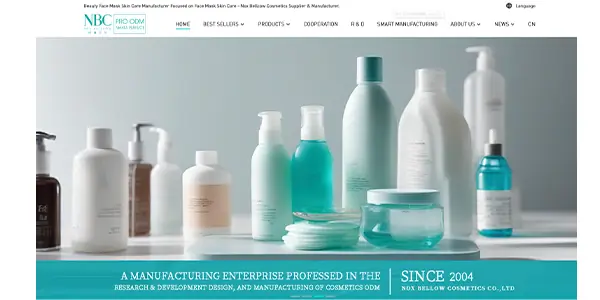
Nox Bellcow is one of the names buyers often notice when researching Chinese beauty manufacturing, especially around sheet masks, wipes, and skincare production.
If your brand needs large-volume facial masks or retail-ready mask programs, this type of factory is worth screening.
Its strength is scale. That can be a real advantage if your order volume and retail plan are already clear. But for smaller brands looking for a highly customized active serum or a very specific efficacy formula, a large-scale manufacturer may not always be the most flexible first option.
Best fit: sheet masks, wipes, large-volume skincare programs.
What to check: MOQ, sample flexibility, packaging options, documentation for your market.
2. Shangpinhui Biotechnology Co., Ltd.
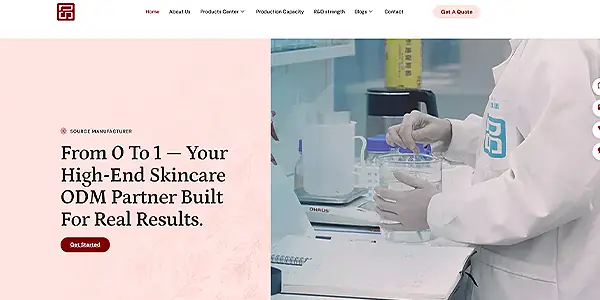
Shangpinhui Biotechnology Co., Ltd. is a better fit for brands that want efficacy-focused skincare instead of basic commodity products.
Its stronger direction is private label facial care, serums, whitening and brightening formulas, anti-aging skincare, sensitive-skin products, fermentation-derived actives, and liposome delivery systems.
This makes it more suitable for brands that care about formula logic, texture, packaging compatibility, and long-term product planning.
It may not be the best match for every beauty category. For example, brands focused mainly on pressed powder makeup or extremely low-cost stock products may need a more specialized factory. But for performance-driven skincare and private label serum projects, Shangpinhui is worth shortlisting.
Best fit: private label serums, whitening skincare, anti-aging formulas, sensitive-skin care, advanced skincare OEM.
What to check: formula direction, packaging route, target market, expected quantity, and launch timeline.
3. Xiran Skincare
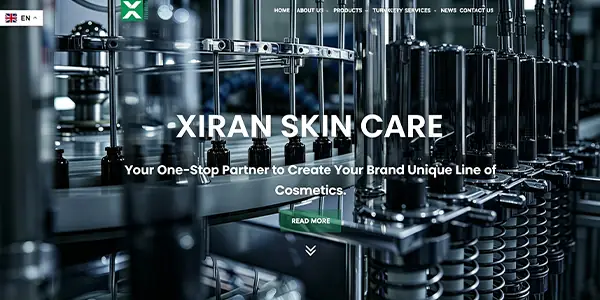
Xiran Skincare has strong online visibility and covers a wide range of private label beauty categories, including skincare, body care, hair care, baby care, and general cosmetics.
This makes it useful for buyers who want broad category support from one supplier, especially if the product plan includes body care, wash-off products, or general private label skincare.
The key question is how technical the product needs to be. For a simple personal care line, broad coverage can be useful. For a highly targeted active formula, buyers should still check the R&D details carefully.
Best fit: body care, general skincare, wash-off products, broad private label personal care.
What to check: formula depth, sample quality, packaging flexibility, export documentation.
4. Bawei Bio-Technology
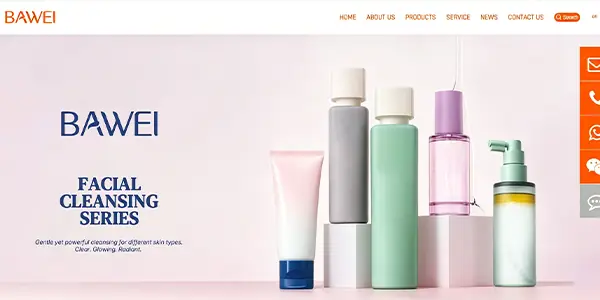
Bawei is a larger and more established OEM/ODM manufacturer with a strong quality-control and testing image.
For mature brands that need a more structured manufacturing system, Bawei is worth considering. It may be especially relevant for brands that care about testing, quality inspection, and standardized production management.
The main trade-off is flexibility. Larger systems can be reliable, but they may not always be the easiest route for smaller custom projects.
Best fit: mature skincare brands, broad personal care lines, projects requiring stronger QC support.
What to check: starting quantity, development process, testing scope, project speed.
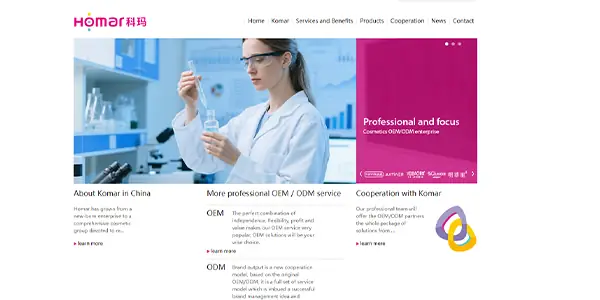
5. Homar / Dongfang
Homar is often associated with botanical, spa, essential oil, and natural-style beauty products.
If your brand positioning is built around plant extracts, aromatherapy, spa body care, or natural personal care, this type of manufacturer may be a practical option.
For advanced anti-aging actives, synthetic peptides, or highly targeted delivery systems, buyers should check whether the factory’s R&D direction matches the formula goal.
Best fit: botanical skincare, spa care, essential oil-style products, natural beauty brands.
What to check: ingredient sourcing, allergen control, claim support, documentation.
6. Easycare Group
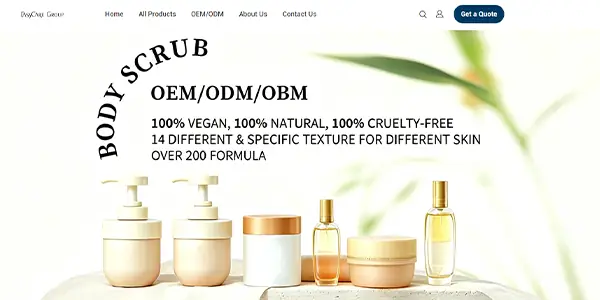
Easycare Group is more relevant when buyers are comparing facial skincare, scalp care, hair care, and body care manufacturers.
For brands developing shampoo, scalp treatment, salon care, or hair care routines, this type of manufacturer may be more suitable than a general skincare-only factory.
Scalp care is not just “hair washing.” It often involves oil control, irritation comfort, dandruff positioning, refreshing feel, and routine-based repeat purchase. That is where category experience matters.
Best fit: scalp care, hair care, facial skincare, body care.
What to check: scalp care experience, formula positioning, packaging MOQ, claim control.
7. Livepro Beauty
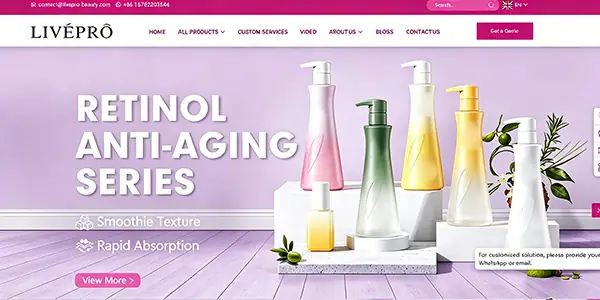
Livepro Beauty is more relevant for makeup and color cosmetics.
This matters because skincare factories and makeup factories are not always interchangeable. Pressed powders, eyeshadow, blush, and similar formats often need different equipment, dust-control conditions, pigment handling, and shade development systems.
For brands focused mainly on color cosmetics, a dedicated makeup manufacturer is usually the better direction.
Best fit: eyeshadow, blush, pressed powder, makeup-focused product lines.
What to check: shade development, pigment control, batch consistency, powder environment.
8. Cosmax China
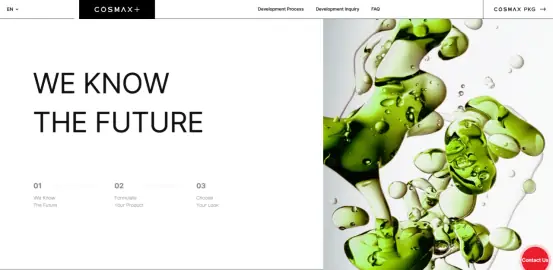
Cosmax China belongs to the kind of large ODM manufacturer that many international beauty buyers already know.
Its strength is not small-batch flexibility. Its strength is trend awareness, texture development, large-scale production, and experience serving bigger beauty brands.
For a small startup, Cosmax-type manufacturers may feel difficult to access. For brands with stronger channels and larger order planning, they can be a serious option.
Best fit: international brands, trend-led skincare, large-volume cosmetics projects.
What to check: MOQ, lead time, development fees, project acceptance threshold.
9. Ausmetics
Ausmetics is often considered for personal care, baby care, and more specialized manufacturing needs.
For buyers looking at baby care, family care, spray-style products, or personal care lines, this type of manufacturer may be worth screening.
These categories also require more careful attention to claims, safety expectations, packaging compatibility, and market documentation.
Best fit: baby care, personal care, spray-style formats, broader OEM/ODM projects.
What to check: testing requirements, claim control, packaging compatibility, target market rules.
10. Guangzhou Magnolia
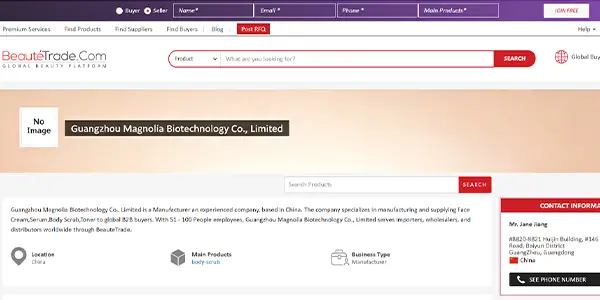
Guangzhou Magnolia represents a more flexible type of manufacturer that may appeal to fast-moving e-commerce brands.
For TikTok sellers, Amazon sellers, or brands testing products quickly, speed can be attractive. Ready-made or lightly customized formulas can help a brand get to market faster.
The limitation is differentiation. A fast launch is useful, but if the formula is too easy to copy, the brand may need stronger packaging, storytelling, or technical upgrades later.
Best fit: fast e-commerce skincare, market-ready formulas, smaller testing projects.
What to check: formula uniqueness, packaging quality, repeat order consistency, compliance documents.
A More Practical Way to Shortlist These Manufacturers
A ranking can help you start, but it should not make the final decision for you.
The better way is to shortlist factories in three rounds.
First, remove factories that are not strong in your category. A sheet mask giant is not automatically the right partner for a peptide serum. A makeup factory is not automatically the right partner for sensitive-skin skincare.
Second, check whether the manufacturer can support your market. For overseas buyers, documentation, labeling support, testing coordination, communication speed, and sample feedback can be just as important as the sample itself.
Third, look at whether the factory can grow with your brand. A cheap stock formula may help you launch quickly, but it may not give you enough difference when competitors copy the same idea.
This is where the “best” manufacturer becomes different for each buyer.
How Shangpinhui Fits Into This List
Shangpinhui Biotechnology Co., Ltd. is not trying to be the answer for every beauty product.
Its stronger position is clear: efficacy-focused skincare OEM/ODM for brands that care about formula logic, active ingredients, texture, packaging, and long-term product planning.
That includes private label facial care, serum development, whitening formulas, anti-aging skincare, sensitive-skin products, barrier repair concepts, fermentation-derived actives, liposome delivery systems, and non-powder beauty formats.
For a new brand, this does not mean every project must start from a fully custom formula. A more realistic route is often to begin with a mature formula, adjust texture and packaging, test the market, and then move toward deeper customization when the brand direction becomes clearer.
For brands building a full facial care line, you can also review our Private Label Facial Care Manufacturer page.
For a more specific product category example, this guide explains how to choose a cleanser manufacturer for private label skincare.
結論
China has many beauty product manufacturers, but the best choice depends on your product strategy.
If you need millions of sheet masks, a large mask manufacturer may be the right fit. If you need scalp care, a hair-care specialist may be more useful. If you need pressed powder makeup, a color cosmetics factory is usually more suitable. If you need a fast TikTok skincare launch, a flexible e-commerce OEM may help you move faster.
But if your brand wants high-value skincare, private label serums, whitening formulas, anti-aging products, sensitive-skin care, or advanced formulation support, R&D depth matters more than factory size alone.
Before contacting any manufacturer, prepare your product type, target market, formula direction, packaging preference, expected quantity, and launch timeline.
That preparation will help you find not just a factory, but the right OEM partner.

 Japanese
  English
  Uzbek
Uzbek  Kazakh
  Turkish
  Russian
  Arabic
  Spanish
  Portuguese
  French
  German
  Korean