
Key Technologies and R&D Capabilities Behind High-Performance Whitening Formulations
はじめに
In our previous guide, we explored how to choose a reliable whitening serum OEM manufacturer and the practical criteria brands should use when evaluating potential partners. However, once brands begin comparing different manufacturers, another question quickly arises: why do some OEM manufacturers consistently deliver better products than others?
The difference often lies in technology and research capability. While many cosmetic manufacturers focus mainly on production capacity, technology-driven OEM partners invest heavily in formulation science, laboratory research, and ingredient innovation.
For whitening serums in particular, these technical capabilities can significantly influence product stability, skin tolerance, and overall performance. Understanding what differentiates advanced OEM manufacturers can help brands choose partners that are capable of developing truly competitive whitening skincare products.
Section 1. Why Technology Matters in Whitening Serum Development
1.1 Whitening formulations rely on complex ingredient interactions
Unlike basic skincare products such as moisturizers or cleansers, whitening serums often combine multiple active ingredients designed to regulate melanin production and improve skin clarity.
Effective brightening formulations usually require a coordinated approach that addresses several biological pathways involved in pigmentation. Brands interested in the scientific background behind whitening strategies can explore our guide on 効果的な美白には3つのメラニン経路を解決する必要がある:
Because whitening formulations depend on multiple active ingredients working together, formulation design and ingredient compatibility become critically important.
1.2 Stability challenges are common in whitening serums
Many whitening ingredients are sensitive to environmental conditions such as pH levels, light exposure, or oxidation. Without proper formulation design and stability testing, these ingredients may lose effectiveness during storage.
For example, ingredient compatibility issues can influence the performance of commonly used brightening actives. Understanding challenges such as niacinamide stability in whitening formulations can help brands avoid formulation problems during product development
This is why advanced whitening serum OEM manufacturers rely on strong formulation research capabilities rather than simply producing standard template formulas.
Section 2. Key Technologies Behind Advanced Whitening Formulations
2.1 Fermentation technology in modern whitening formulations
Fermentation technology has become an increasingly important tool in modern skincare formulation, particularly in whitening and brightening products.
Through controlled microbial fermentation, certain botanical ingredients can be transformed into smaller, more bioavailable molecules that are easier for the skin to absorb. This process can improve ingredient compatibility while helping maintain the stability of active compounds within complex formulations.
However, effective fermentation-based skincare requires far more than simply adding fermented extracts into a formula. It requires dedicated R&D expertise, proprietary microbial strains, and precise fermentation control systems.
Technology-driven OEM manufacturers often maintain their own microbial strain libraries and fermentation platforms, allowing them to produce highly purified fermentation-derived actives and design more stable whitening formulations.
Fermentation technology can also contribute to improved skin tolerance. During fermentation, certain compounds may become more compatible with the skin, which helps balance whitening efficacy with reduced irritation potential. This is particularly valuable when designing whitening serums intended for sensitive or reactive skin types.
2.2 Integrated formulation platforms
While fermentation technology plays an important role in whitening formulations, it is usually part of a broader formulation system.
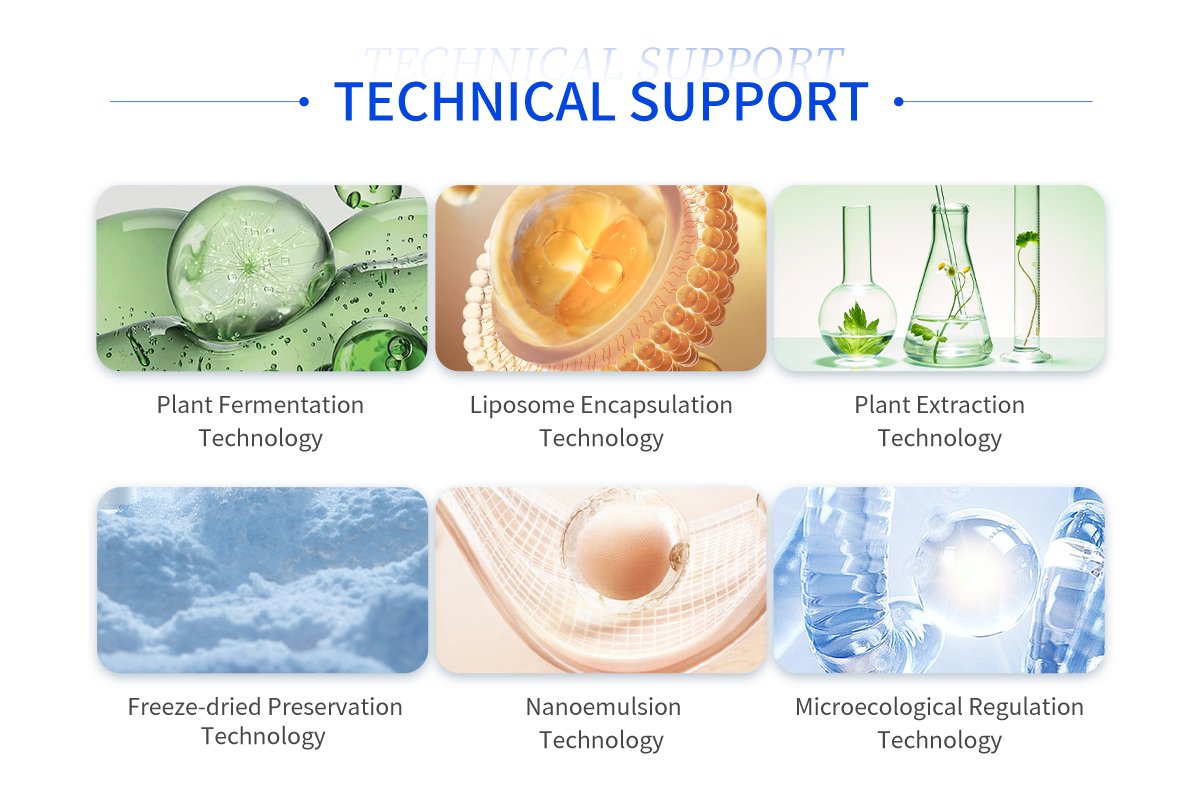
Leading technology-driven OEM manufacturers often rely on integrated formulation platforms that combine multiple technologies such as fermentation, encapsulation, nano-delivery systems, and advanced stability control.
These technologies work together to improve ingredient delivery, enhance formulation stability, and optimize the overall performance of whitening skincare products.
Section 3. The R&D Capabilities Behind Technology-Driven OEM Manufacturers
3.1 Dedicated whitening formulation specialists
Technology alone is not enough to develop high-performance skincare products. Advanced formulation systems require experienced researchers who understand how to apply these technologies effectively.
Leading OEM manufacturers typically employ dedicated formulation specialists who focus specifically on functional skincare categories such as whitening, brightening, and pigmentation control.
Rather than relying on pre-existing template formulas, these R&D teams develop customized formulations tailored to different markets, skin types, and product positioning.
This customization capability allows brands to create differentiated products instead of launching yet another standard whitening serum already widely available in the market.
3.2 Rigorous testing and formulation validation
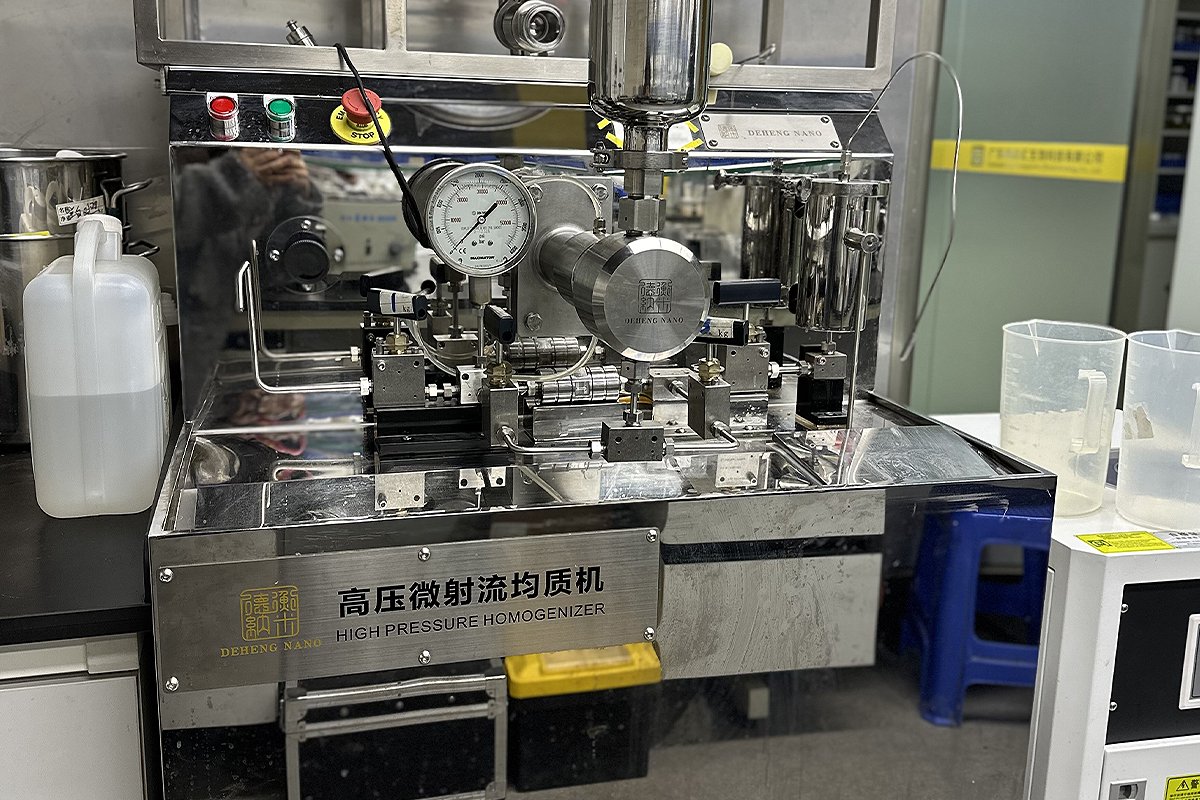
Another key characteristic of advanced OEM partners is their ability to validate formulations through laboratory testing.
Stability studies, compatibility assessments, and safety testing help ensure that whitening serums maintain consistent performance throughout their shelf life.
For example, delivery technologies such as microencapsulation of 377 in whitening formulations can help protect sensitive active ingredients and improve long-term stability
These testing and validation processes are essential for developing whitening serums that perform reliably in real-world conditions.
Section 4. One Important Question to Ask Your OEM Partner
When evaluating potential whitening serum OEM manufacturers, a simple question can often reveal their technical capability:
“Can you explain your formulation development process for whitening serums, including how fermentation or delivery technologies are applied from laboratory research to full-scale production?”
Manufacturers with strong R&D systems will usually be able to explain their formulation strategies, testing procedures, and development workflow in clear technical terms.
Section 5. Conclusion
5.1 Technology is the real differentiator
Not all cosmetic OEM manufacturers operate at the same technological level. While some factories focus primarily on production capacity, technology-driven OEM partners invest heavily in formulation science, ingredient innovation, and laboratory research.
For whitening serums in particular, technologies such as fermentation systems, delivery platforms, and advanced stability design can significantly influence product performance and long-term reliability.
Understanding these technological differences helps brands identify OEM partners capable of supporting high-quality skincare development.
5.2 Continue to the next guide
Once brands understand what differentiates advanced whitening serum OEM manufacturers, the next step is learning how a typical whitening serum project moves from concept to production.
In our next guide, we walk through the complete development workflow for launching a whitening serum with an OEM partner.
Read the full guide here:
From Concept to Launch: The Whitening Serum OEM Development Process
5.3 Explore the formulation knowledge hub
For more insights into whitening formulation science and OEM development strategies, explore our Skincare Formulation & OEM Guides hub page:

 Japanese
  English
  Uzbek
Uzbek  Kazakh
  Turkish
  Russian
  Arabic
  Spanish
  Portuguese
  French
  German
  Korean