
Why Brands Need More Than Generic Ingredient Lists to Escape Price-Driven Competition
Introduction
In skincare OEM development, many brands eventually face the same problem: their ingredient lists begin to look increasingly similar.
Niacinamide, vitamin C derivatives, tranexamic acid, peptides, and familiar botanical extracts still matter, but they also make it easier for products to fall into generic competition. When multiple brands rely on the same actives and the same formula language, it becomes harder to defend premium pricing and harder to build a product identity that feels truly memorable.
This is where custom fermentation ingredients become strategically valuable.
At ShangpinHui, we see fermentation as more than a trend label. It is a development route that can help create more distinctive bio-active ingredients, stronger product stories, and formulations that are less dependent on widely shared market materials. In OEM development, that difference matters because it helps brands move from generic comparison toward more ownable product positioning.
This article explains how custom fermentation ingredients support skincare differentiation, why real fermentation development depends on a full technical loop, and how fermentation can become a platform for brightening, soothing, and anti-aging product strategy.
Why Generic Ingredient Lists Make It Harder for Brands to Stand Out
In many skincare categories, especially serum development, the market has become crowded with products built from nearly identical raw material logic.
That creates a serious business problem. If multiple brands use the same familiar actives and similar marketing claims, it becomes more difficult to create product memorability, justify a stronger price position, or build a formula story that feels harder to copy.
This does not mean common ingredients no longer have value. It means that ingredients alone are often no longer enough.
Many brands today need something more than an acceptable formula sheet. They need a formulation identity that supports stronger differentiation and a product concept that does not disappear into direct ingredient-list comparison.
This is one reason fermentation has become more interesting in modern OEM strategy. To better understand the technical side of this route, it also helps to review fermented actives in whitening formulation and how they differ from more conventional ingredient choices.
What Custom Fermentation Actually Means in OEM Development
In professional OEM development, custom fermentation is not simply about buying a fermented raw material from the market and adding it to a formula.
It is about shaping an ingredient for a more specific technical and commercial purpose.
That may include:
- improving how a plant material performs through fermentation transformation
- building a more distinctive bio-active ingredient story
- aligning the ingredient with a more premium product direction
- supporting a specific efficacy route such as brightening, soothing, or anti-aging
- refining the ingredient so it fits the intended formula system more effectively
From a brand perspective, this matters because custom fermentation helps shift the conversation from simple sourcing to more meaningful ingredient development.
In other words, this is not only about being an ingredient buyer. It is about building a product around ingredients that feel more connected to the brand’s positioning and harder to compare directly with generic market formulas.
That is why custom fermentation can support stronger product defensibility, not by sounding more exotic, but by making the formula identity more specific and more ownable.
From Strain Selection to Process Control: Why Differentiation Requires a Real Development Loop
True fermentation differentiation does not begin with marketing language. It begins with a controlled development loop.
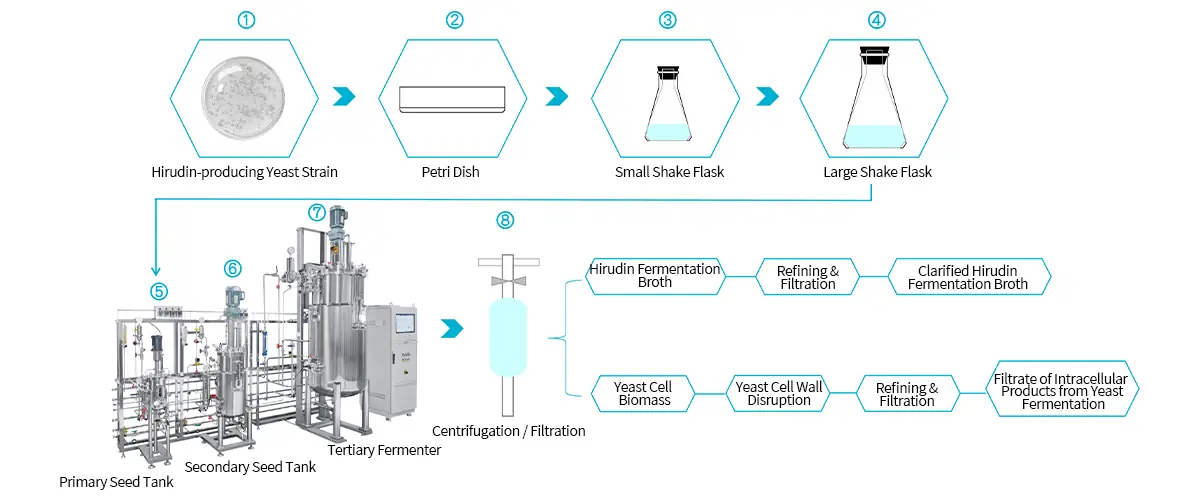
In practical OEM work, a meaningful fermentation ingredient depends on several linked stages working together, including:
- strain selection
- substrate selection
- fermentation pathway design
- process condition control
- quality monitoring
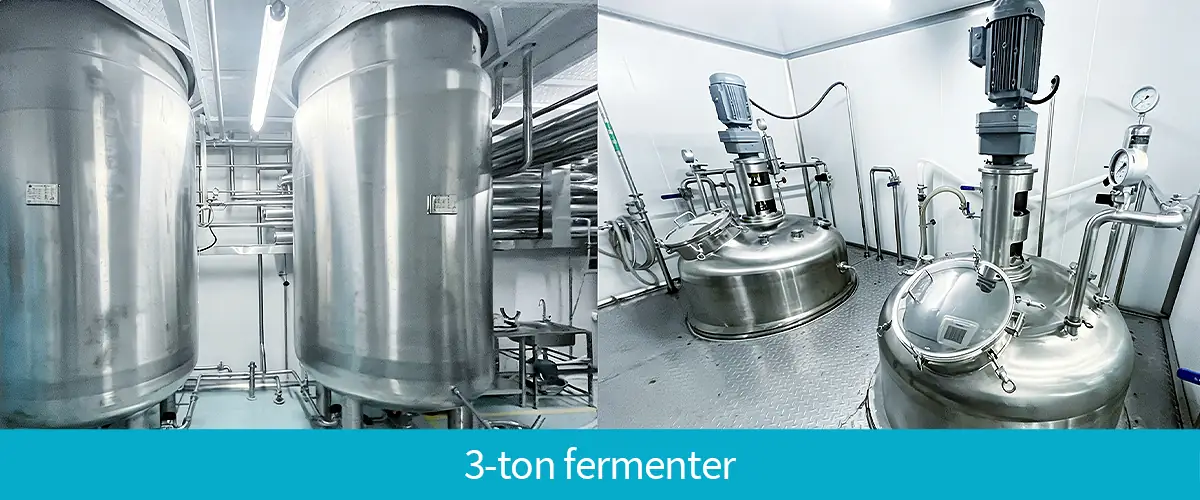
- scale-up stability
This is one of the biggest differences between superficial fermentation storytelling and real fermentation development capability.
Not every microorganism behaves the same way. Not every substrate creates the same ingredient profile. And not every fermentation output remains commercially useful once it moves from concept stage to production stage.
That is why a fermentation-capable OEM partner should be able to think beyond raw material purchasing. The manufacturer should be able to evaluate which strain route fits the target goal, which substrate supports the intended ingredient concept, and how process control affects the consistency of the final output.
This type of closed-loop development is a key part of broader OEM whitening technology, because meaningful ingredient differentiation only matters when it can be translated into stable, usable formulation value.
Why In-House Strain Resources Matter More Than Simple Ingredient Purchasing
Many OEM manufacturers can source fermentation-related materials, but that alone does not give a brand a strong competitive edge. What matters more is whether the manufacturer can help shape a fermentation route that supports clearer product identity, stronger technical storytelling, and more defensible market positioning.
A partner with in-house strain resources, fermentation development capability, and stronger process control can help brands move from generic sourcing toward more strategic ingredient ownership. That does not always mean inventing an entirely new material from nothing. Often, it means building a more tailored fermentation route that supports a clearer formula goal and a more distinctive product identity.
From a commercial perspective, this matters because direct comparison becomes harder when the ingredient logic itself is more specific to the brand.
This is not just ingredient sourcing. It is ingredient creation through controlled fermentation development.
For brands looking to build a stronger technical edge, this route can become especially valuable when fermentation is integrated into a broader whitening serum development process rather than treated as a decorative add-on.
Beyond Brightening: A Platform for Multi-Benefit Skincare
One of the most powerful aspects of fermentation is that it does not need to stay limited to one efficacy category.
Many brands first become interested in fermentation through brightening concepts, and that makes sense. Fermentation can help support more differentiated brightening ingredients and more refined product stories. But its strategic value extends well beyond whitening alone.
Depending on the strain route, substrate choice, and development objective, fermentation can also support ingredients positioned toward:
- soothing support
- barrier-friendly formulation
- anti-aging concepts
- multi-benefit skincare systems
This makes fermentation more than a single-trend article topic. It makes it a platform capability.
For brands, that means fermentation can support not only one hero product, but also a broader line strategy. A brightening concept today can later expand into soothing or anti-aging directions without losing the technical narrative that helped define the brand in the first place.
This is also why fermentation can work well alongside liposome whitening serum OEM strategy when a brand wants both ingredient differentiation and more advanced delivery positioning in the same portfolio.
What Can Be Customized Beyond Efficacy
When people think about custom ingredients, they usually think first about efficacy. But in OEM development, differentiation often depends on more than function alone.
Custom fermentation can also support:
- ingredient story and concept uniqueness
- odor refinement
- color and visual suitability
- sensory fit within the final formula
- alignment with premium or clean-positioned product goals
This is especially relevant in plant fermentation projects. In some cases, fermentation can help make difficult natural extracts more elegant in the final formula by improving usability, reducing harshness, or making the ingredient profile feel more refined.
That matters because premium skincare is judged by more than technical claims. It is also judged by coherence: whether the ingredient story, sensory experience, visual quality, and formulation identity all support the same positioning logic.
For brands trying to move beyond generic competition, this kind of customization can be just as valuable as the headline efficacy itself.
What This Looks Like in Real OEM Development
In practical OEM development, custom fermentation can support many different project directions.
A brand may want to explore a fermented ginseng concept to create a stronger plant-fermentation identity and a more premium botanical story. Another may look for a specialty strain-derived ingredient route that supports a more technical bio-active positioning. Others may use fermentation not only for brightening, but also to build ingredients aligned with soothing or anti-aging goals.
The point is not that every project needs the most unusual ingredient. The point is that fermentation gives brands more room to design around the actual formula goal rather than relying entirely on the same shared market inputs.
This is where the OEM partner’s role becomes critical. A strong fermentation-capable manufacturer should be able to help evaluate whether a custom route is technically realistic, commercially meaningful, and scalable for production.
Differentiation is not created by complexity alone. It is created when the technical route, formula logic, and market positioning all support the same product identity.
For brands that want to strengthen this technical story even further, it is also useful to understand whitening serum OEM technology in relation to long-term formulation planning and execution capability.
Conclusion
Custom fermentation ingredients matter in skincare OEM development because they help brands move beyond generic ingredient-list competition.
Their real value lies not only in novelty, but in the ability to create bio-active ingredients with stronger identity, more flexible positioning, and better alignment with real brand goals. When supported by a full development loop — from strain selection and substrate design to fermentation control and scalable execution — fermentation becomes more than a trend. It becomes a practical differentiation tool.
For brands, this means custom fermentation is not simply about claiming something unique. It is about building ingredients and ingredient stories that are harder to compare directly in a crowded market.
For OEM manufacturers, it means the true value of fermentation comes from being able to develop, control, and translate biotechnology into commercially useful results.
Looking for a more distinctive ingredient strategy for your next skincare project? Our R&D team can help explore custom fermentation possibilities tailored to your brand positioning.
Before moving into the FAQ section, it is also worth noting that fermentation-based differentiation becomes even more powerful when combined with long-term formulation planning and delivery strategy.
FAQ
Q1:What are custom fermentation ingredients in skincare OEM development?
A:They are fermentation-based ingredients developed around a more specific formulation or commercial goal, rather than simply using standard market ingredients without modification.
Q2:Why do custom fermentation ingredients help brands stand out?
A:Because they can support more distinctive ingredient stories, stronger product identity, and less reliance on formulas built entirely from widely shared raw materials.
Q3:Is fermentation useful only for brightening products?
A:No. Fermentation can also support soothing, barrier-friendly, and anti-aging oriented product concepts, depending on how the ingredient route is developed.
Q4:What can be customized in fermentation development besides efficacy?
A:Brands may also explore customization in odor, color profile, ingredient story, sensory fit, and broader product positioning.
Q5:Why does in-house fermentation capability matter in OEM development?
A:Because meaningful differentiation depends on more than purchasing finished ingredients. In-house capability can support strain-related development, process control, and more credible ingredient creation.
Recommended Reading
Fermented Actives in Whitening Formulation: What Makes Them Different in OEM Development
Why Liposome Delivery Systems Matter in High-End Whitening Serum Development
Whitening Serum OEM Technology: What Makes a Manufacturer Stand Out

 French
  English
  Uzbek
Uzbek  Kazakh
  Turkish
  Russian
  Arabic
  Spanish
  Portuguese
  German
  Japanese
  Korean