
How Beauty Brands Can Compare OEM Partners for Private Label, Custom Formulation, and Long-Term Anti-Aging Product Development.
Einführung
Choosing an anti-aging skincare OEM manufacturer is not the same as choosing a supplier for a simple basic moisturizer.
Anti-aging products often need stronger formulation judgment because brands may need to balance visible performance, long-term use experience, ingredient stability, texture, irritation control, packaging compatibility, and market positioning.
Many beauty brands begin by comparing product catalogs or unit prices. That is understandable, but in anti-aging skincare OEM development, price is only one part of the decision.
A better question is:
Can this manufacturer support the type of anti-aging product your brand actually wants to build?
For some brands, the right partner may be a mature private label manufacturer with ready-to-brand anti-aging serums and creams. For others, the better fit may be a custom formulation partner that can support peptides, retinol alternatives, antioxidants, barrier-support systems, fermented actives, or more sensitive-skin-friendly anti-aging routes.
This guide reviews several anti-aging skincare OEM manufacturers and explains what beauty brands should compare before choosing the right partner.
What Makes an Anti-Aging Skincare OEM Manufacturer Worth Comparing?
Anti-aging skincare is a high-expectation category.
Customers may expect smoother-looking skin, better firmness, improved texture, reduced visible lines, or a more refined skin appearance. But from an OEM development perspective, these goals cannot be supported by ingredient names alone.
Before comparing manufacturers, brands should look at several key areas.
1. Anti-aging formulation experience
A useful anti-aging OEM partner should understand more than one hero ingredient.
Depending on the product direction, anti-aging formulas may involve:
- peptides
- retinol or retinol alternatives
- bakuchiol
- antioxidants
- barrier-support ingredients
- soothing systems
- fermentation-derived actives
- moisturizing and firming complexes
The question is not only whether a manufacturer can add these ingredients. The question is whether they can help build a formula route that makes sense for the brand’s target users.
2. Stability and compatibility awareness
Many anti-aging ingredients can be sensitive to formula environment, packaging, oxidation, pH, texture system, or usage conditions.
A good OEM partner should understand how ingredient choice, packaging format, and product texture can affect stability and user experience.
3. Sensitive-skin and low-irritation design
Anti-aging skincare is often used long term. If the formula feels too strong, too heavy, or too irritating, the product may be difficult for consumers to keep using.
For brands targeting sensitive skin, mature skin, or daily-use anti-aging routines, low-irritation design can be just as important as active ingredient selection.
4. Private label and custom formulation flexibility
Not every anti-aging brand needs full custom formulation from the beginning.
Some brands may benefit from mature anti-aging formulas with targeted adjustment. Others may need deeper custom development for a hero product or a differentiated ingredient story.
Before comparing manufacturers, brands should first understand whether their project is closer to a private label route or a deeper custom formulation route.
Private Label vs. Custom Formulation in Skincare: Which Is Right for Your Brand?
5. Packaging and first-batch planning
Anti-aging products often rely on packaging to support both performance and positioning.
Serums, creams, ampoules, eye creams, pump bottles, jars, airless bottles, and dropper bottles can all create different expectations. Packaging also affects timeline, MOQ, cost, and production planning.
6. Export and documentation support
For overseas beauty brands, manufacturer selection should also consider export experience, documentation support, testing requirements, and target-market compliance.
A manufacturer may be able to make a good formula, but international brands also need practical project support from sampling to production and shipment.
Top Anti-Aging Skincare OEM Manufacturers for Beauty Brands
The manufacturers below are not ranked from “best” to “worst.” They represent different types of OEM, ODM, private label, and contract manufacturing partners that beauty brands may compare when developing anti-aging skincare.
The best choice depends on your project stage, product category, budget, timeline, ingredient strategy, and target market.
The table below gives a quick comparison before the detailed manufacturer list.
| Manufacturer | Service Focus | Core Tech & Ingredients | Best Match For |
|---|---|---|---|
| 1. Cosmetic Solutions | Professional & Custom R&D | Clinical-grade formulas, OTC manufacturing | Clinics, medical SPAs, and professional lines |
| 2. Prime Matter Labs | Full-Spectrum Manufacturing | Cross-category R&D, adaptive production | Brands scaling across multiple categories |
| 3. RainShadow Labs | Private Label & Bulk Supply | Ready-to-use serums, small-batch options | Startups needing fast market entry |
| 4. Dynamic Blending | Turnkey OEM/ODM Services | Extensive library, packaging procurement | Brands seeking all-in-one fulfillment |
| 5. COSMAX | Global Enterprise ODM | Advanced R&I, massive global capacity | Established global labels with high volume |
| 6. Kolmar Korea | Structured Skincare ODM | Functional K-beauty, systematic R&D | Brands focusing on Korean skincare logic |
| 7. Intercos Group | Premium Beauty Production | Superior textures, luxury packaging synergy | High-end brands prioritizing aesthetics |
| 8. SHANGPINHUI | Precision Anti-Aging Formulation | NIO-ACTIVE, SOD, Peptides/Acmella, Collagen, Ginseng Ferment, Bakuchiol | Brands seeking differentiated, “high-efficiency & gentle” solutions |
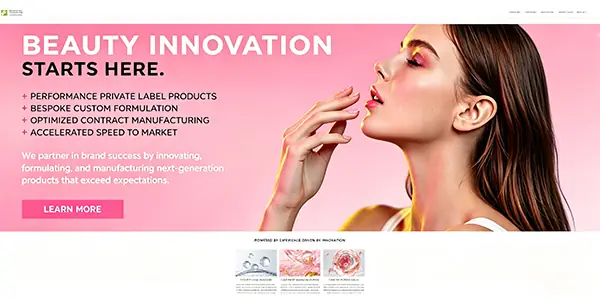
1. Cosmetic Solutions
Best for:
Beauty brands looking for turnkey private label skincare, custom formulation, and professional skincare development support.
Why brands may consider them:
Cosmetic Solutions presents itself as a private label skincare and contract manufacturing partner offering formulation, innovation, manufacturing, and turnkey packaging support for skincare, body care, specialty hair care, OTC, and professional-use products. This makes it a relevant option for brands that want a structured private label or custom formulation route with established development support.
What to compare before choosing:
Brands should compare formula flexibility, MOQ, anti-aging product range, packaging options, customization depth, and whether the available development route matches their brand stage.
Suitable project types:
- private label anti-aging serums
- anti-aging creams
- professional skincare lines
- custom skincare development
- spa, salon, or medical-aesthetic adjacent skincare projects
2. Prime Matter Labs
Best for:
Brands looking for broader beauty and skincare contract manufacturing with development, production, and process support.
Why brands may consider them:
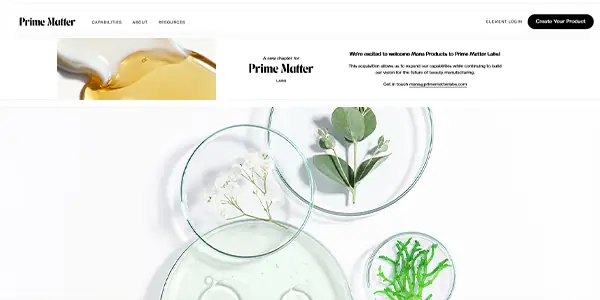
Prime Matter Labs describes itself as a beauty and OTC manufacturer providing full-spectrum development and production for skin, hair, body, and sun care. It also emphasizes full-service product development and production capabilities, which may make it suitable for brands looking for larger-scale support across multiple beauty categories.
What to compare before choosing:
Brands should compare whether the manufacturer’s scale, project process, communication system, and formulation route fit their anti-aging product goals and first-batch planning needs.
Suitable project types:
- anti-aging skincare lines
- sun care and skincare crossover products
- OTC-adjacent skincare projects
- multi-category beauty launches
- larger-scale contract manufacturing projects
3. RainShadow Labs
Best for:
Brands looking for private label anti-aging serums, moisturizers, and low-barrier product launch options.
Why brands may consider them:
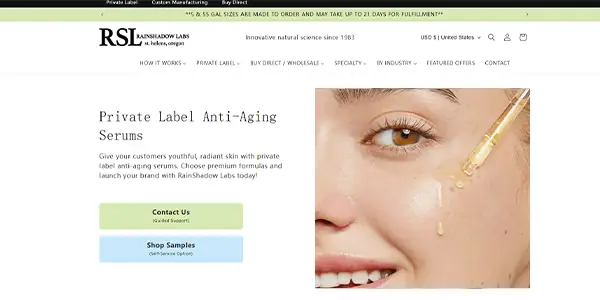
RainShadow Labs offers private label anti-aging serums and moisturizers, as well as bulk, private label, and custom development options. Its public materials highlight anti-aging serum options, sample testing, bulk ordering, and lower-MOQ routes, which may be attractive for smaller brands, spas, salons, or retailers looking for a faster private label approach.
What to compare before choosing:
Brands should compare how much formula customization is available, whether the anti-aging formulas match their target positioning, and whether the product route supports long-term brand differentiation.
Suitable project types:
- private label anti-aging serums
- anti-aging moisturizers
- spa and salon skincare
- small-batch private label skincare
- simple first-launch anti-aging products
4. Dynamic Blending
Best for:
Brands looking for private label skincare and broader contract manufacturing support across personal care categories.
Why brands may consider them:
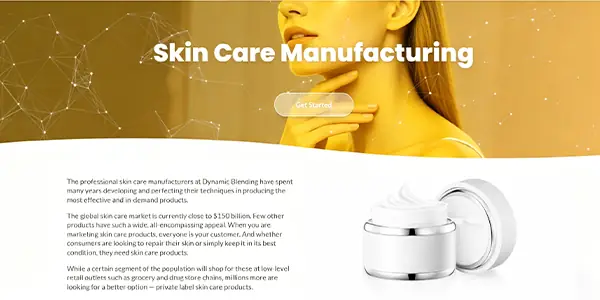
Dynamic Blending provides private label skincare manufacturing, including face masks, creams, lotions, balms, cleansers, scrubs, and serums. Its public materials also discuss private label and custom contract manufacturing routes, making it relevant for brands comparing ready-made and more customized development options.
What to compare before choosing:
Brands should evaluate whether the manufacturer’s skincare experience fits their anti-aging positioning, whether they need private label or custom contract manufacturing, and how the company supports packaging and fulfillment.
Suitable project types:
- private label anti-aging creams
- facial serums
- moisturizers and lotions
- face masks
- multi-SKU skincare launches
5. COSMAX
Best for:
Brands looking for a large global ODM partner with strong R&D, production, and international manufacturing capabilities.
Why brands may consider them:
COSMAX presents itself as a global ODM company with research, innovation, manufacturing capabilities, global factories, and a wide certification footprint. Its public materials emphasize R&I, production, global supply chain, and facilities in markets including Korea, China, the USA, Indonesia, and Thailand.
What to compare before choosing:
COSMAX may be more suitable for brands needing large-scale ODM capability, global production infrastructure, and advanced product development support. Smaller brands should compare project access, MOQ, customization scope, and communication fit before choosing a large-scale ODM partner.
Suitable project types:
- large-scale anti-aging skincare lines
- K-beauty-inspired skincare
- advanced ODM skincare projects
- global beauty brand product development
- technology-driven skincare launches
6. Kolmar Korea
Best for:
Brands looking for established Korean ODM capabilities and structured skincare development support.
Why brands may consider them:
Kolmar Korea positions itself as a major cosmetics ODM platform service provider and describes itself as Korea’s first cosmetics ODM company. Public materials also reference systematic ODM solutions, CGMP-related credentials, and skincare manufacturing systems.
What to compare before choosing:
Brands should compare whether Kolmar Korea’s ODM model, development scale, project access, and product category focus match their anti-aging skincare goals.
Suitable project types:
- K-beauty anti-aging skincare
- functional skincare
- peptide or high-efficacy anti-aging concepts
- larger ODM development projects
- brands looking for structured Korean manufacturing support
7. Intercos Group
Best for:
Beauty brands looking for a global cosmetic contract manufacturer with skincare, makeup, and packaging expertise.
Why brands may consider them:
Intercos Group describes itself as a leading cosmetic contract manufacturer specializing in development, production, and packaging for major beauty labels. Public materials state that the group has been involved in cosmetic creation, development, and manufacturing since 1972, with skincare and personal care product capabilities.
What to compare before choosing:
Intercos may be better suited for established brands or larger beauty companies that need global manufacturing, development, and packaging support. Smaller brands should evaluate whether the company’s scale and project model fit their current stage.
Suitable project types:
- premium skincare lines
- skincare and makeup crossover ranges
- high-end anti-aging concepts
- large-scale contract manufacturing
- global brand product development
8. Shangpinhui (Shangpinhui Biotechnology Co., Ltd)
Best for: Brands seeking advanced anti-aging OEM development focused on bio-fermented actives, multi-peptide systems, and sensitive-skin-friendly formulation design.
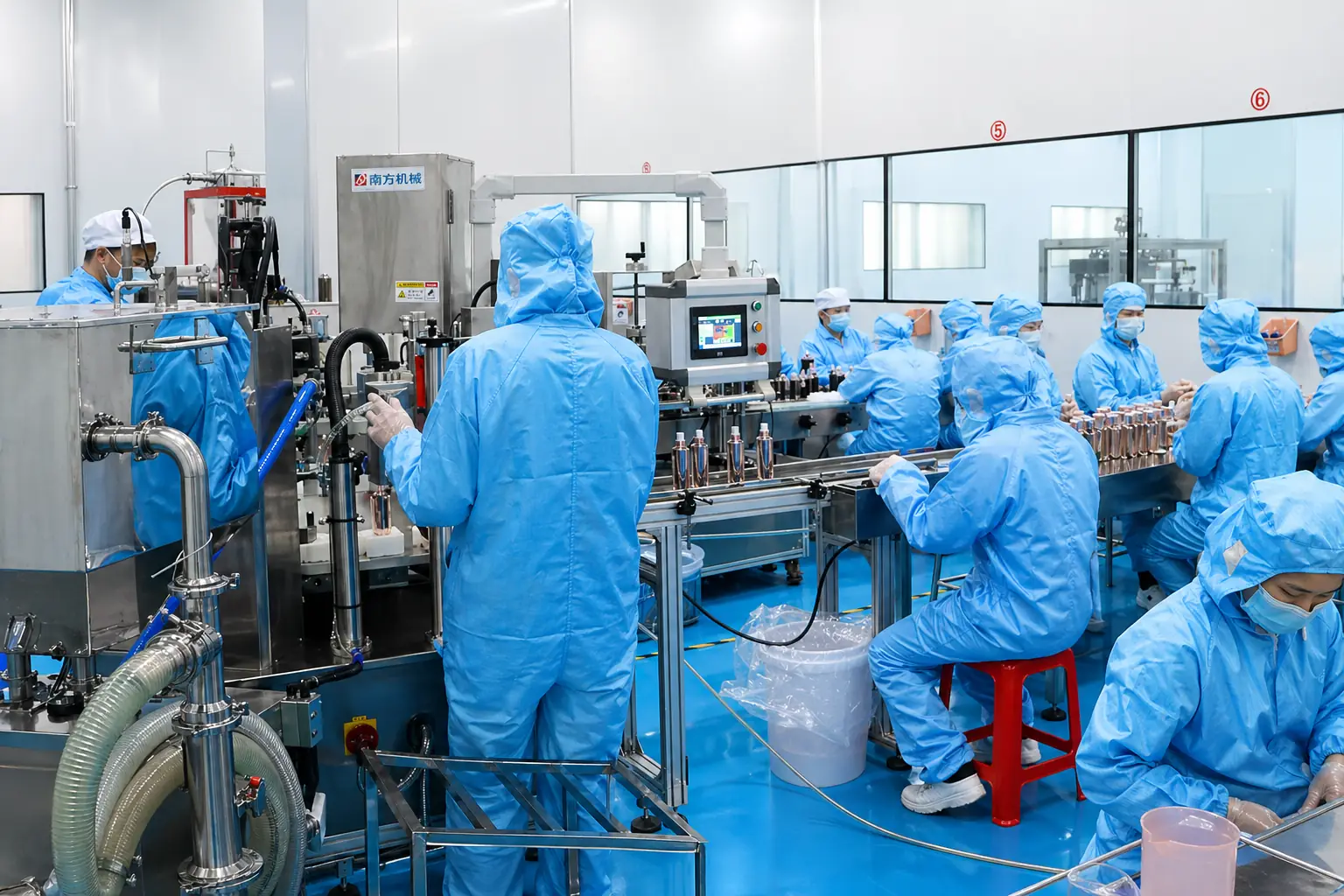
Why brands choose Shangpinhui: Shangpinhui Biotechnology excels at helping brands move beyond simple ingredient claims to develop integrated, high-performance anti-aging systems. We understand that a successful product depends on the perfect balance of visible results, formula stability, and long-term user experience.
Our R&D team specializes in “High-Efficiency & Gentle” solutions—delivering potent anti-aging benefits without compromising the skin barrier. Whether your brand is targeting deep wrinkles or preventative aging for sensitive skin, Shangpinhui provides the technical expertise to bring complex formulations to life.
Shangpinhui specializes in developing:
High-Potency Peptide firming serums (including Botulinum-like peptides and Acmella Oleracea)
Bio-Ferment revitalizing essences and Ginseng ferment lines
Bakuchiol and Retinol-alternative creams for low-irritation aging care
Advanced Antioxidant systems featuring SOD und NIO-ACTIVE rejuvenating factors
Collagen-based barrier support and firming formulas
What to compare before choosing: Brands should clarify whether they need a mature, market-ready formula for rapid launch or a fully customized ingredient story to differentiate their hero products. Shangpinhui supports both paths with flexible development and rigorous stability testing.
Suitable project types:
Private label anti-aging skincare with unique active systems
Custom anti-aging formulations (NIO-ACTIVE, SOD, Peptide-focused)
Sensitive-skin-friendly anti-aging lines
Fermentation-derived active skincare series
First-batch OEM development for growth-oriented brands
Choosing the right formula route is the foundation of a successful product launch. If you are looking for a partner to help review your project direction, ingredient strategy, or first-batch planning, you can consult with our SHANGPINHUI OEM team here to discuss how to build a high-efficacy and gentle anti-aging line for your brand.
How to Choose the Right Anti-Aging OEM Partner for Your Brand
A manufacturer list can help brands start research, but the right partner depends on your actual product strategy.
Different brands should compare manufacturers in different ways.
If you are testing your first anti-aging product
A mature formula route may be more practical. You may want to compare:
- available anti-aging formulas
- first-batch MOQ
- packaging options
- sample speed
- label customization support
- export documentation
For early-stage brands, the goal is often not to build the most complex formula immediately. It is to launch a product that matches the brand direction while keeping the project manageable.
If you want to build a hero product
A hero anti-aging product usually needs stronger formula logic.
You may want to compare:
- custom formulation capability
- ingredient strategy
- stability awareness
- texture development
- packaging compatibility
- claim direction
A hero product should not only sound impressive. It should have a formula route that supports the brand’s positioning over time.
If your target users have sensitive skin
Sensitive-skin anti-aging is different from aggressive anti-aging.
Brands should compare whether the manufacturer understands:
- low-irritation design
- barrier-support systems
- retinol alternatives
- peptide-based routes
- soothing and recovery-focused ingredients
- texture comfort for daily use
This is especially important for brands that want anti-aging products suitable for long-term use.
If you are building a premium anti-aging line
Premium anti-aging products often need more than strong ingredient names.
Brands should compare:
- texture elegance
- packaging consistency
- formula stability
- ingredient story
- brand positioning support
- product line architecture
Timeline is also part of manufacturer selection, because different formula routes and packaging decisions can change how quickly a project moves from sample to shipment.
Custom Skincare Development Timeline: How Long Does It Really Take?
Anti-Aging OEM Is Not Only About Ingredients
Many brands still treat anti-aging skincare as an ingredient checklist.
They may ask for collagen, retinol, peptides, bakuchiol, hyaluronic acid, or antioxidants. These ingredients can be useful, but anti-aging formulation should not rely on ingredient names alone.
A stronger anti-aging product should consider:
- oxidative stress
- glycation
- chronic inflammation
- barrier decline
- firmness support
- moisture balance
- texture and tolerance
- long-term use experience
For brands still defining their anti-aging product logic, it is helpful to understand why anti-aging skincare should not rely on collagen claims alone.
How Anti-Aging Skincare Works: Why Collagen Alone Is Not Enough
The right OEM partner should be able to help the brand think through these factors instead of simply adding trendy ingredients into a base formula.
Common Mistakes When Comparing Anti-Aging Skincare OEM Manufacturers
Choosing an anti-aging skincare OEM manufacturer is not only about finding a supplier. It is about choosing the right development partner for the product you want to build.
Here are common mistakes brands should avoid.
Mistake 1: Choosing only by unit price
A low unit price may look attractive, but anti-aging skincare often needs stronger formulation planning. If the formula does not match the brand’s positioning, the product may struggle even if the first quote looks competitive.
Mistake 2: Treating all anti-aging formulas as the same
Retinol, peptides, bakuchiol, antioxidants, barrier-support systems, and fermented actives all support different product stories. The manufacturer should understand which route fits the brand’s target users.
Mistake 3: Ignoring texture and tolerance
Anti-aging products are often used daily or long term. If the formula feels too heavy, sticky, irritating, or difficult to layer, consumers may not keep using it.
Mistake 4: Not asking about packaging compatibility
Packaging can affect product positioning, stability, and user experience. Serums, creams, eye products, airless bottles, jars, and droppers all create different project requirements.
Mistake 5: Not clarifying the development route early
Brands should clarify whether they need a mature formula route, limited adjustment, or full custom formulation. This affects timeline, MOQ, sampling, quotation, and packaging planning.
Conclusion
A list of top anti-aging skincare OEM manufacturers can help beauty brands begin their research, but the final decision should not be based on a company name alone.
The right manufacturer depends on your brand stage, product direction, formulation needs, packaging plan, budget, target market, and launch timeline.
For private label brands, a mature anti-aging formula route may be the most practical first step. For brands building a differentiated hero product, custom formulation and stronger ingredient strategy may matter more.
The best anti-aging skincare OEM manufacturer is not simply the largest or cheapest one. It is the partner whose formulation capability, development route, packaging support, and project communication match your brand’s product strategy.
Before moving into the FAQ section, here are a few questions brands often ask when comparing anti-aging skincare OEM manufacturers.
FAQ
Q1:What should I compare when choosing an anti-aging skincare OEM manufacturer?
Brands should compare anti-aging formulation experience, ingredient strategy, stability awareness, packaging support, MOQ, sample process, export documentation, and whether the manufacturer supports private label, custom formulation, or both.
Q2:Should a new brand choose private label or custom formulation for anti-aging skincare?
Many new brands can start with a mature anti-aging formula route to reduce early complexity. Custom formulation may be more suitable when the brand needs a stronger ingredient story, hero product, or more specific formula direction.
Q3:What anti-aging product types are suitable for OEM development?
Common anti-aging OEM products include serums, creams, eye creams, essences, ampoules, masks, neck creams, and barrier-support products. The right format depends on the brand’s target users and price positioning.
Q4:Are retinol alternatives important in anti-aging OEM projects?
Yes, especially for brands targeting sensitive skin, daily-use anti-aging, or lower-irritation positioning. Bakuchiol, peptides, antioxidants, and barrier-support systems can all be considered depending on the product route.
Q5:Can anti-aging OEM manufacturers support packaging and first-batch planning?
A good OEM partner should support more than formula making. Packaging selection, sample confirmation, production planning, quality checks, and first-batch execution all affect how smoothly the project moves forward.

 German
  English
  Uzbek
Uzbek  Kazakh
  Turkish
  Russian
  Arabic
  Spanish
  Portuguese
  French
  Japanese
  Korean